




How QDCs Work, Flow Restriction and When to Use Them
If you have ever had to drain an entire loop just to swap out a graphics card or move an external radiator, you will already understand the appeal of quick disconnect fittings. A QDC, or quick disconnect coupling, is a two part valve assembly that lets you break a filled loop with minimal coolant loss. They are especially handy for external radiators, removable GPU sections, test benches and serviceable workstations. The trade offs are cost, physical bulk and added flow restriction, so the sensible approach is to fit only as many as your build genuinely needs rather than scattering them everywhere.
This guide covers how QDCs work, whether they truly are spill free, how much flow they cost you, how many you actually need, and where they earn their keep. If you just want to browse the options, our quick release fitting range carries Koolance, Alphacool, Thermal Grizzly and Barrow options. That said, read on first so you order the right series and the right quantity.
| Use case | QDCs worth it? | Pairs needed | Main thing to watch |
|---|---|---|---|
| External radiator (e.g. MO-RA) | Yes | 2 pairs (supply + return) | Order 4 halves, not 2 |
| Removable GPU | Yes | 2 pairs | Make the connections directional |
| Test bench / service station | Yes | Per line swapped | Choose a low-restriction series |
| Server / workstation | Yes, bulkhead style | Per pass-through | Panel clearance for the release collar |
| Sealed single-case loop | Usually not | – | Adds cost and restriction for little gain |
What is a quick disconnect fitting?
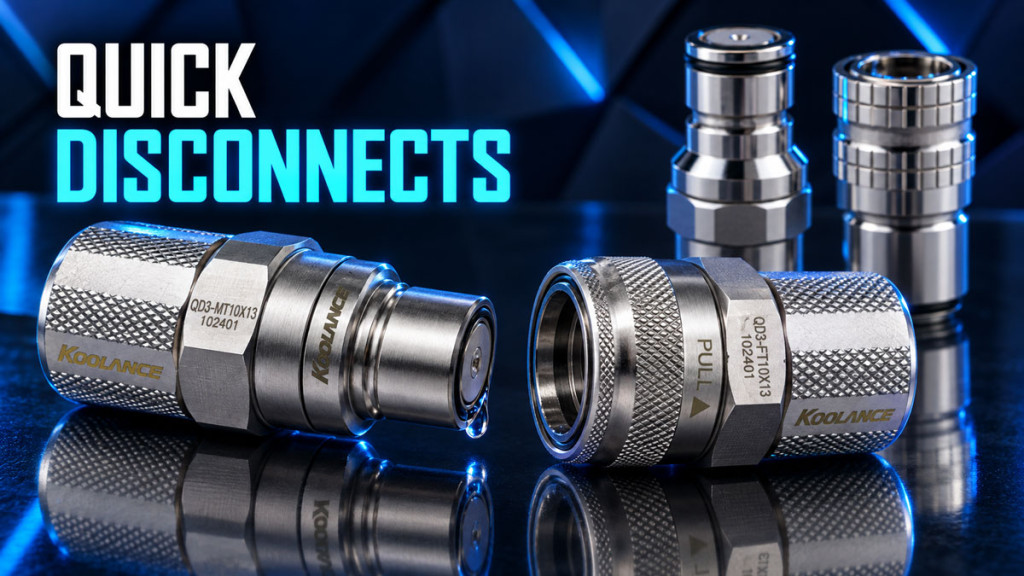
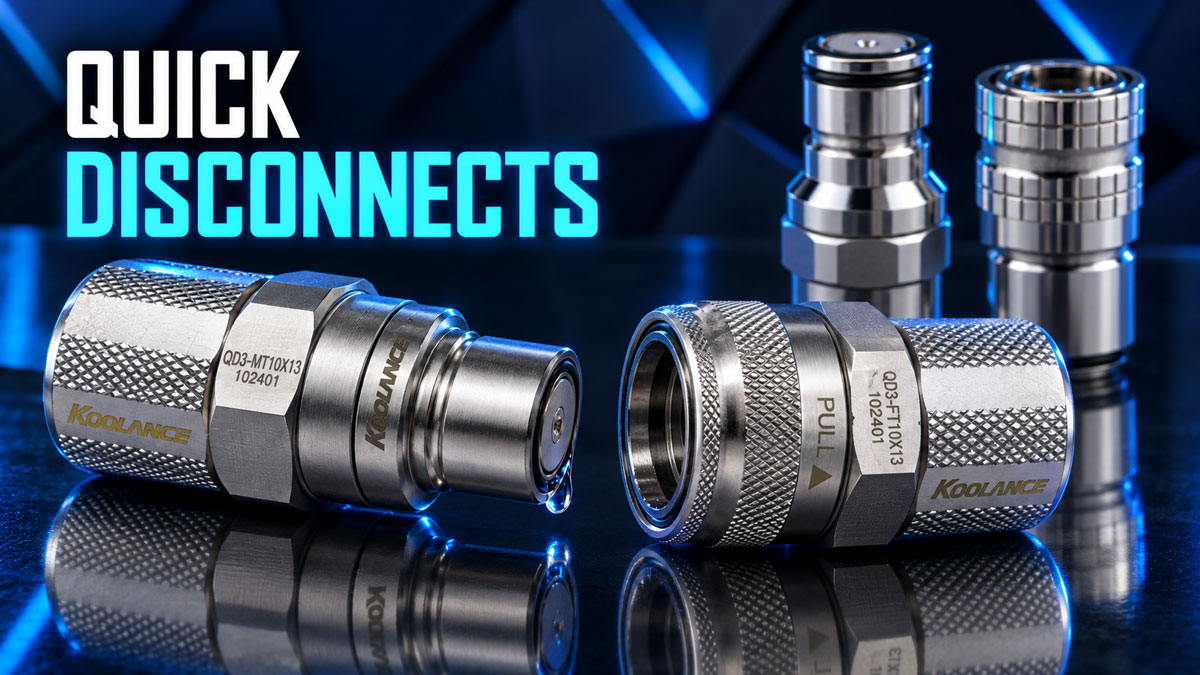
A QDC is a coupling in two halves. One half is the plug (often called the male QDC) and the other is the socket (the female QDC). Each half contains an internal shutoff valve, a spring and locking mechanism, and a seal, with a thread or hose interface on the other end.
When you push the two halves together and they lock, the valves open and coolant flows through. When you release the collar and pull them apart, the valves close and the coolant on each side is held in place. That is the whole point of the design. You can break a loop and reconnect it without draining it.
One terminology trap catches a lot of first time buyers. The QDC connection type and the thread type are separate properties. A single fitting might have a male QDC side with a male G1/4 thread, or a female QDC side with a male G1/4 thread, and so on. A male QDC is not the same thing as a male G1/4 thread. Always read both halves of the description before you buy.
How does a no spill QDC work?
The no spill mechanism is the pair of spring loaded valves inside the coupling. While the halves are joined, the valves are held open by the mating action and the coolant path is continuous. The moment you separate them, each valve springs shut against its seal, closing off both sides almost simultaneously.
Only the tiny amount of coolant sitting in the coupling face is exposed. That is why you can lift out an external radiator or a removable GPU section and set it aside without emptying the loop across your desk.
Do QDCs leak when disconnected?
This is where marketing language needs a reality check. Terms like ‘no spill’, ‘drip free’ and ‘zero spill’ are used differently by different brands and are not a shared measurement standard. Do not assume they all mean the same thing.
More usefully, look at manufacturer figures. Koolance, for example, specifies its QD3 no spill coupling as releasing approximately 0.2ml of liquid on disconnect under the stated conditions, with automatic shutoff. So the honest answer to whether a ‘no spill’ fitting is completely dry is no, not literally zero, but a very small, controlled amount.
The same Koolance QD3 specification also lists useful limits. Coolant loss can increase once internal pressure rises above roughly 7 psi (0.5 kgf/cm²). Maximum pressure tolerance is about 114 psi (8 kgf/cm²) at 25°C, with a maximum temperature of 80°C, EPDM seals and wetted materials including brass, nickel plating and stainless steel. That roughly 7 psi spill guidance is exactly why the most important safety rule with QDCs, which we come to further below, is to disconnect with the system off rather than under pump pressure.
Do QDCs restrict flow?
Yes, they do. The valve body changes and narrows the flow path, which adds local resistance. This is not a controversial point, and the manufacturers say so themselves. Thermal Grizzly, for instance, states plainly that its DeltaMate quick disconnects cause a slight pressure drop, restrict flow more than an ordinary fitting, and should therefore be used only in the quantity actually required. That is exactly our recommendation too.
The right question is not whether QDCs restrict flow (they do), but whether the extra restriction is meaningful in your particular loop. That depends on the QDC bore and design, the number of pairs, and everything else in the loop: the water blocks, the radiators, the elbows and fittings, the tubing and the pump curve.
If your loop is already quite restrictive and you plan to add several pairs, choose a lower restriction QDC and measure flow before and after. Do not assume you need to add a second pump to compensate. Measure the system first and solve the problem you actually have, not an imagined one.
QD3 vs QD4 vs other sizes
Within a single brand, larger bore couplings generally offer lower restriction at the cost of physical size. A cited Koolance QD4 variant, for example, uses a larger bore than the QD3 while sharing similar no spill behaviour (around 0.2ml on disconnect, the same roughly 7 psi no spill pressure guidance, about 114 psi maximum tolerance at 25°C, an 80°C limit and EPDM seals). The larger bore can flow more easily, but the fitting is physically bigger, which matters in a tight case.
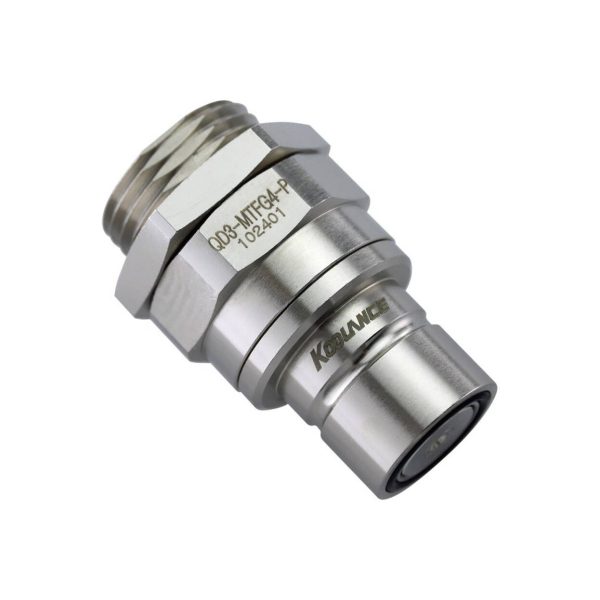
- SKU: WAZU-1292
- MPN: QD3-MTFG4-P
- EAN: 8295969151296
- Available for Collection
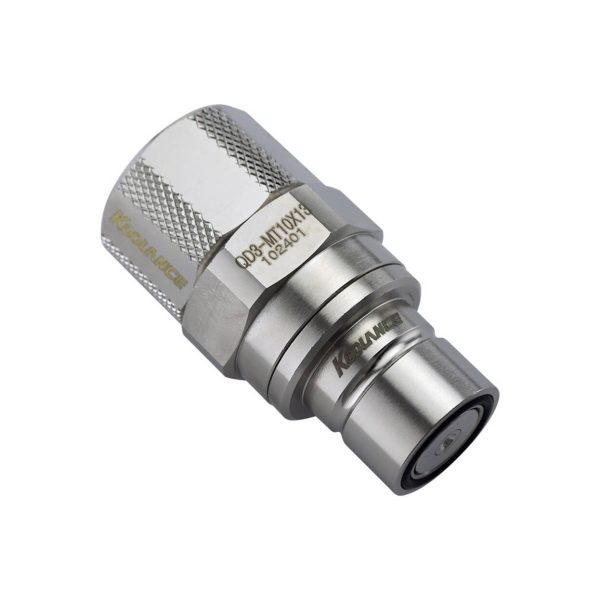
- SKU: WASA-472
- MPN: QD3-MT10X13
- EAN: 0829596915051
- Available for Collection
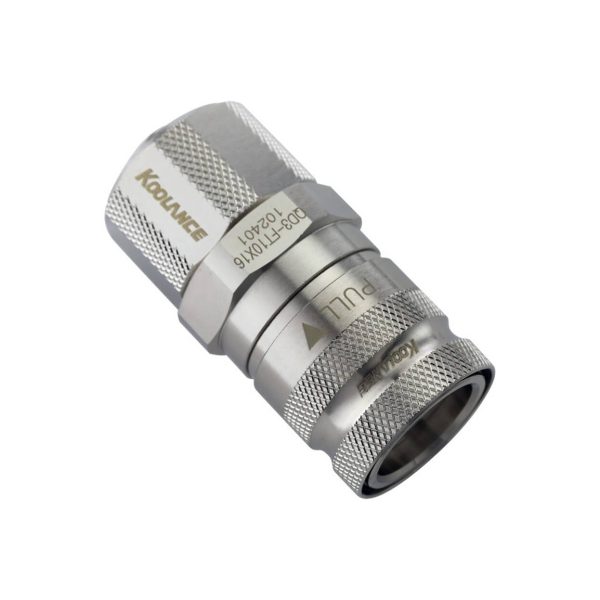
- SKU: WASA-475
- MPN: QD3-FT10X16
- EAN: 0829596914948
- Available for Collection
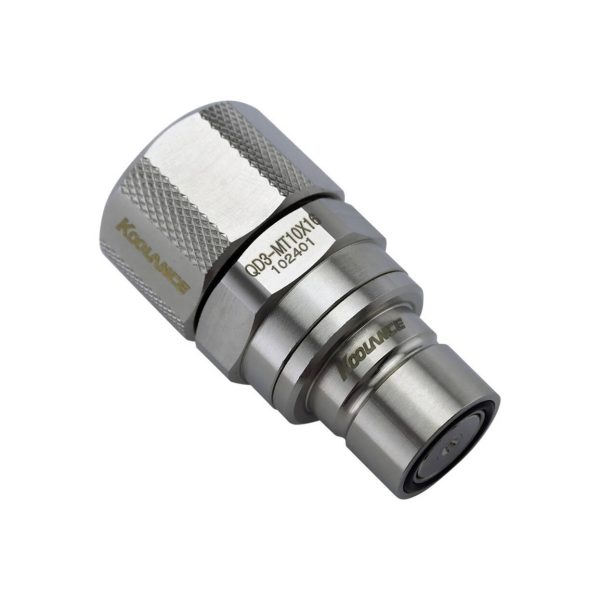
- SKU: WASA-474
- MPN: QD3-MT10X16
- EAN: 0829596915075
- Available for Collection
Two cautions here. First, do not assume a larger QDC is automatically better. It is only better if its size fits your build and its lower restriction actually helps your loop. Second, when comparing flow between couplings, compare them at the same flow rate using the manufacturer pressure drop data, not headline peak flow figures taken at different pressures.
And never assume two QDC families interconnect. A G1/4 thread tells you how the fitting screws into your loop, not whether one brand’s or series’ coupling mates with another’s. QD3 and QD4 are different series and do not mate with each other.
How many QDCs do I need?
This is the single most common ordering mistake, so it is important to be precise. One disconnectable fluid line needs one mating QDC pair: one male half and one female half. However, to fully remove an inline component or section from a loop, you normally have to break two fluid lines (the supply and the return).
That means a removable external radiator usually needs two QDC pairs, which is four QDC halves in total. If you buy two identical halves, or only one pair for a component that needs two, you will not be able to complete the loop. Picture it as: PC out, into a QDC pair, through the external radiator, into a second QDC pair, back into the PC.
Where should QDCs go?
External radiator
This is the classic use case. A pair on the supply and a pair on the return let you move the PC and an external radiator (such as a MO-RA) independently, service one side without draining the other, and route cleanly through a panel.
Removable GPU
QDCs let you drop a water cooled graphics card out of the loop for maintenance or transport without draining everything. Again, that is two lines, so two pairs are needed (into and out of the GPU block).
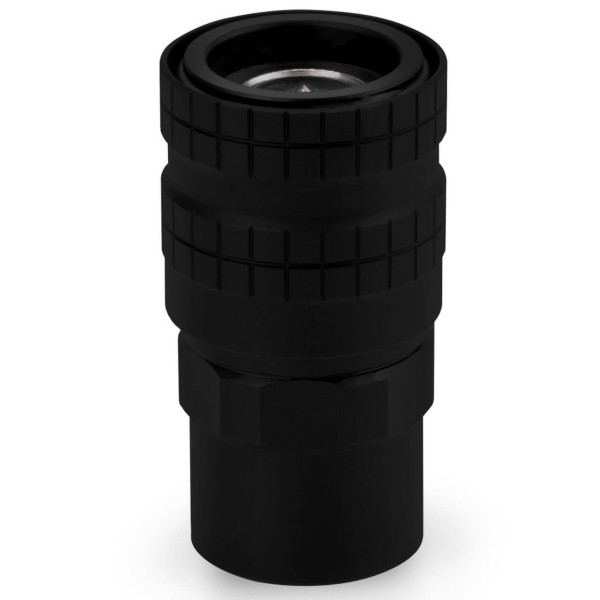
- SKU: WAZU-1366
- MPN: TG-DM-QDC-0002
- EAN: 4260711993619
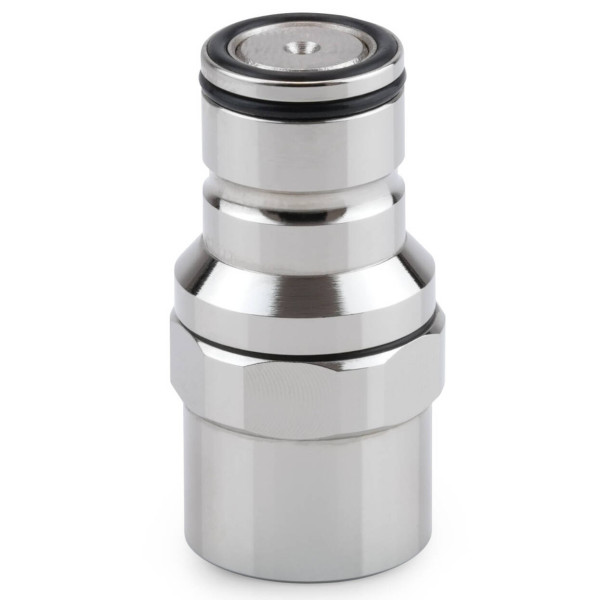
- SKU: WAZU-1362
- MPN: TG-DM-QDC-0320
- EAN: 4260711993749
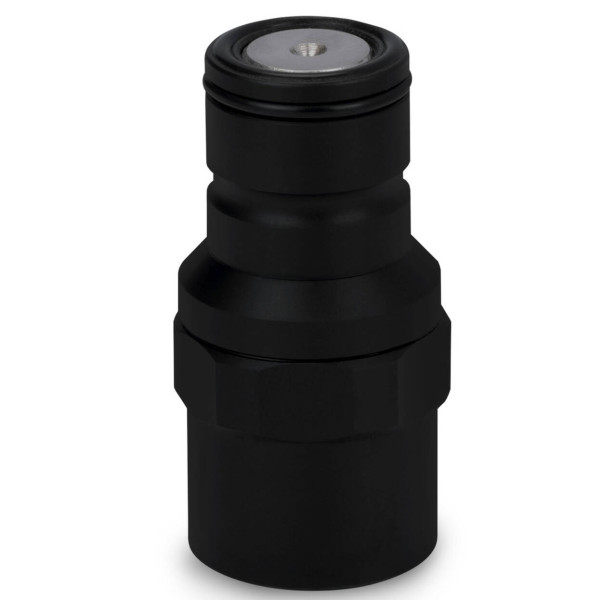
- SKU: WAZU-1368
- MPN: TG-DM-QDC-0020
- EAN: 4260711993589
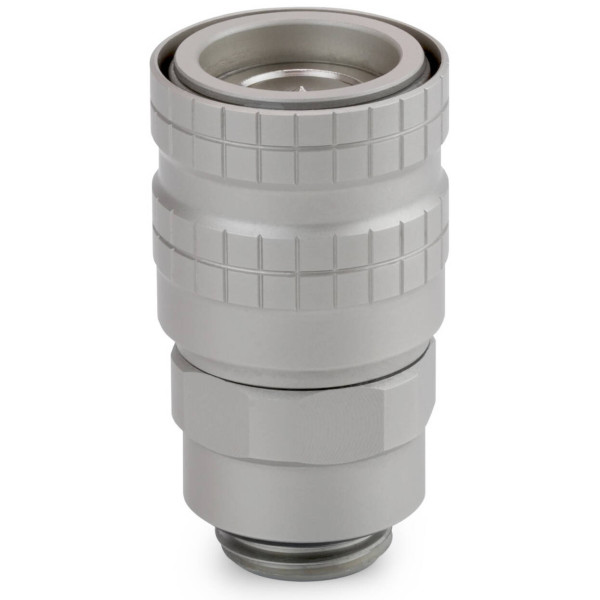
- SKU: WAZU-1364
- MPN: TG-DM-QDC-0201
- EAN: 4260711993688
Test bench
On a test bench where hardware changes constantly, QDCs turn a drain and refill chore into a quick swap. That is why they are popular on service stations.
Server and workstation
In serviceable workstations and industrial systems, QDCs make maintenance a design feature rather than an ordeal. Alphacool’s ES Industry range, aimed at data centres, workstations and industrial use, offers bulkhead style quick connect couplings in a nylon body with a G1/4 bulkhead format for exactly this purpose. This is the point where QDCs stop being an enthusiast extra and become a genuine serviceability strategy.
Inline vs bulkhead QDCs
Inline QDCs sit in the tubing itself, which makes them flexible to place and fairly easy to retrofit. They suit flexible tube, external radiator hose tails and removable components. The downside is that a heavy coupling can hang from an unsupported length of tube, and the connection point at the chassis boundary is less tidy.
Bulkhead QDCs mount through a panel, a rear bracket or a purpose built pass through, giving you a fixed, clean in and out location with proper strain relief. They are ideal for workstation and server enclosures. The trade off is that they need a compatible hole or bracket and enough room around the coupling for your hand and the release sleeve.
How to make the connections directional
A neat trick, which Thermal Grizzly documents for the DeltaMate, is to use differently threaded or differently sexed QDC combinations so a removable section can only be reconnected the correct way round. On a removable GPU, for example, you can arrange the couplings so the loop supply physically connects only to the GPU inlet and the return only to the GPU outlet.
That removes any chance of reconnecting the section backwards, which is a genuinely useful safeguard on hardware you disconnect often, for the sake of a little planning.
The one safety rule: do not disconnect with the pump running
However good the no spill mechanism is, shut the system down and stop the pump before you separate a QDC. Disconnecting under pump pressure invites a larger coolant release, can leave the pump running against a closed path (or dry, depending on the loop layout), and adds needless spill and electrical risk near live equipment.
‘No spill’ describes the small residual release when you part the halves at rest. It is not permission to break a loop while it is running. Power down, then disconnect.
Seal care
Some manufacturers caution against unnecessary dry actuation, because the seals rely on being used wet and suitably lubricated. Whatever you do, follow the specific fitting’s instructions, keep the sealing faces clean, inspect the O-rings, avoid incompatible oils or chemicals, and run a coolant that is compatible with EPDM seals and the rest of your loop materials. Do not reach for a generic lubricant unless the fitting manufacturer explicitly allows it.
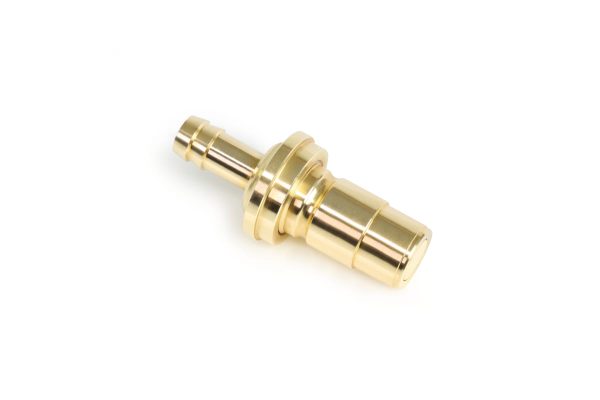
- SKU: 1025761
- MPN: 14637
- EAN: 4250197146371
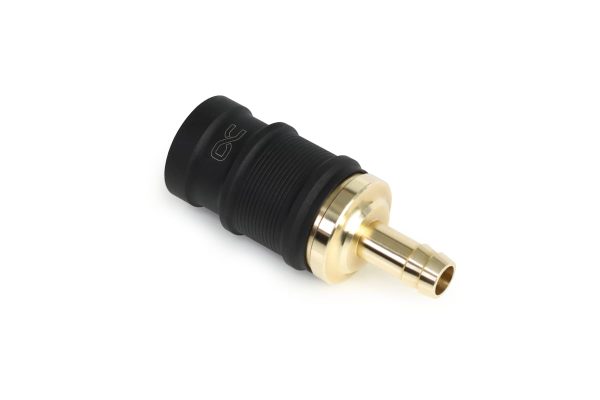
- SKU: 1025763
- MPN: 14638
- EAN: 4250197146388
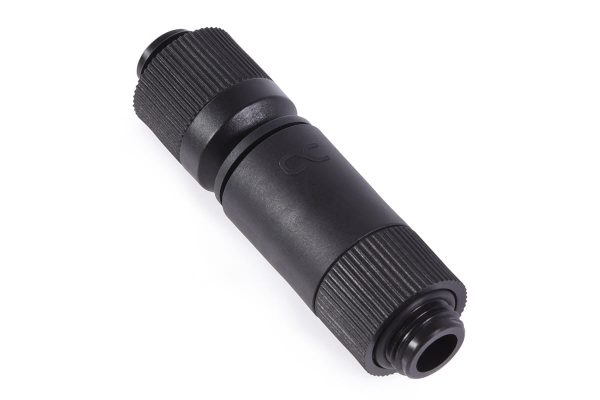
- SKU: 1019608
- MPN: 17537
- EAN: 4250197175371
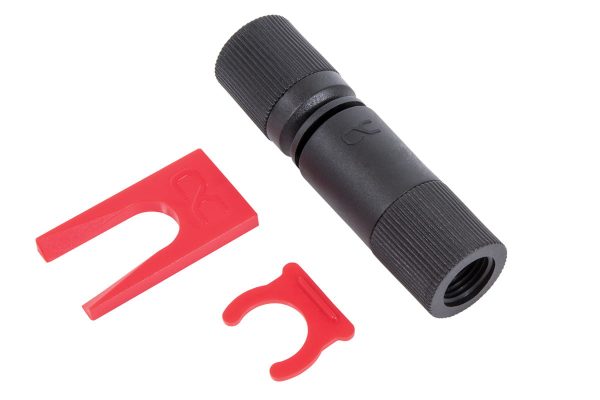
- SKU: 1020306
- MPN: 17569
- EAN: 4250197175692
Common QDC mistakes
The mistakes we see most often are as follows: buying two identical halves instead of a mating male and female pair, ordering only one pair for a component that needs two lines, mixing incompatible series and assuming a shared G1/4 thread makes them mate, fitting more pairs than the system needs and paying for it in restriction, leaving no hand clearance for the release collar, hanging a heavy coupling from an unsupported tube, and disconnecting with the pump still running.
Every one of these is avoidable with a little planning before you order.
Frequently asked questions
Are quick disconnects worth it?
They are worth it wherever they create real modularity: external radiators, removable graphics cards, test benches and serviceable workstations. If your loop is sealed inside one case and rarely opened, QDCs add cost and restriction for relatively little benefit. Use them at the service boundaries that actually make your life easier, not everywhere.
Do QDCs lower flow?
Yes. Every QDC adds some restriction, and manufacturers such as Thermal Grizzly acknowledge this directly. Whether it matters depends on your loop and how many pairs you add. Choose a lower restriction coupling if your loop is already restrictive, and measure flow before and after rather than guessing.
Are no spill fittings completely dry?
No, not literally. A quality no spill coupling releases only a very small, controlled amount. Koolance, for example, specifies about 0.2ml on disconnect for its QD3 under the stated conditions. That is a drop, not a puddle, but it is not zero. Keep a cloth handy and disconnect with the system off.
Can I mix Koolance QD3 and QD4?
No. QD3 and QD4 are different series with different couplings and do not mate with each other, even though both are available with G1/4 threads. The thread only tells you how the fitting joins your loop, not which coupling it connects to. Keep both halves of any disconnect within the same series.
Do I need two QDCs for an external radiator?
You need two QDC pairs, which is four halves, because you are breaking two fluid lines (the supply and the return). One pair only handles one line. This is the most common ordering mistake, so count the lines you need to break and buy a mating pair for each.