




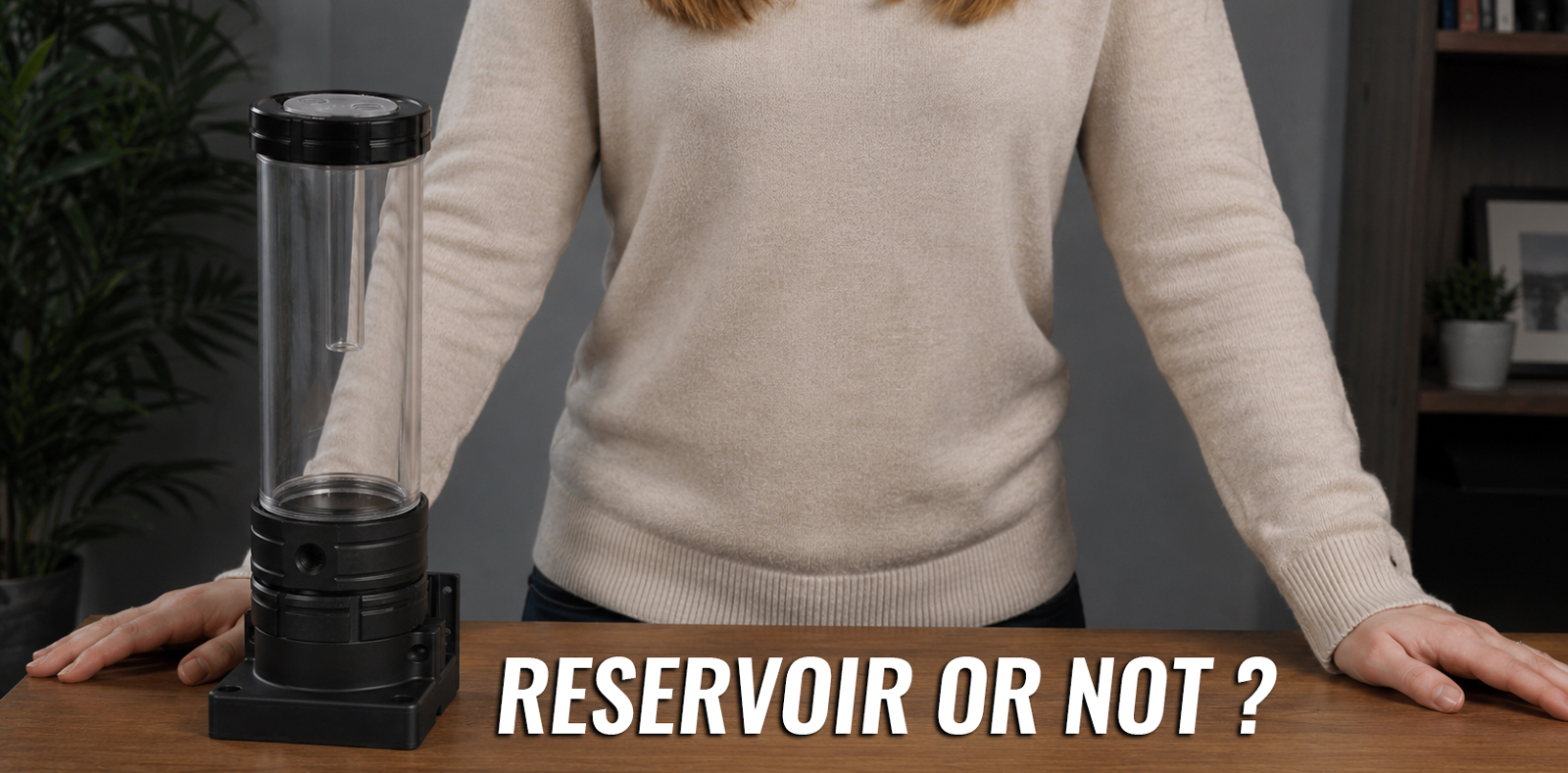
Do You Need a Reservoir for Water Cooling?
Okay, so. When I first got into custom loops, I genuinely thought the reservoir was just the fancy tube of coloured liquid people showed off in their build photos. Turns out there’s a lot more going on in there than looking pretty. The short answer to the title question is no, you don’t strictly need one. A custom loop can technically run without a reservoir. But here’s the thing. Nearly every experienced builder recommends putting one in anyway, and once you understand what it actually does, you’ll probably want one too. So let me break down what it’s for, bust the one big myth about it, and be honest about the single situation where skipping one genuinely makes sense.
What a reservoir actually does
It’s easy to look at a reservoir and think “okay, pretty tube of liquid, got it.” Spoiler: it is NOT just for looks. It has three real jobs, and the first one matters most.
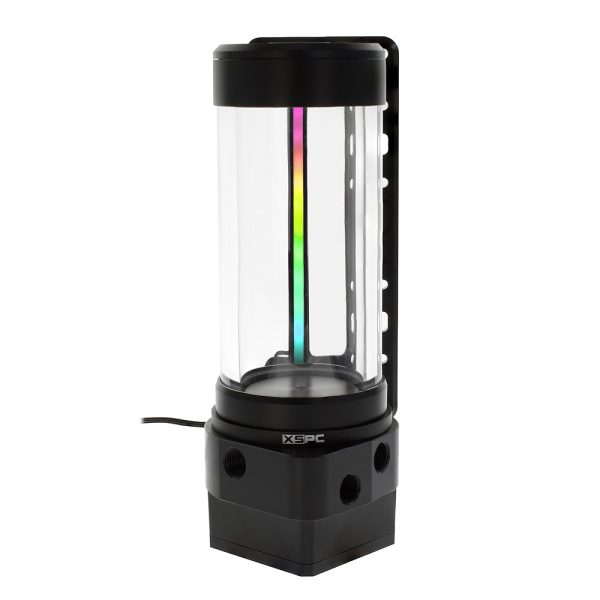
Job one is feeding your pump. Watercooling pumps are clever bits of engineering, but they’re designed to never run dry. Running dry kills them. By sitting the reservoir directly before the pump in your loop order, you give it a steady, air free supply of coolant so it always has something to push. Job two is making filling easy. The reservoir is where you pour coolant in, and it gives the loop somewhere to draw from while you fill. Job three is getting the air out. When coolant flows into the wide space of a reservoir, it slows right down. That’s exactly when trapped air bubbles get a chance to rise up and escape instead of racing around your loop. A thin fill tube can’t do that nearly as well.
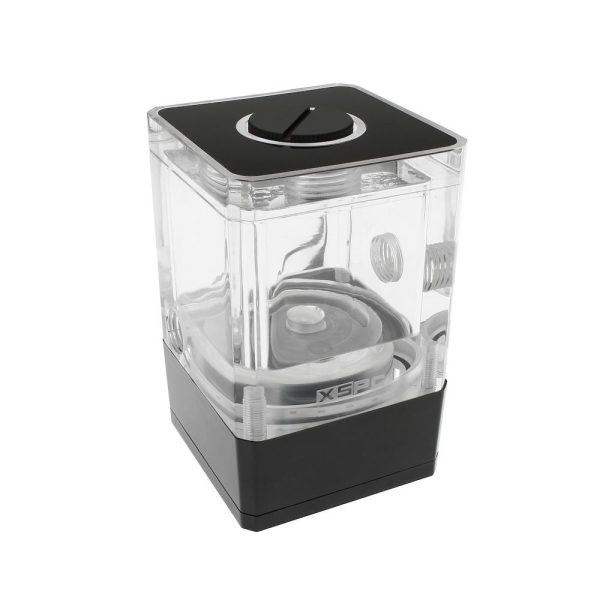
- SKU: XS-PMP-014
- MPN: 5060596651869
- EAN: 5060596651869
- Available for Collection
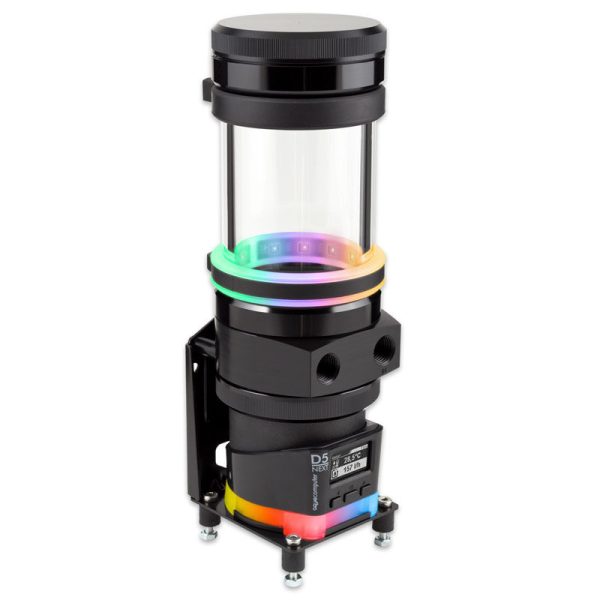
- SKU: WAAU-611
- MPN: 34100
- EAN: 4260473312574
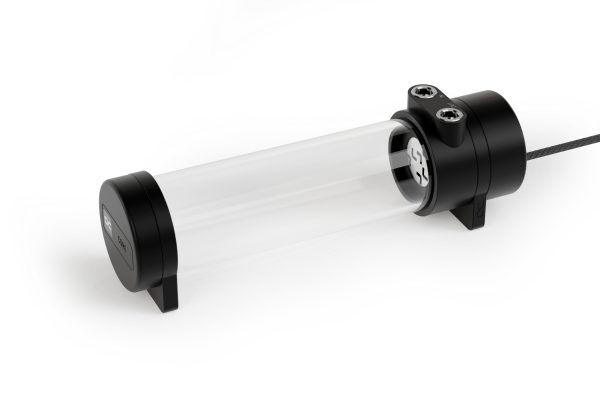
- SKU: 1023976
- MPN: 13742
- EAN: 4250197137423
- SKU: XS-PMP-010
- MPN: 5060596651661
- EAN: 5060596651661
There’s a quiet fourth job too. Your coolant level slowly drops over time, even with zero leaks, because a little water vapour passes through the tubing walls. That’s completely normal, not a fault. A reservoir makes that slow drop easy to see and easy to top up. Without one, you’ve got no simple way to even notice it’s happening.
The myth.. bigger reservoir, better cooling
Let me stop this one before you spend money on it. A bigger reservoir does not lower your temperatures. It only changes how long the loop takes to reach its maximum temperature, not what that maximum actually is. Once everything is warmed up and running, a tiny reservoir and a giant one settle at the same temp. So please don’t buy a massive reservoir hoping for better cooling.
All a huge one really gets you is a bigger case to fit it, more coolant to buy to fill it, and less money left for the parts that genuinely move heat. Your radiators, water blocks and fans. Spend it there instead.
The one place size does matter is maintenance. A reservoir closer in size to your total loop volume makes draining and refilling a bit cleaner. That’s a convenience thing, not a temperature thing.
Going without?
You can run a loop with just a small fill line, called a T-line, instead of a reservoir. It works. It’s smaller and it can look very clean. But the trade off is real, and it’s mostly about filling and bleeding.
- SKU: 1022051
- MPN: 13466
- EAN: 4250197134668
- Available for Collection
- SKU: BAR-FIT99
- MPN: TCDZS-V1-B
- EAN: 6937826601316
- Available for Collection
- SKU: WAAD-423
- MPN: BP-CBWP-C04
- EAN: 4711946747947
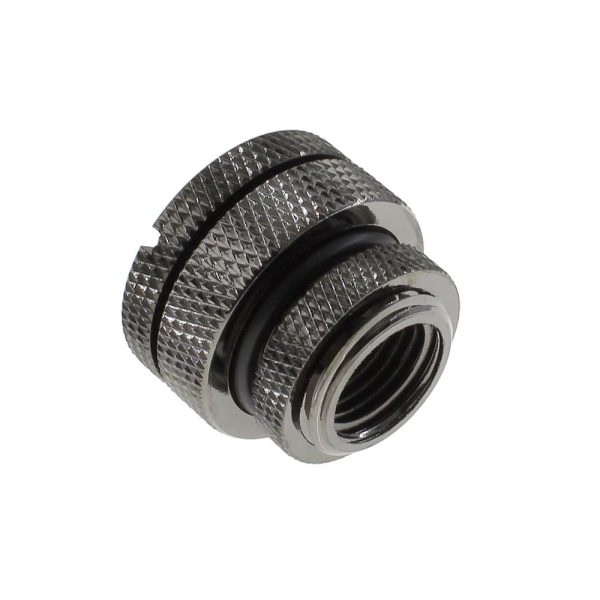
- SKU: XSM20FILLBLK
- MPN: n/a
- EAN: 5060175581662
- Available for Collection
Getting the air out of a T-line build takes a LOT longer, because a T-line has almost no space for bubbles to gather and escape. To put the difference in perspective, even a modest reservoir holds something like thirty odd times more liquid than a T-line has room to work with. So the bubbles that a reservoir would catch in one pass tend to just get pushed back around a T-line loop, again and again, sometimes for weeks.
And this is the part people don’t expect. Bleeding air isn’t a one and done job even in a good loop. Tiny bubbles keep circulating and settling out for a while after your first fill. A reservoir lets you watch that happen and top up as it does. Without one, you’re working blind.
The one time going reservoir less makes real sense
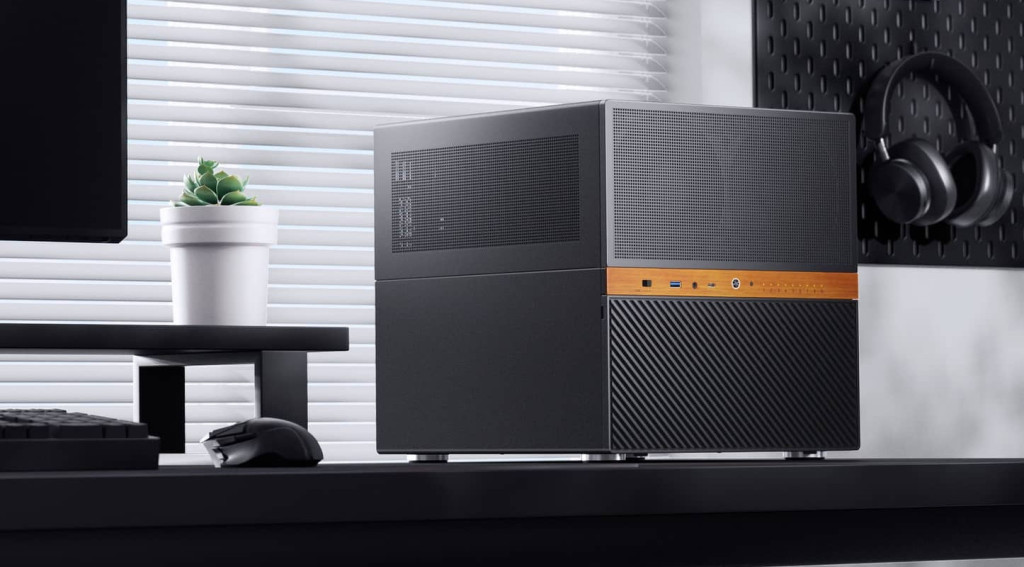
Small form factor builds. If you’re working in a genuinely tiny PC case and space is the thing you simply do not have, going without a reservoir for that ultra clean look is a fair, defensible choice rather than a corner cut. Even builders who love that look are split on it though, and the common verdict is telling. It does look great, but the extra filling and bleeding hassle is a lot to take on for the aesthetic alone. Which leads to the middle ground I’d actually recommend.
My take
For almost everyone, put a reservoir in. And if space is tight, here’s the trick. It doesn’t have to be big or even visible. Get a small one and tuck it away somewhere. You keep nearly all the benefit, the easy fills, the air bleeding, the level gauge, without the bulk.
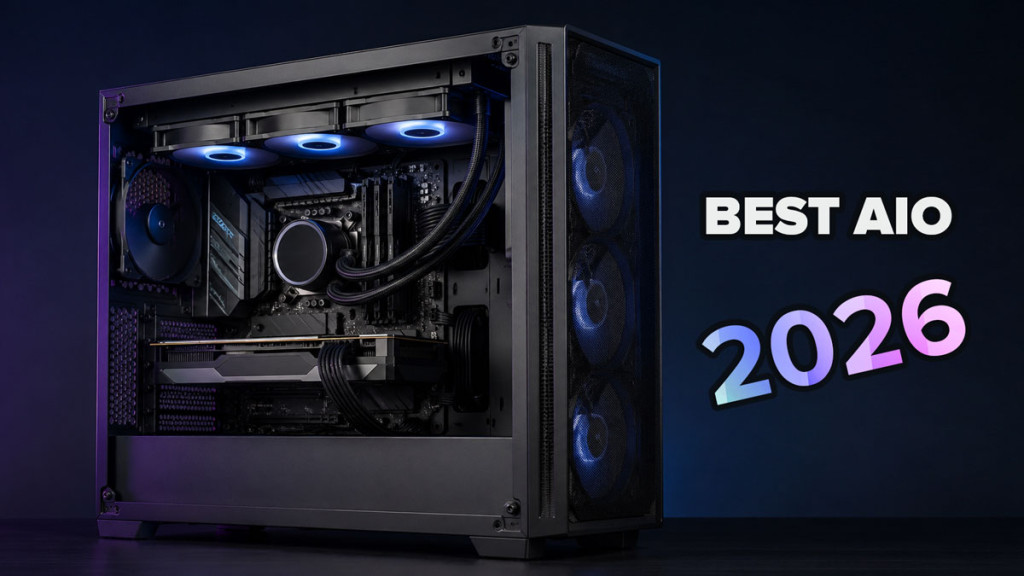
One quick note if you’re comparing cooling types. This whole question is a custom loop thing. Sealed AIO coolers already have a small reservoir built in that you never see or touch, so if that’s your route you don’t need to think about any of this at all. But if you’re building your own loop, even a tiny reservoir will save you a lot of patience later. Promise it’s one of those things future you will genuinely thank you for.