




Loop Planning, Tube Routing and Order
Okay, so. When I was planning my first loop I must have stared at photos of other people’s builds for about three hours, trying to work out why their tubing looked so clean and mine looked like a mess of spaghetti before I’d even started. Turns out the secret isn’t some magical building talent. It’s just planning. A well-routed loop looks better, flows better, and saves you from kinks and restrictions that’ll make your life harder down the line.
Let me walk you through how to think about it.
Planning the Loop: CPU to GPU to Radiator to Pump/Reservoir
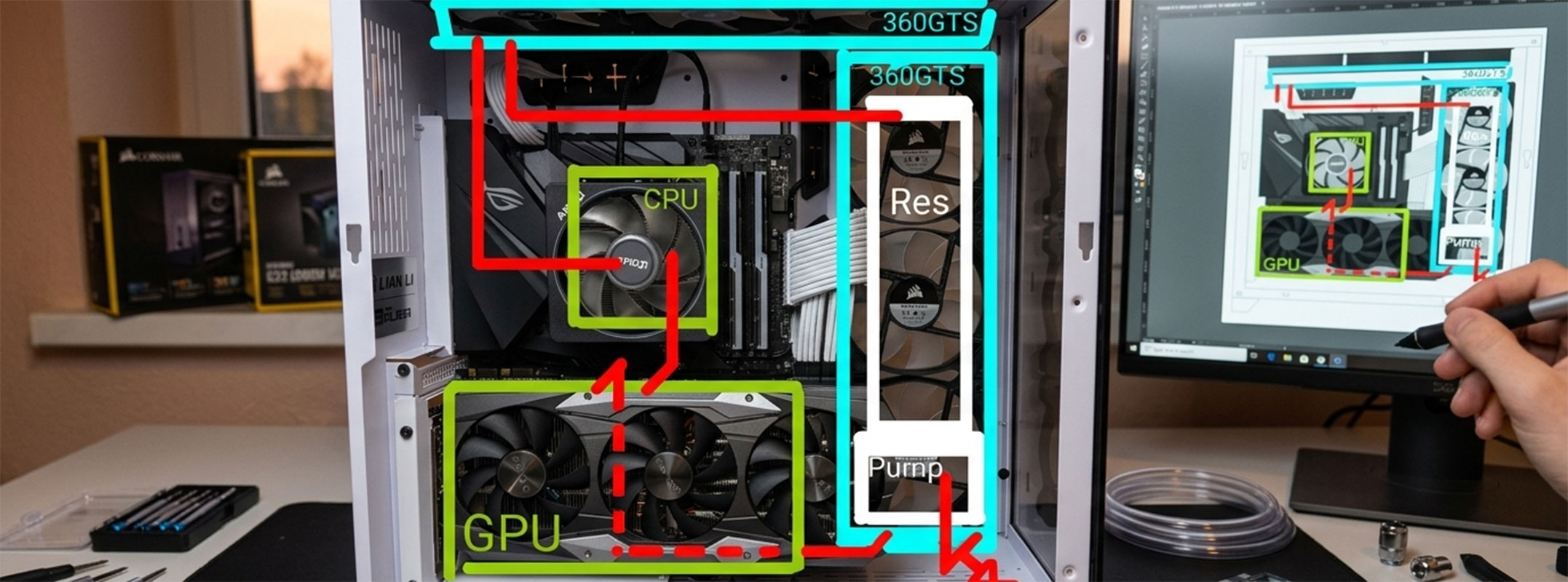
Here’s the main idea. Your coolant needs to flow through every component in one continuous cycle. One big circle. The order you put things in (CPU block, GPU block, radiator, pump and reservoir) can actually vary, and your overall cooling performance won’t really change based on what comes first or last. I’ll get into that more in a second, but first let’s look at a typical loop order so you’ve got a starting point.
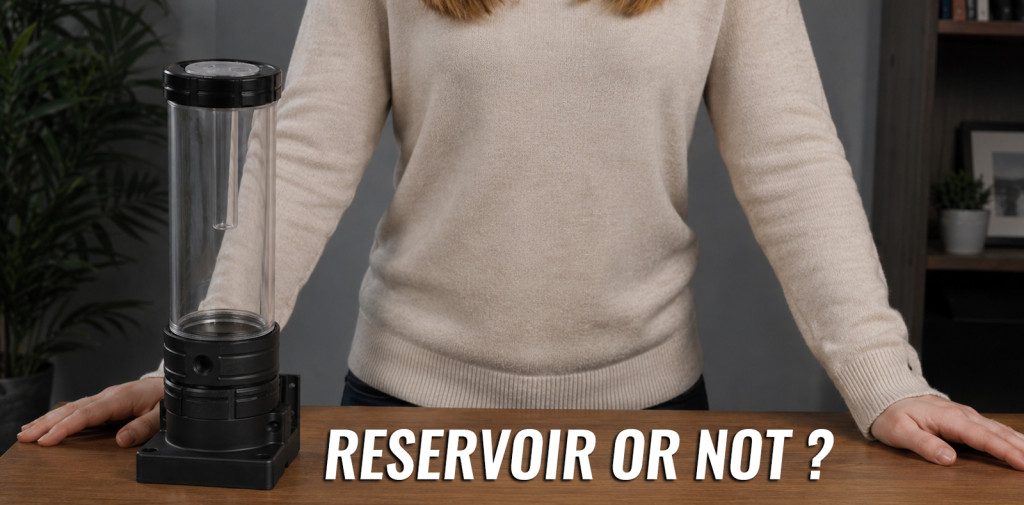
Start with the reservoir and pump. The reservoir should feed directly into the pump so it never runs dry. If you can, position the reservoir slightly above the pump. That way gravity helps feed coolant down into it, which is exactly what you want.
CPU block. From the pump, route your tubing to the CPU water block. The CPU is usually your hottest component, so cooling it first makes sense. Try to keep your runs as straight as you can here. Fewer bends means less restriction on flow.
GPU block. After the CPU, route tubing to the GPU block. This is typically your second-biggest heat source.
Radiator. From the GPU block, the tubing goes to the radiator. By this point your coolant has picked up heat from both the CPU and GPU, and the radiator is where it dumps that heat. You can mount the radiator at the top, front, or bottom of your case depending on your layout. Just try to avoid sharp angles in the tubing runs going to and from it.
Return to the reservoir. After the radiator, route tubing back to the reservoir and that completes the loop. The cooled liquid gets cycled back through the pump for another pass. And round it goes.
Component Order: It Does Not Matter
This is the question everyone asks, and honestly, the answer is way simpler than the internet makes it sound.
Does it matter which component gets cooled first? No. Once coolant is circulating, it reaches thermal equilibrium pretty quickly. The temperature stabilises as it flows continuously through the loop. Whether you cool the CPU before the GPU or the other way around makes a negligible difference to your overall temps.
What DOES matter is that all your components are connected in a single loop without a load of excessive bends, tight angles, or restrictions getting in the way of flow. Water blocks work efficiently regardless of flow direction too, so coolant can enter or exit from either port. So that’s one less thing to worry about.
- SKU: XS-FLX-012
- MPN: 5060596651302
- EAN: 5060596651302
- Available for Collection
- SKU: XS-FLX-008
- MPN: n/a
- EAN: 5060596650220
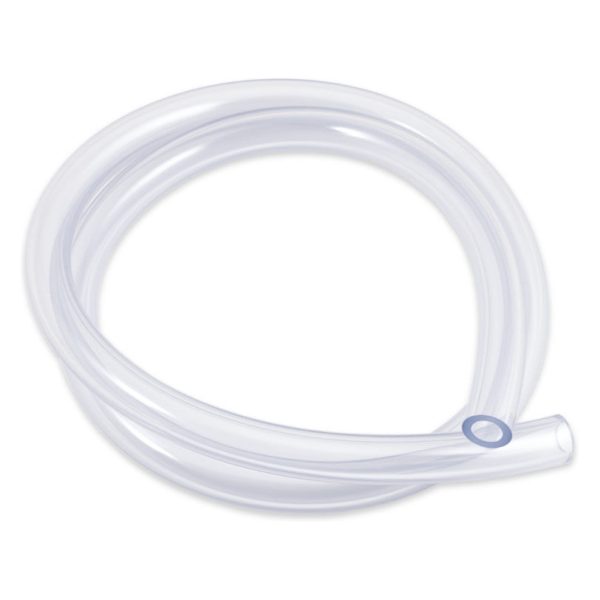
- SKU: WAZU-1261
- MPN: 61046
- EAN: 4260473315186
- Available for Collection
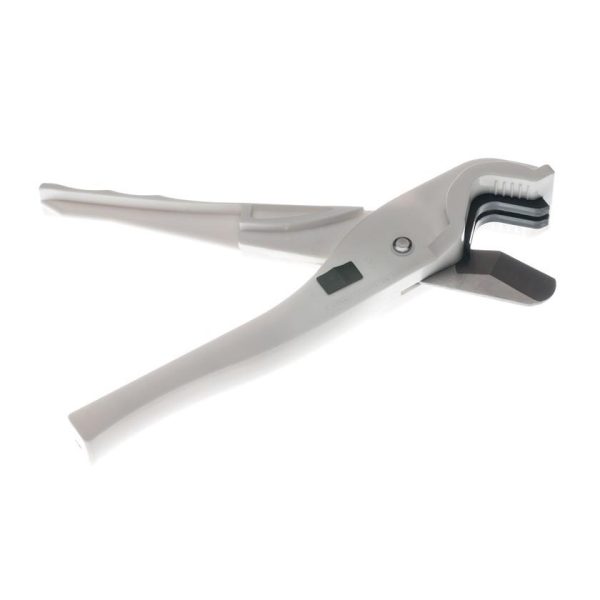
- SKU: BAR-HT03
- MPN: PRG-V1
- EAN: 6937826600074
- Available for Collection
Tips for Efficient Tube Routing
Keep bends and length to a minimum. Shorter, more direct tubing runs are better for flow rate and cooling efficiency. If you’re using soft tube, plan your routes so the tubing doesn’t have to make tight turns that could kink. A kink in a tube is basically a traffic jam for your coolant, and nobody wants that.
Use angled fittings where you need them. In tight spaces or awkward routing situations, 90-degree and 45-degree fittings let you guide tubing cleanly without forcing a kink. They’re especially useful with hard tube where your bends need to be precise.
Keep the loop simple. Honestly, this one is easy to forget when you’re deep in the planning stage and getting ambitious. Avoid adding unnecessary components or overly complex routing. A clean, simple loop is easier to maintain and generally performs better than a cluttered one.
The thing nobody tells you is that good tube routing isn’t about being clever. It’s about being practical. The order of your components matters far less than making sure flow is smooth, unrestricted, and leak-free. Keep your runs short, avoid sharp bends, use quality fittings throughout, and you’re sorted. Promise it’s easier than it sounds once you’ve done it once.