




Best Reservoir and Pump Combos for Custom Loops
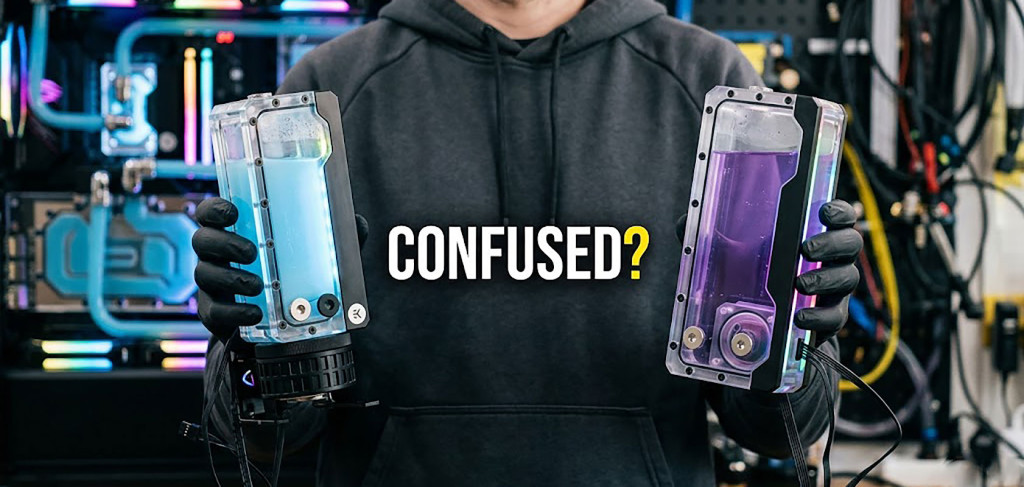
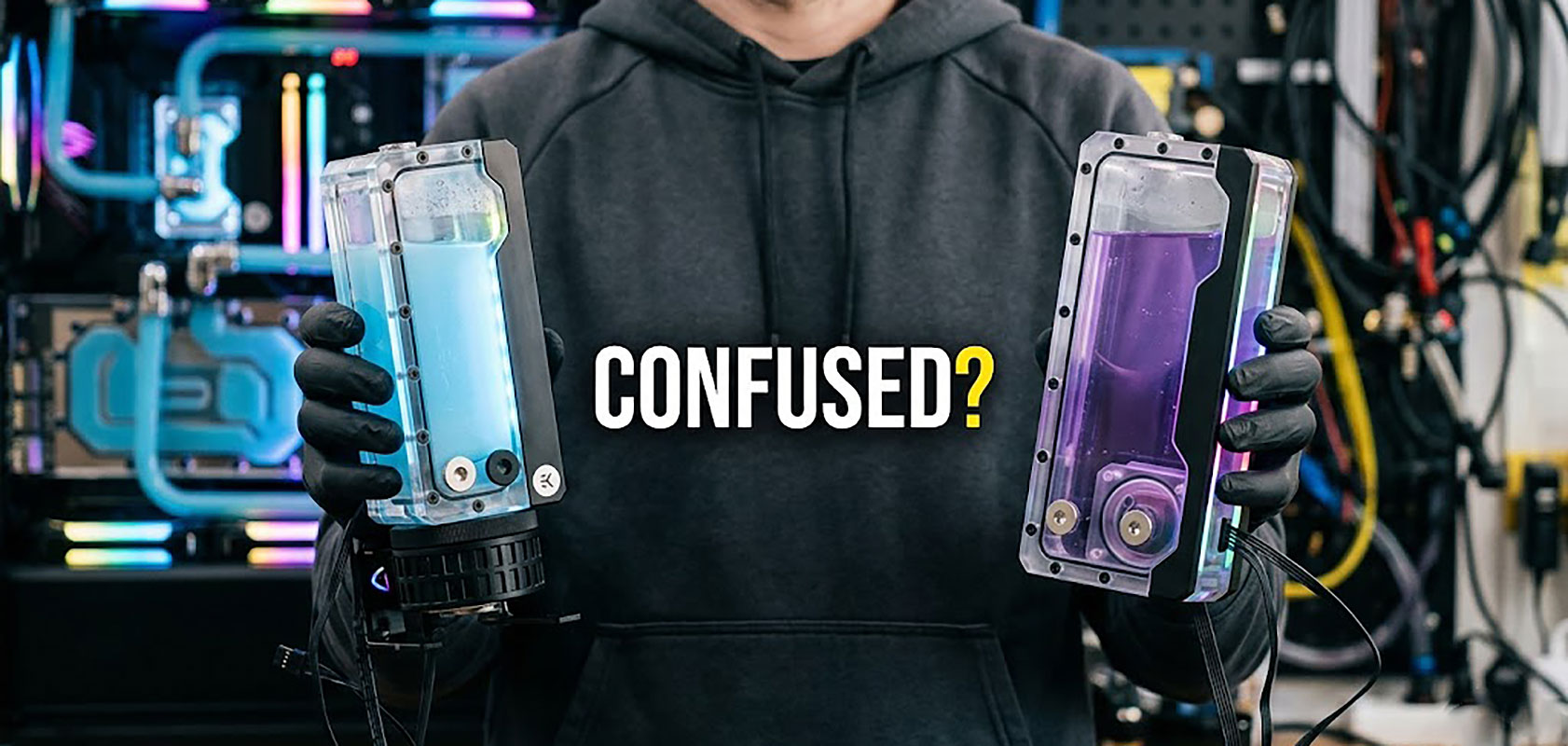
If you are building a custom loop, you are going to need two things at the very minimum: a pump to move your coolant and a reservoir to hold it. A combo unit rolls both into a single assembly, with the reservoir sitting directly above the pump so that coolant is gravity-fed to the inlet at all times. It is the safest, simplest, and most space-efficient arrangement for the vast majority of builds. But with so many options on the market, which combo unit actually deserves your money? Let us break it down.
D5 vs DDC. The Only Decision That Matters
Every custom loop pump on sale today is built around one of two Xylem motor platforms: the D5 and the DDC. No other pumps have meaningfully displaced them in over fifteen years, and I do not see that changing any time soon.
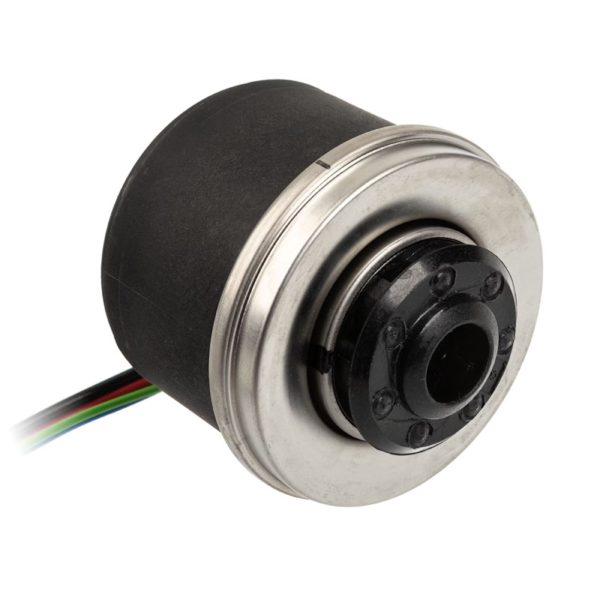
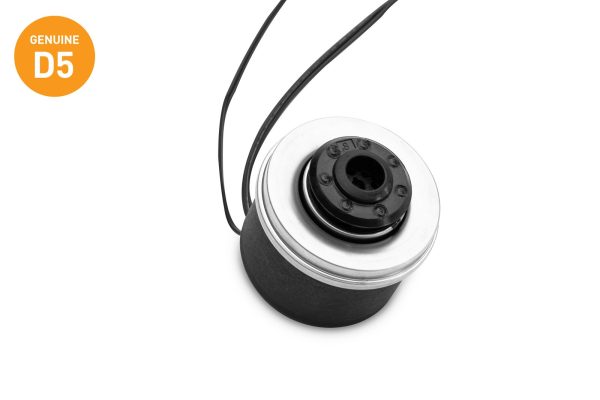
The D5 is a wet-rotor centrifugal pump. The rotor sits submerged in coolant, which lubricates the ceramic bearing and cools the motor simultaneously. It delivers up to 1,500 litres per hour at zero restriction, though real-world flow in a typical CPU plus GPU loop with two radiators is closer to 200-400 litres per hour depending on speed. At 60 percent speed it moves roughly 210 litres per hour, which is above the point where diminishing returns begin in modern water blocks. The D5 is rated for 50,000 hours MTBF, and community reports of pumps running for over a decade without failure are not uncommon. At speed settings below 50 percent PWM, it is essentially inaudible from a metre away. Easy on the ears, in other words.
- SKU: LF-PMP002
- MPN: 6085C2015
- EAN: 5060684862153
- Available for Collection
- SKU: WAEK-2230
- MPN: 3831109848494
- EAN: 3831109848494
- Available for Collection
- SKU: 49064
- MPN: 6500023
- EAN: 4049469056810
- Available for Collection

- SKU: 49135
- MPN: 13914
- EAN: 4049469175511
- Available for Collection
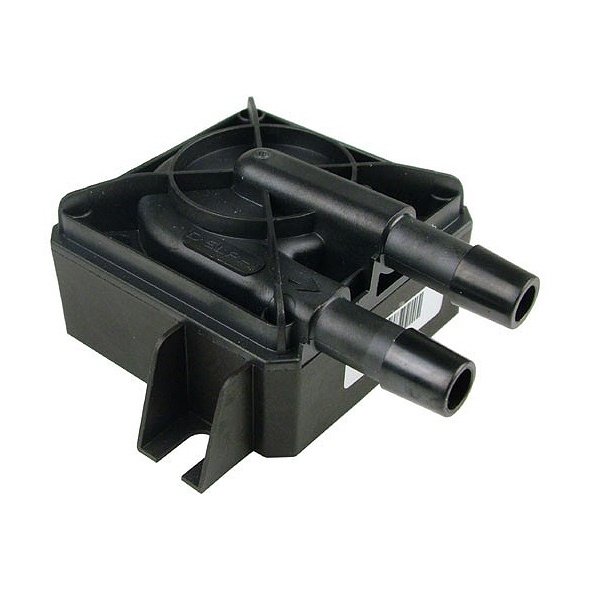
The DDC uses an air-cooled brushless motor in a physically compact package. It delivers higher head pressure than the D5 (up to 5.2 metres versus 3.9 metres), which maintains flow better in extremely restrictive loops. However, it runs louder at equivalent flow rates, produces more vibration, and requires proper anti-vibration mounting to avoid transferring resonance into the case. Community testing consistently shows the D5 at 70 percent speed produces the same noise as a DDC at 50 percent but delivers double the flow rate. That is quite a significant difference.
My recommendation is straightforward: choose the D5 for virtually every build. The DDC makes sense only when physical space prevents a D5 from fitting, when the loop is extremely restrictive with multiple tight-microfin blocks in series, or when a case-specific distro plate requires a DDC pump bay.
Reservoir Types
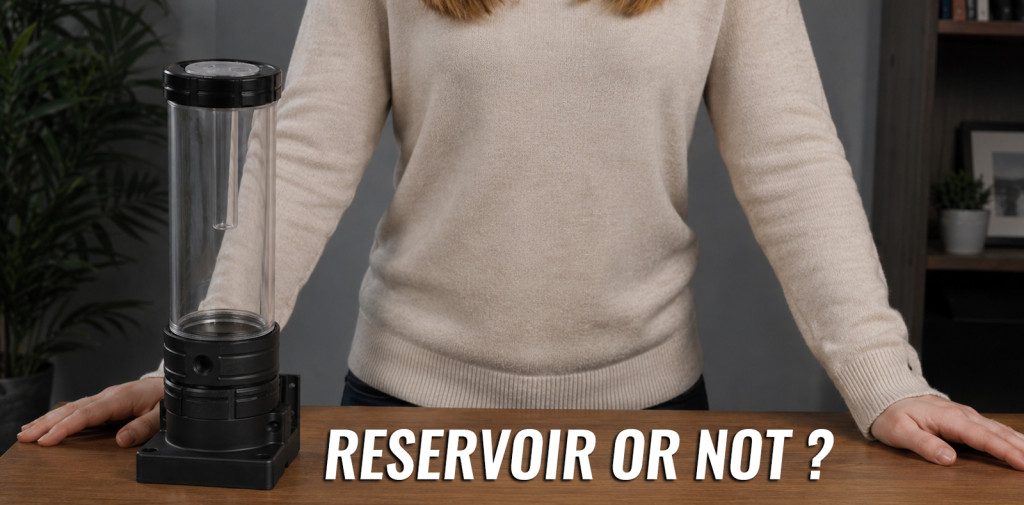
Tube reservoirs are the classic form. A vertical cylinder sealed at both ends with G1/4 ports, available in sizes from roughly 150ml to 500ml capacity. The tube material matters more than you might expect for long-term satisfaction. Acrylic is transparent and affordable, but it can develop micro-scratches and discolour over time. Borosilicate glass, used by Watercool and Aqua Computer, offers superior scratch resistance, chemical inertness, and optical clarity that does not degrade with age. It is a genuine premium upgrade.
Bear in mind that reservoir capacity beyond roughly 150ml provides no thermal benefit. The fluid volume in a PC loop is simply too small to act as a meaningful thermal buffer. Larger reservoirs are easier to fill and bleed, but they do not lower temperatures. As such, choose your size based on aesthetics and case clearance, not cooling expectations.
Distro plates are flat acrylic panels with internal machined channels that serve as reservoir, coolant routing system, and pump mount in one unit. They are designed for specific cases and dramatically simplify tubing routing. That said, they are expensive, case-locked, harder to bleed than tube reservoirs due to lower internal volume, and have more potential leak points at every G1/4 port. They suit builders using a supported case who want the cleanest possible aesthetic and are willing to pay the premium.
Combo Units Worth Considering
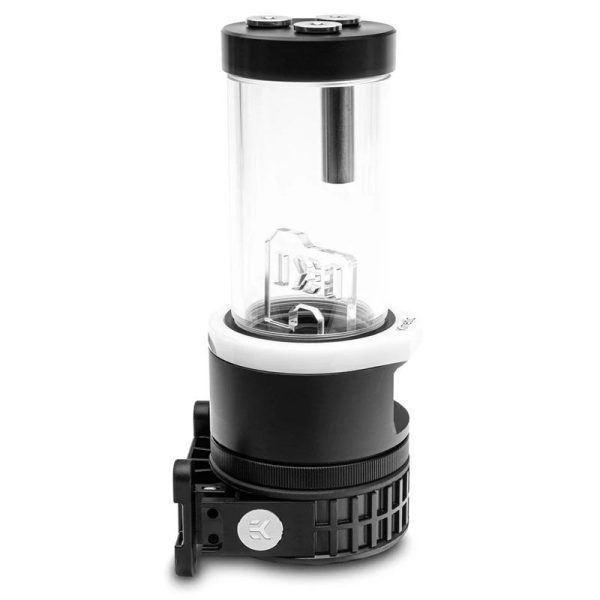
EK’s Quantum Kinetic range includes the TBE tube series and the FLT flat series. The TBE 200 D5 is the benchmark tube combo, with an acrylic or acetal body, addressable RGB, and six G1/4 ports. The third-generation FLT series mounts directly to fan mounting points without drilling, making it quite versatile for unusual case placements. Both use genuine Xylem D5 motors.
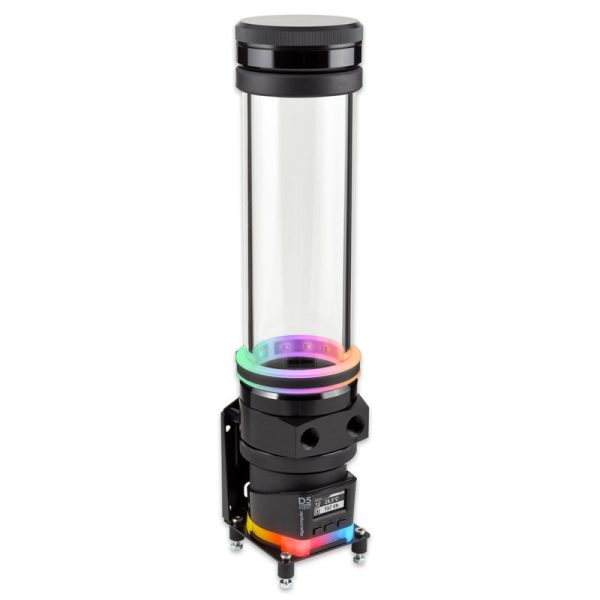
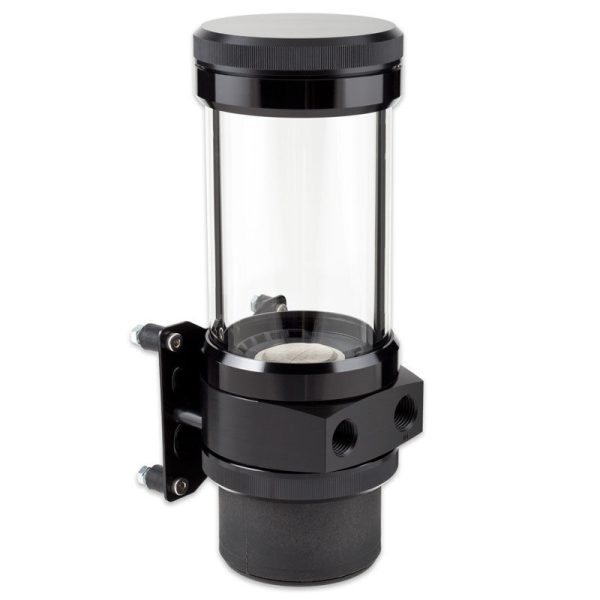
Watercool’s Heatkiller Tube series uses genuine borosilicate glass for the tube section, an anti-cyclone inlay in the pump adapter that reduces vortex formation and noise, and a flow-optimised pump chamber. Available in 100mm, 150mm, and 200mm tube lengths. The glass tube is a proper step up from acrylic, offering superior scratch resistance and chemical compatibility that does not degrade with age. These are manufactured entirely in Germany. We stock the full Heatkiller Tube range.
- SKU: WAAU-613
- MPN: 34110
- EAN: 4260473312598
- SKU: WAAU-608
- MPN: 34097
- EAN: 4260473312543
- SKU: WAEK-1848
- MPN: 3831109818381
- EAN: 3831109818381
- SKU: XS-PMP-020
- MPN: 5060596651906
- EAN: 5060596651906
Alphacool offers the widest range of configurations. The Eisbecher series covers budget acetal tube combos with the VPP655 D5 pump. The Aurora variant adds a borosilicate glass tube with addressable RGB. The Eisstation is a compact flat-form combo that fits in SSD or drive bay mounting positions, and the Rise Flat is a low-profile option with a 120mm by 120mm footprint that works well in smaller cases. We are the official UK distributor for Alphacool.
Aqua Computer’s ULTITUBE D5 with D5 NEXT pump is, on a subjective note, the enthusiast benchmark. The D5 NEXT adds a high-resolution OLED display showing pump speed, coolant temperature, and flow rate without needing the PC to be powered on. It connects via USB for software control through aquasuite, includes an integrated temperature sensor, and can drive up to 90 addressable LEDs. That is quite impressive monitoring functionality from a single component. The ULTITUBE PRO version includes a gas exchange membrane that passively manages pressure changes and assists long-term degassing. The borosilicate glass tube and stainless steel mesh filter complete a genuinely premium package.
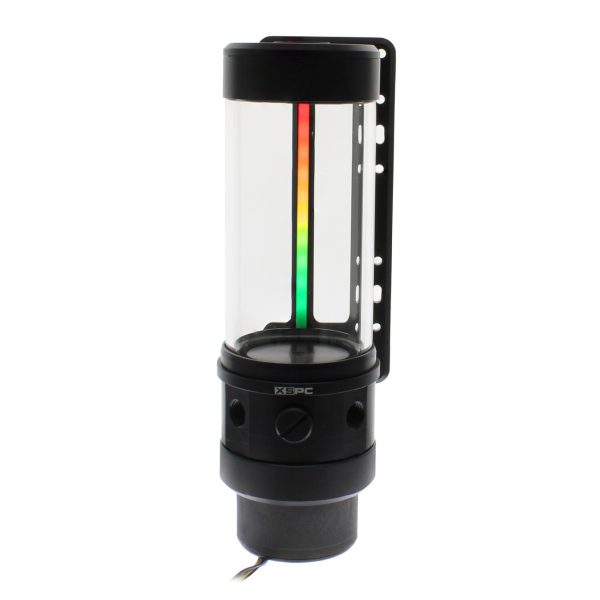
XSPC offers the D5 PWM aRGB Tank combo with a genuine Xylem D5 motor, and their QX5 mini tank with a compact DDC-style pump achieving higher head pressure in a very small footprint. Both are individually pressure-tested. We are an XSPC distribution partner.
Anti-Vibration Mounting
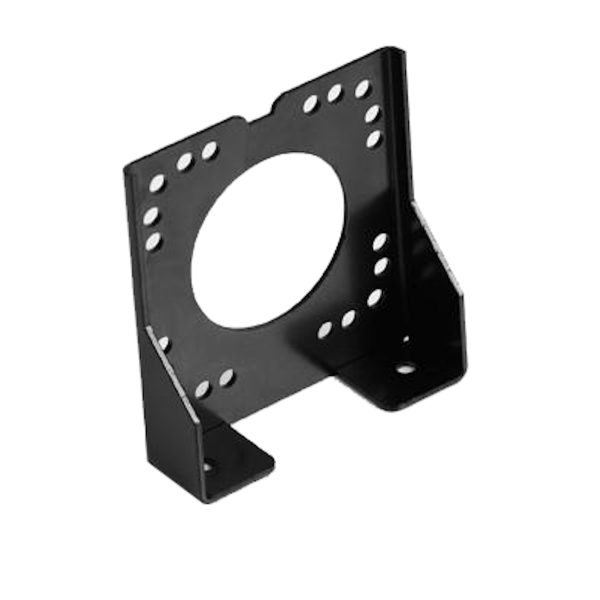
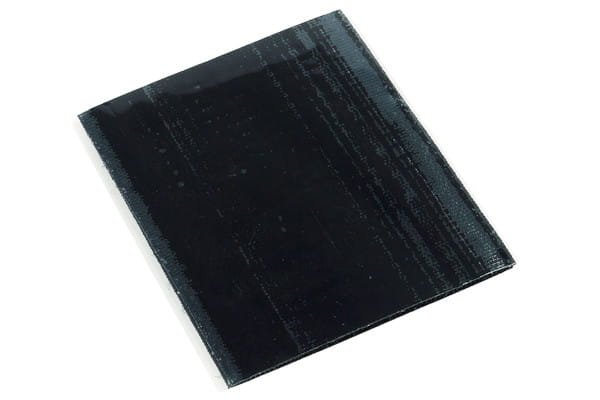
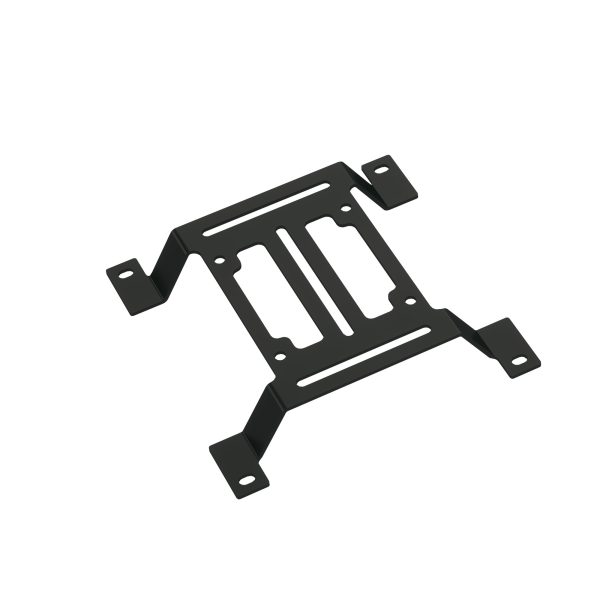
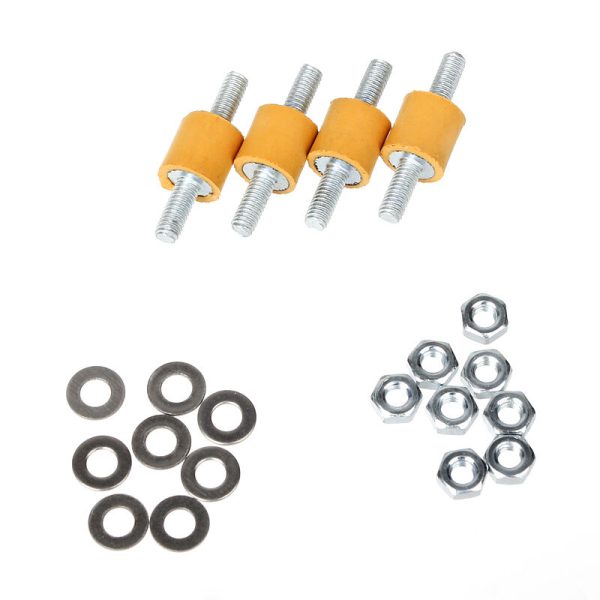
Pump vibration transmitted to the case becomes audible noise, and this is one of those areas where a small investment makes a big difference. Both D5 and DDC can vibrate, but the DDC tends to be more problematic because its compact motor produces more vibration per watt. Solutions include rubber grommets on mounting screws, foam pads between the reservoir base and case bracket, and purpose-built anti-vibration kits.
- SKU: BAR-ACC08
- MPN: TCBJ-DDF
- EAN: 6937826603761
- Available for Collection
- SKU: 52028
- MPN: 13700
- EAN: 4250197137003
- Available for Collection
- SKU: BAR-ACC14
- MPN: TCBJ-G
- EAN: 6937826603440
- Available for Collection
- SKU: WAPU-094
- MPN: 41092
- EAN: 4260073416047
Quality pump reservoir combos from Watercool and EK include engineered pump chambers that reduce mechanical coupling. Even so, supplementary dampening is always worthwhile. The fix costs relatively little and the improvement is immediately noticeable.
Common Mistakes
Running the pump dry, even briefly, can permanently damage the ceramic bearing. I do feel this is something that really cannot be stressed enough. Never start the pump until coolant covers the inlet. Fill the reservoir to at least two-thirds before the first power-on and keep adding coolant as the level drops during initial bleeding.
Oversizing the reservoir wastes money and coolant for no thermal benefit. A 200ml unit handles any standard loop. Buying DDC when D5 is the better choice happens when builders underestimate the noise difference or overestimate the importance of the DDC’s extra head pressure for their specific loop.
Skipping anti-vibration mounting turns an otherwise quiet pump into a constant source of low-frequency hum. The fix costs very little and the improvement is immediately noticeable. And always position the reservoir above the pump in separated setups, or simply use a combo unit where gravity feed is guaranteed by design.
For those building their first custom loop, a D5-based combo unit with proper anti-vibration mounting is the sensible starting point. The choice between acrylic and borosilicate glass, between tube and flat form, and between basic and feature-rich models like the D5 NEXT comes down to budget and personal preference. I would say the core performance difference between a well-made budget combo and a premium one is relatively small. Where the premium units earn their keep is in build quality, noise characteristics, and long-term durability. Whether that is worth shelling out the extra few quid is, obviously, a decision only you can make.