




How to Choose It, How to use It
Thermal paste sits between your CPU or GPU and its cooler, and its only job is to fill the microscopic air gaps between two metal surfaces that look flat but are not. Air is a terrible thermal conductor, so even a thin layer of paste dramatically improves heat transfer. Get it right and your components run cooler and quieter. Get it wrong and you are leaving performance on the table, or worse, risking actual damage with the wrong product.
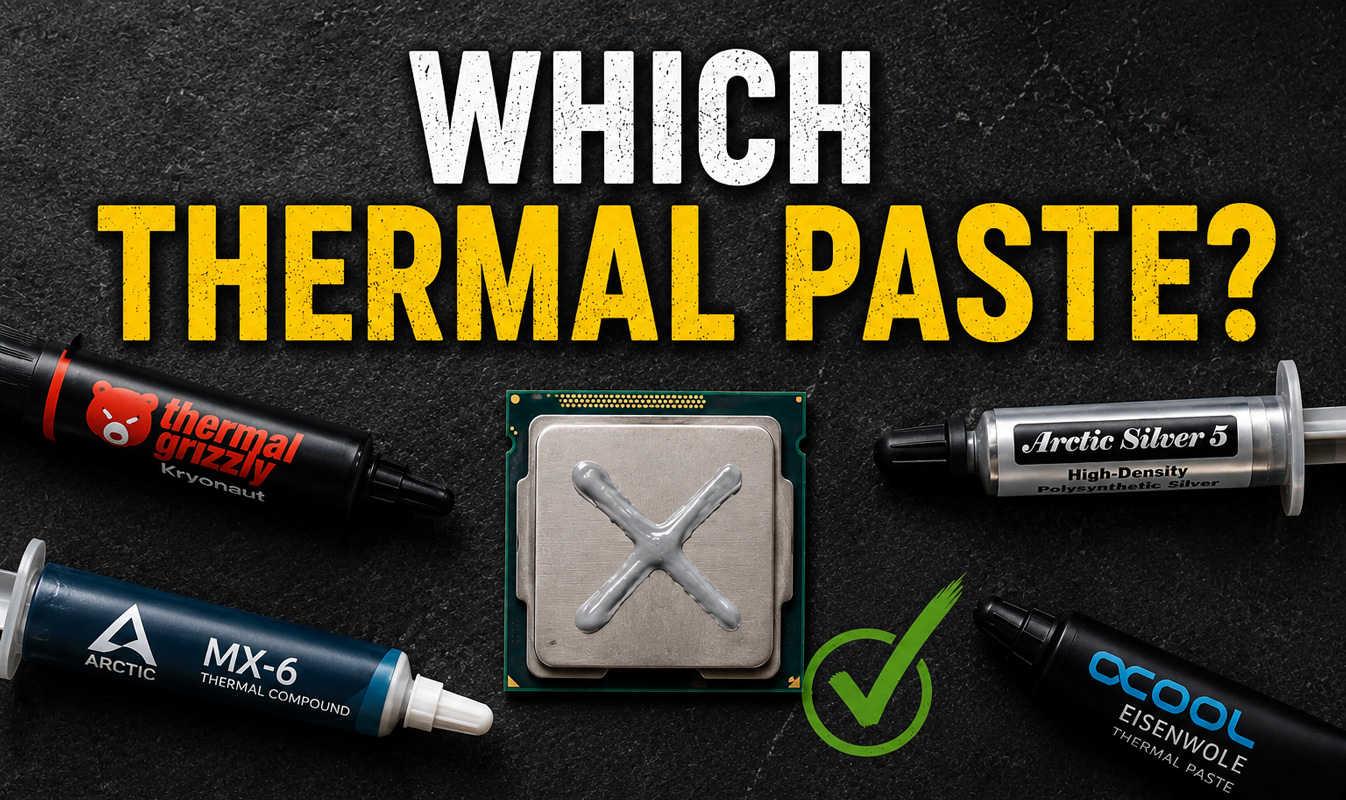
I have put together this guide to cover everything in one place: which application method actually works best (with real test data, not forum folklore), what the different paste types are made of and how they perform, a brand by brand breakdown of Thermal Grizzly, Arctic, Arctic Silver, and Polartherm, a detailed liquid metal warning, and practical advice on surface prep, storage, and reapplication intervals. Could this be the only thermal paste reference you will ever need? I certainly hope so.
How to Apply Thermal Paste
There are five common application methods. The good news, based on testing by GamersNexus, Puget Systems, and Igor’s Lab, is that most methods land within about 0.5 degrees Celsius of each other in raw thermals. The real differences come down to coverage consistency, air bubble risk, and forgiveness on different socket sizes.
TL;DR, The X Method is the best way to apply your paste, but read on for a comparison on the others + a whole lot more!
Pea or Dot Method
This is the fastest and most repeatable approach. You place a single 3-5 mm drop in the centre of the IHS, lower the cooler straight down, and tighten screws in a diagonal star pattern. Noctua recommends 3-4 mm for AM4, LGA1700, and AM5.
Air bubble risk is minimal because the paste expands radially outward from the centre. The downside is that it can leave corners uncovered on large rectangular heatspreaders like Intel LGA1700, and it does not tolerate uneven mounting pressure particularly well. GamersNexus visually confirmed an uncovered corner on a desktop IHS even when temperatures were similar to other methods.
Cross or X Method
Two thin diagonal lines forming an X from corner to corner. Puget Systems tested 12 different patterns on an i7-3770K with a Corsair H60 and ranked the X pattern as the best overall: cleanest spread, fewest air bubbles, and the coldest reading at 54.25 degrees Celsius. The smooth spread method was within 0.25 degrees, and the pea came in at 54.75 degrees.
The X method is particularly good for rectangular and large heatspreaders, especially Intel LGA1700 (approximately 37.5 by 45 mm). The only concern is overflow risk if the lines are too thick. This is a particular issue on AM5’s octagonal IHS, where paste can pool in the cut out channels and reach exposed surface mount components.
Line or Sausage Method
A single thin line perpendicular to the long axis of the IHS, or along the heat pipe direction for direct heat pipe touch coolers. Igor’s Lab tested this on an RTX 3080 with an Alphacool Apex waterblock and found the central vertical sausage line beat a central blob by about 3 degrees and beat a full pre spread by about 5 degrees. That said, this only held true when combined with a seesaw screw tightening sequence on the long edges.
Arctic Silver historically recommended a line for Ryzen and Intel quad core processors. Bear in mind, however, that a thick line is one of the worst performing patterns per Puget’s testing because of squeeze out.
Spread Method
Here, paste is dispensed and manually spread thin with a spatula, card, or plastic bag over a finger. This is the method for very large heatspreaders like Threadripper TR4 and sTRX4, for direct die applications, and for stiff pastes that will not self spread under cooler pressure (such as Kryonaut, NT-H1, and GC-Extreme).
der8auer is documented as using manual spread on 12th, 13th, and 14th gen Intel and Ryzen 5000 and 7000 series regardless of paste type. It guarantees full coverage and gives you control over bond line thickness. The downsides are speed, the possibility of introducing micro bubbles (Puget noted these), and the risk of contamination from the spreading tool.
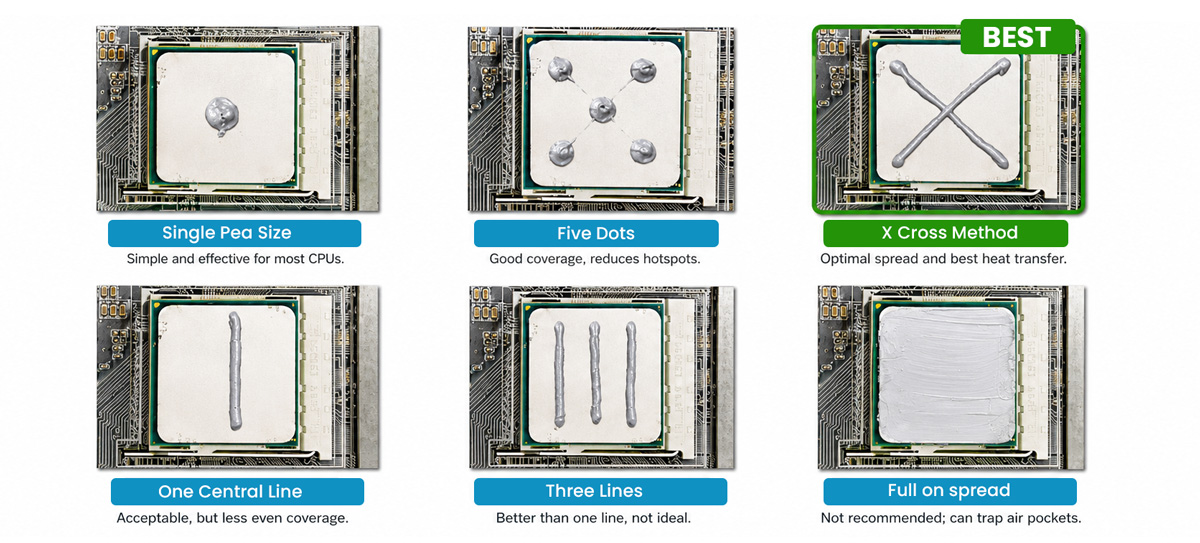
Multi Dot Pattern
A centre dot plus four smaller corner dots, sometimes called the Noctua method. This was Noctua’s historical instruction for NT-H2 on AM4 and LGA1700. It gives strong coverage with convex base coolers that exert more pressure in the centre.
However, Noctua revised its NT-H2 instructions for AM5 back to a single 3-4 mm dot. The reason is that the smaller octagonal contact area and exposed pad channels around the perimeter make a five dot pattern prone to overflowing onto surface mount components.
Best Method by Socket
For Intel LGA1700 (approximately 37.5 by 45 mm, rectangular, concave bent by the stock loading mechanism): use the X method, a line or sausage, or a thin manual spread. A small pea is not ideal because of the rectangular shape and the ILM-induced bow. Sources: Puget Systems, Igor’s Lab, der8auer, Tom’s Hardware.
For AMD AM4 (approximately 40 by 40 mm square): a pea or five dot pattern both work well. The square shape means the pea spreads evenly in all directions.
For AMD AM5 (octagonal with cut out channels exposing surface mount devices, smaller contact area than AM4): use a single 3-4 mm centre dot. This is Noctua’s revised guidance. Avoid the five dot and X patterns to prevent paste overflowing into the channels. Sources: Noctua, Tom’s Hardware, HWCooling.
Common Application Mistakes
Too much paste causes squeeze out onto the socket, substrate, or motherboard. With electrically conductive pastes like liquid metal this can short components. Even with non conductive paste like Kryonaut, GamersNexus found gross over application was only within 1 degree Celsius of optimal, so the risk is cosmetic mess rather than thermal problems. However, Puget showed that thick line and double pea patterns were the worst thermal performers because excess bond line thickness acts as an insulator.
Too little paste leaves visible uncovered area over the die, a single hot core showing in monitoring software, and paste that does not reach the edges.
Air bubbles are most common with pre spread methods. To minimise them, apply paste to the CPU rather than the cooler, lower the cooler straight down without rotating, and never lift and re seat without cleaning and reapplying. Contamination from skin oils, perfumed wet wipes, paper towel lint, or cheap rubbing alcohol containing lanolin will also compromise the thermal interface.
Does Application Method Matter More for Air or Water Cooling
With watercooling and AIOs, the cold plate is flat and well machined, clamping force is high and uniform, and the application method matters less because paste is forced into the gaps regardless of pattern. With air coolers, especially on a bent LGA1700 IHS or direct heat pipe touch coolers with inter heatpipe grooves, application method matters more. Thicker pastes like Kryonaut, NT-H2, and GC-Extreme handle the grooves better than thin runny compounds.
The LGA1700 ILM Bend Problem
Igor’s Lab and Tom’s Hardware confirm the stock Intel Independent Loading Mechanism bows the LGA1700 IHS concavely along its long axis, with the centre sitting 50-100 micrometres lower than the edges. The cooler rides on the raised edges, leaving a larger gap over the hot dies. That is exactly where paste needs to bridge.
Igor measured about a 5 degree improvement from a washer mod, and Tom’s Hardware measured up to 12 degrees from a Thermalright LGA1700-BCF contact frame on i9 class chips. For best results on LGA1700, use more paste at the centre and consider a contact frame from Thermal Grizzly, Thermalright, or ElecGear.
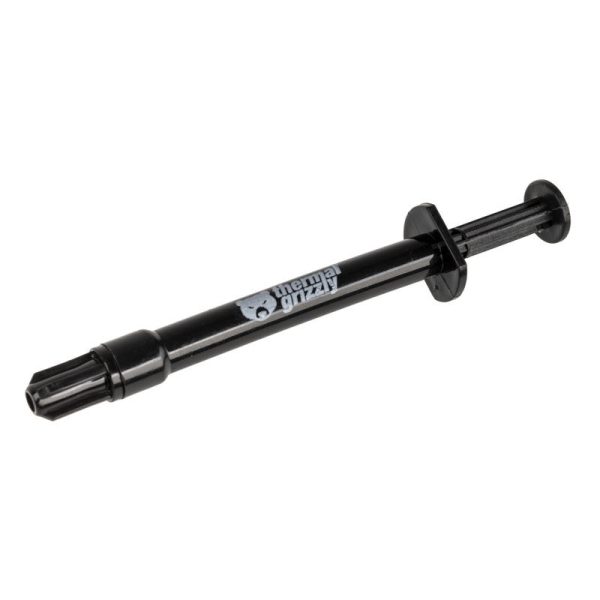
- SKU: ZUWA-214
- MPN: TG-KE-002-R
- EAN: 0753677507241
- Available for Collection
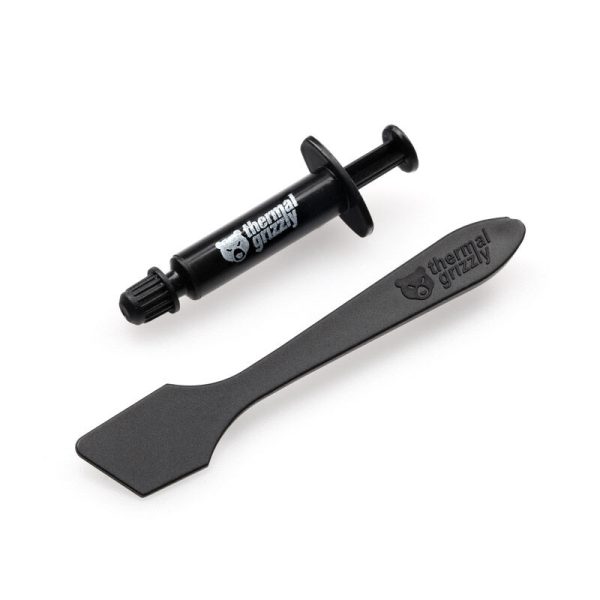
- SKU: ZUWA-145
- MPN: TG-K-001-RS
- EAN: 0753677507234
- Available for Collection
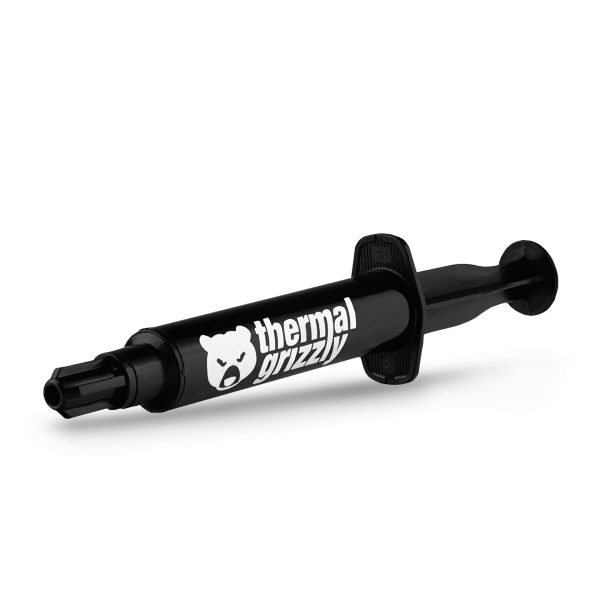
- SKU: ZUWA-325
- MPN: TG-D-006-R
- EAN: 4260711991141
- Available for Collection
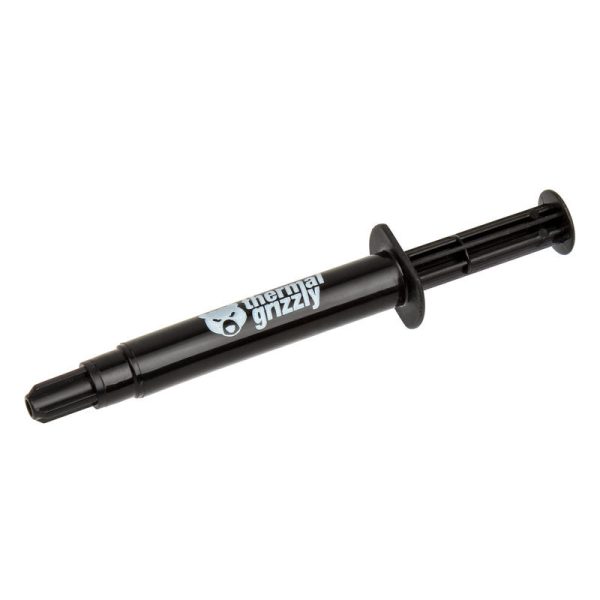
- SKU: ZUWA-128
- MPN: TG-H-030-R
- EAN: 0753677507562
- Available for Collection
Types of Thermal Paste
Not all thermal compounds are created equal. They differ in composition, thermal conductivity, electrical properties, viscosity, and longevity. Below is what each type is actually made of and how it performs.
Silicone Based Stock Pastes
These use a polydimethylsiloxane carrier with cheap mineral or oxide fillers like zinc oxide and silicon dioxide. They come pre applied on Intel Laminar and AMD Wraith stock coolers. Real-world thermal conductivity is typically 1-4 W/mK according to Igor’s Lab, despite some products claiming higher.
They are non conductive, non capacitive, require no curing, and are perfectly adequate for office PCs, HTPCs, and systems running at stock speeds. Examples include the paste pre applied on Intel and AMD stock coolers, Cooler Master MasterGel Regular, Arctic MX-2, and various budget pastes.
Metal Oxide and Ceramic Compounds
These contain sub micron particles of zinc oxide, aluminium oxide, and sometimes hexagonal boron nitride suspended in polysynthetic or silicone oil. Arctic Silver Ceramique 2, for instance, is described as a tri linear composite of aluminium oxide, zinc oxide, and boron nitride.
Real-world performance falls in the 3-5 W/mK range measured by Igor’s Lab, though manufacturer claims reach as high as 8.5 W/mK. They are non conductive and non capacitive, which is their main safety advantage. Often there is a brief first cycle settling period. Examples include Ceramique 2, Arctic Alumina, Noctua NT-H1, Cooler Master MasterGel Maker, and Gelid GC-Extreme.
Carbon, Diamond, and Graphite Particle Compounds
These use a silicone or polysynthetic carrier with carbon micro and nano particles, micronised synthetic diamond, graphite flakes, or graphene. Arctic MX-6 is explicitly carbon filler based with no diamond and no metals. IC Diamond 7 uses approximately 92 percent by weight micronised diamond.
Igor’s Lab independently measured Arctic MX-6 Rev. 4 at 4.748 W/mK bulk thermal conductivity with 6.0 mm² K/W interface resistance, well below the 8.5-13 W/mK sometimes quoted in marketing. The honest performance band is 4-8 W/mK bulk. Despite the seemingly modest numbers, bench performance is often class leading because of favourable rheology and wetting characteristics. Non-conductive and non capacitive. Examples include Arctic MX-4, MX-6, MX-7, Cooler Master MasterGel Maker, IC Diamond, GC-Extreme, and Noctua NT-H2.
Silver Loaded Compounds
These contain polysynthetic oil with a high loading of micronised pure silver plus zinc oxide, aluminium oxide, and boron nitride to fill the gaps between silver particles. Arctic Silver 5 contains over 88 percent by weight thermally conductive filler with 99.9 percent pure silver. The manufacturer claims approximately 8.7-8.9 W/mK, though a Wikipedia-cited NREL study measured only 0.94 W/mK using composite measurement methodology. That is a very large discrepancy and one I think is well worth flagging.
Arctic Silver 5 is DC non conductive but slightly capacitive. This is the most important misconception to correct. Arctic Silver’s own product page states: “While it is not electrically conductive, the compound is very slightly capacitive and could potentially cause problems if it bridges two close proximity electrical paths.” Each silver particle is isolated in insulating oil with no DC percolation path, so it will not short power rails. But at GHz signal frequencies the bulk paste shows measurable dielectric coupling. It is significantly safer than liquid metal but less safe than truly non capacitive ceramic pastes.
Arctic Silver 5 has a famously long cure period of up to 200 hours and several thermal cycles, with a typical 2-5 degree drop during break in as silver particles physically migrate and reorient. Most modern non silver pastes have eliminated cure entirely.
Liquid Metal / Conductonaut / Gallium
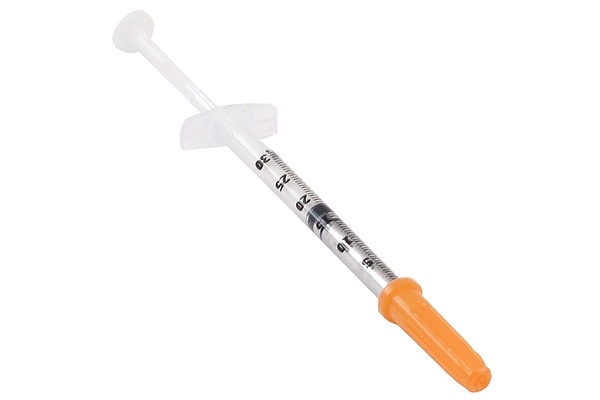
- SKU: 31001
- MPN: 250
- EAN: 4049469003708
- Available for Collection
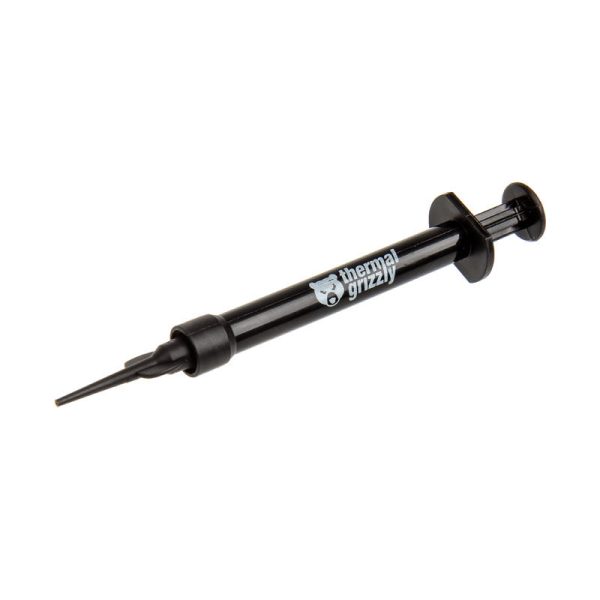
- SKU: ZUWA-153
- MPN: TG-C-001-R
- EAN: 0753677507449
- Available for Collection
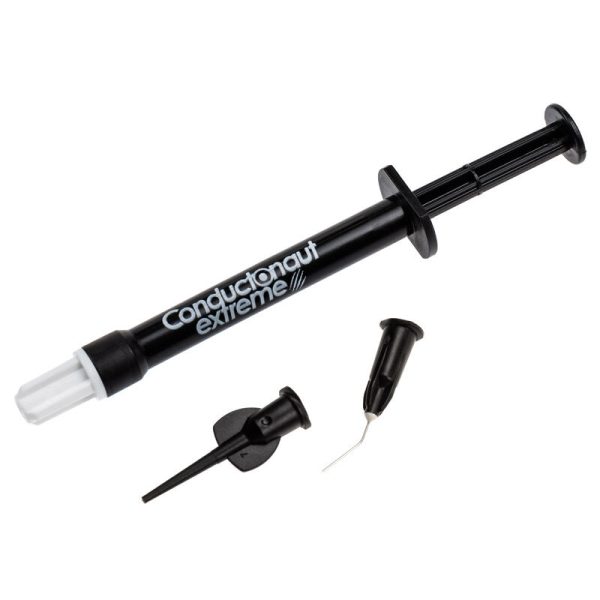
- SKU: ZUWA-283
- MPN: TG-CE-005-R
- EAN: 4260711990557
- Available for Collection
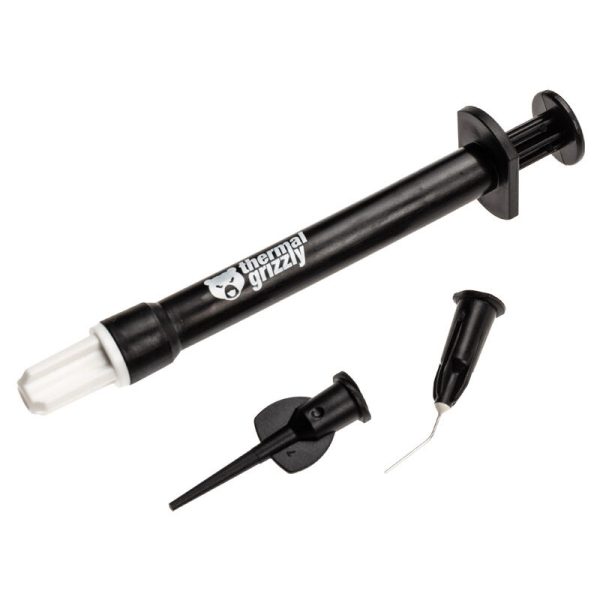
- SKU: ZUWA-276
- MPN: TG-CE-001-R
- EAN: 4260711990564
- Available for Collection
Eutectic gallium indium tin alloys (the Galinstan family) with thermal conductivity of 73 W/mK or higher. Thermal Grizzly Conductonaut is the most widely known product. These are fully electrically conductive with about 3 times the conductivity of copper. They offer dramatically better thermal performance than any paste but carry serious risks including electrical shorts, gallium induced embrittlement of aluminium, and capillary migration over time. I cover liquid metal in detail in a dedicated section below.
Thermal Pads and Phase Change Materials
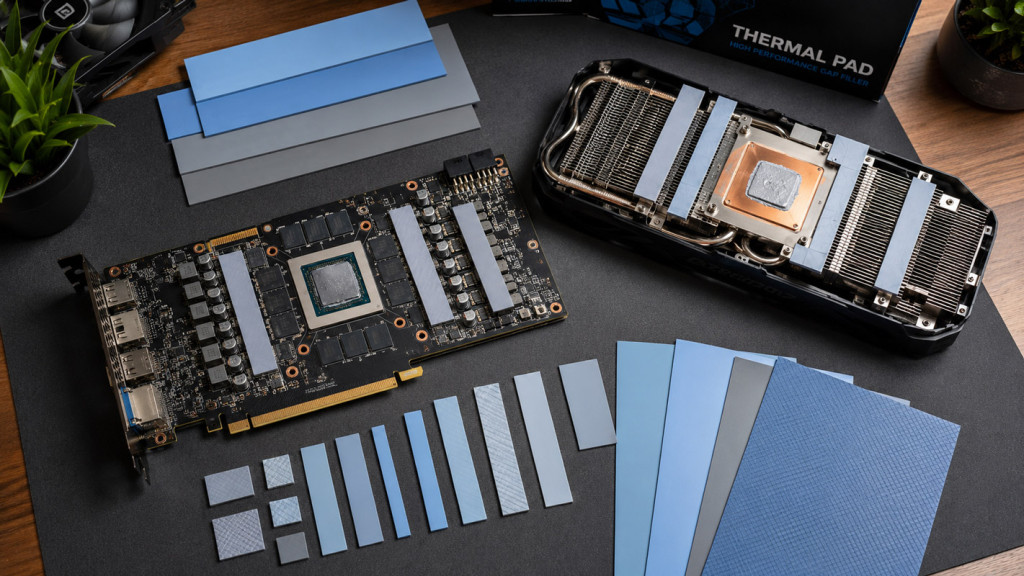
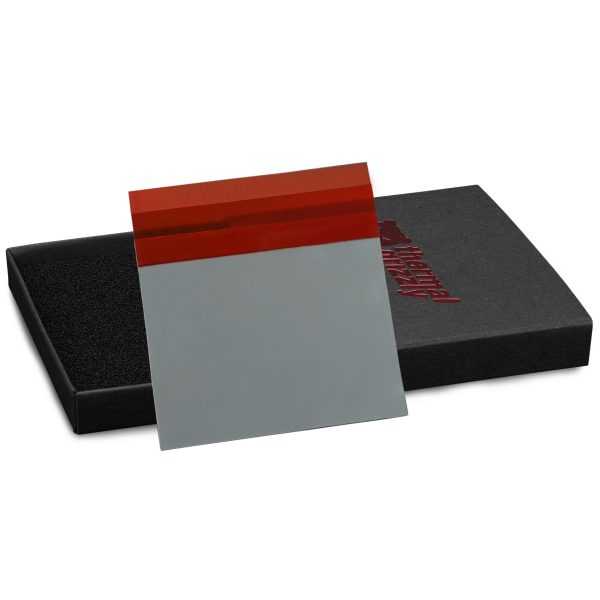
Honeywell PTM7950 (and Thermal Grizzly’s equivalent PhaseSheet PTM) is a proprietary carbon hybrid phase change material rated at 8.5 W/mK. It is solid at room temperature, melts at about 45 degrees Celsius, and reflows every thermal cycle, making it essentially immune to pump out. It passes 1000 thermal cycles and 1000 hours at 150 degrees Celsius. Non-conductive. Used by NVIDIA, Lenovo, and Apple in flagship laptops and GPUs. Be aware that most PTM7950 listings on Amazon and AliExpress are counterfeit. Authentic supply is only available from Honeywell direct, LTT Store, Moddiy, and Caplinq.
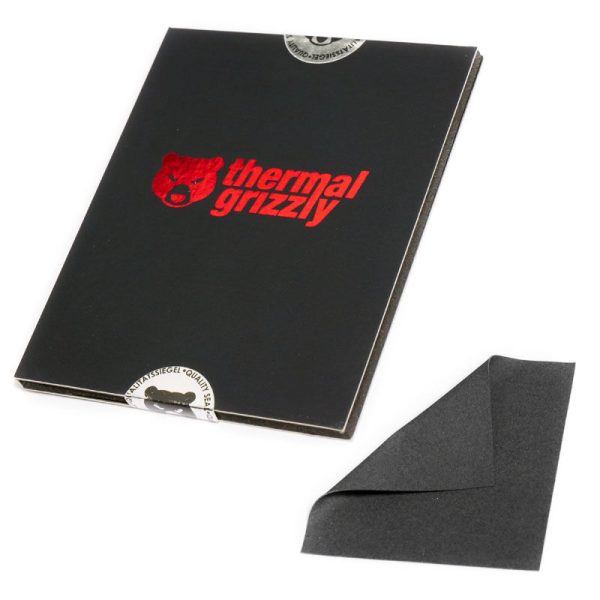
Thermal Grizzly Carbonaut is a flexible carbon fibre and graphite thermal pad with 62.5 W/mK anisotropic thermal conductivity, 0.2 mm thick, reusable, with an estimated 15-year lifespan. However, the 62.5 W/mK figure is a through plane anisotropic measurement and real world performance is interface limited, often only matching a mid tier paste. It is electrically conductive, so do not let it drape over surface mount components.
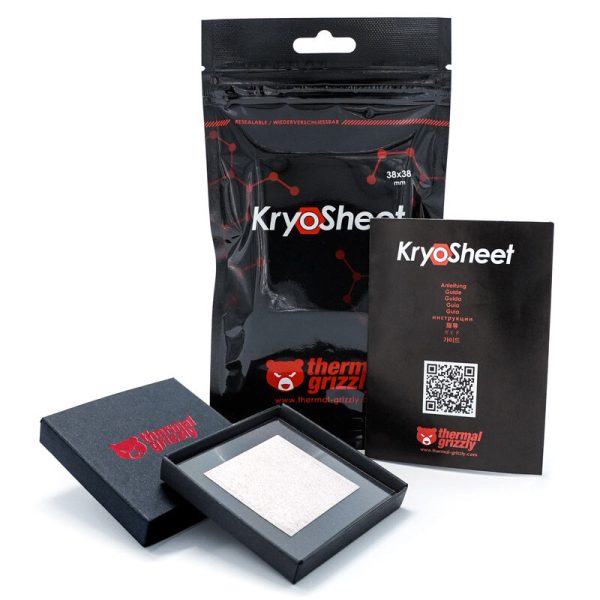
- SKU: ZUWA-281
- MPN: TG-KS-38-38
- EAN: 4260711990847
- Available for Collection
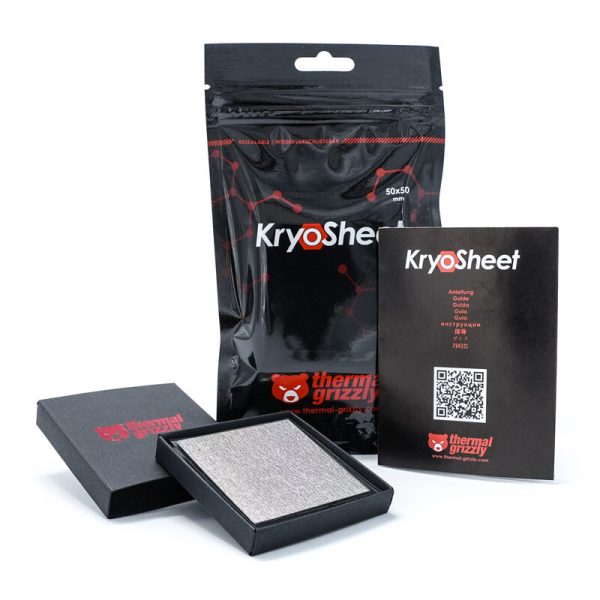
- SKU: ZUWA-282
- MPN: TG-KS-50-50
- EAN: 4260711990854
- Available for Collection
- SKU: ZUWA-180
- MPN: TG-CA-38-38-02-R
- EAN: 0753677507494
- SKU: ZUWA-308
- MPN: TG-PS-50-40
- EAN: 4260711991059
- Available for Collection
Thermal Grizzly KryoSheet is a graphene pad with a Z-direction stacked crystal structure made in Sweden. Thermal Grizzly does not publish a W/mK figure, but Tom’s Hardware’s 2025 paste roundup found it outperformed every traditional paste tested on a Ryzen 9 9950X. It is electrically conductive and develops micro cracks after lifting, making it effectively single use.
Ease of Application: Viscosity, Break-In, and Pump Out
Easy to Apply Pastes:
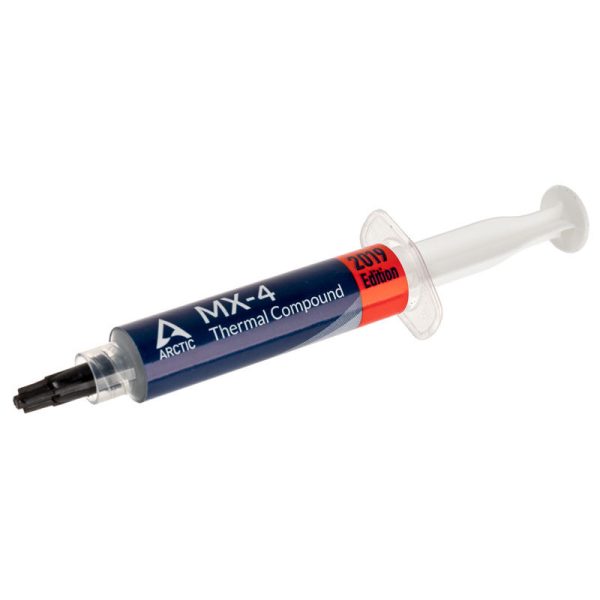
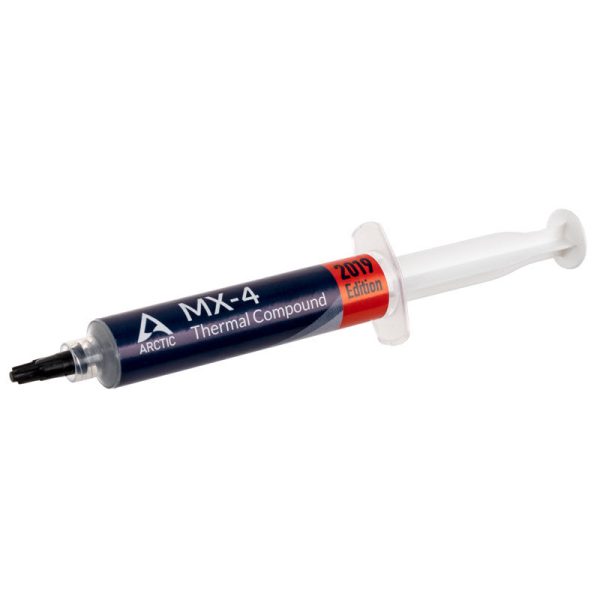
Arctic MX-4 at approximately 87 Pa.s is the classic beginner friendly paste. It is soft, spreads under cooler pressure, and has no curing period. Noctua NT-H2 is less viscous than NT-H1 and described by HWCooling as paste that does not hold its shape when squeezed. Alphacool Apex sits at about 200 Pa.s and is Igor’s Lab’s recommended GPU paste. Thermal Grizzly Hydronaut is silicone free and easier to spread than Kryonaut despite slightly higher numerical viscosity.
- SKU: ZUWA-176
- MPN: ACTCP00008B
- EAN: 4895213701662
- Available for Collection
- SKU: ZUWA-172
- MPN: ACTCP00001B
- EAN: 4895213701723
- SKU: ZUWA-242
- MPN: ACTCP00080A
- EAN: 4895213703925
- SKU: ZUWA-367
- MPN: ACTCP00092A
- EAN: 4895265000898
Thick and Stiff Pastes:
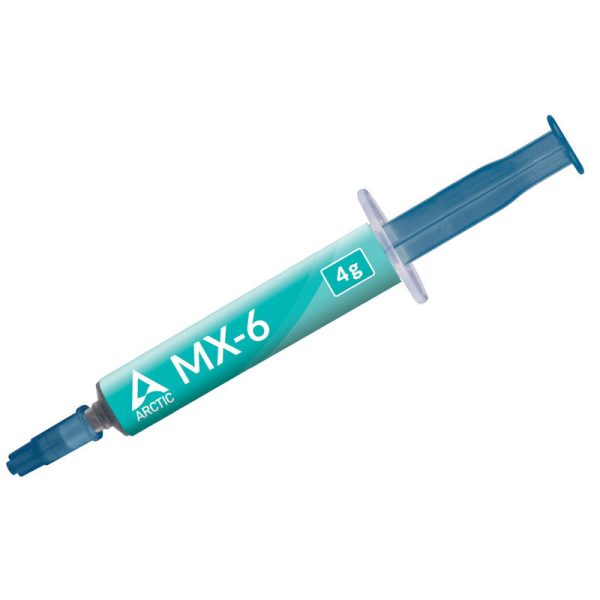
Thermal Grizzly Kryonaut at 130-170 Pa.s is famously described as chewing gum like and benefits from being pre warmed below 20 degrees Celsius. Arctic MX-6 at approximately 450 Pa.s is far thicker than MX-4. Arctic’s specification sheet explicitly states it cannot be spread with a spatula, and the high viscosity is deliberately engineered to resist pump out.
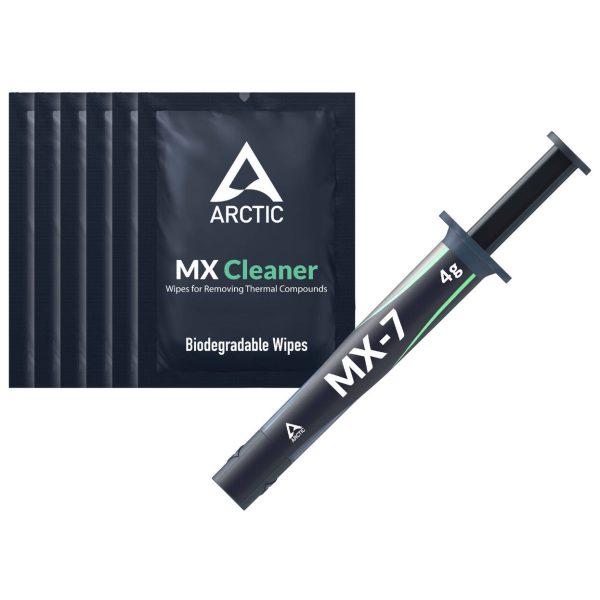
Arctic MX-7, despite Arctic claiming it is 22 percent less viscous than MX-6, is described by reviewers as putty like. Gelid GC-Extreme, Noctua NT-H1, and Thermalright TFX are also in the stiff paste category.
All silicone based pastes are non-Newtonian and shear thinning. Below 20 degrees Celsius, Kryonaut, NT-H1, and GC-Extreme become noticeably harder to apply. Igor’s Lab recommends warming the tube in your hand or pocket for 5-10 minutes before application, especially in winter or cold rooms. Never use a microwave.
Pump Out: The Long Term Killer
Pump out is the gradual migration of paste away from the hot zone due to repeated thermal expansion and contraction cycles. Causes identified by Igor’s Lab include high temperature deltas, frequent cycling, thermal expansion coefficient mismatch between the IHS and cold plate, insufficient mounting pressure, viscosity loss at high temperatures, silicone oil bleed and separation, and ageing siloxane chemistry.
The most pump out prone paste in mainstream use is Thermal Grizzly Kryonaut above approximately 80 degrees Celsius sustained. This is manufacturer acknowledged: Thermal Grizzly’s own datasheet states the carrier structure halts the drying out process at temperatures up to 80 degrees Celsius. This is corroborated by Igor’s Lab, der8auer’s own YouTube commentary, and multiple user reports of 5-10 degree regression in 2-3 months on laptops and hot GPUs. Kryonaut Extreme is reported to be even worse, with users reporting drying in 3 months on hot GPUs. Noctua NT-H2 has moderate durability and is classified by Igor’s Lab as not ideal for graphics cards due to pump out.
Pump-out resistant pastes include Arctic MX-6 (explicitly engineered for it with high viscosity), Arctic MX-7, Thermalright TFX, Phanteks PDC, Thermal Grizzly Duronaut (their new flagship designed specifically to address Kryonaut’s pump out criticism), and phase change pads which are essentially immune because they reflow every cycle.
Thermal Grizzly
Based in Hamburg, co founded with der8auer, and led by CEO Eike Salow. The current 2025/2026 thermal paste lineup consists of five products: Duronaut, Kryonaut Extreme, Kryonaut, Hydronaut, and Aeronaut. Liquid metal (Conductonaut, Conductonaut Extreme) and thermal pads (Carbonaut, KryoSheet, PhaseSheet PTM) are separate lines.
Aeronaut (8.5 W/mK claimed) is the entry level product. Silicone-based, non conductive, available in 1-7.8 gram sizes. It has high pump out risk and is best for basic builds.
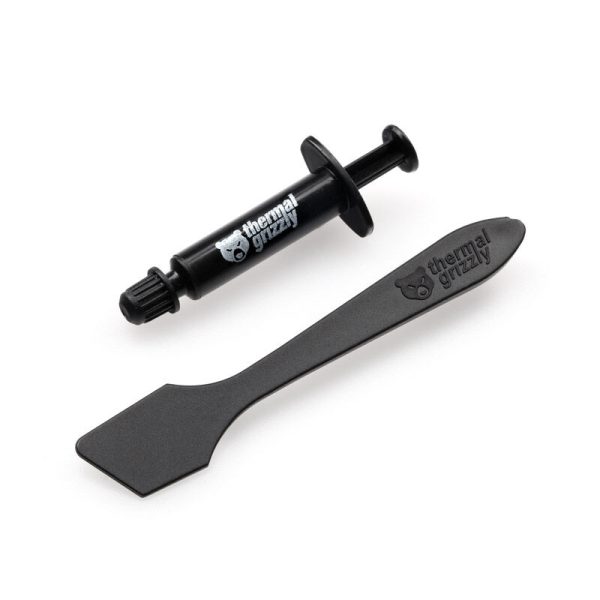
Hydronaut (11.8 W/mK claimed) is the mid tier product marketed for watercooling. It is silicone free, more flexible, and spreads more easily than Kryonaut despite slightly higher numerical viscosity of 140-190 Pa.s. It is markedly more pump out resistant than Kryonaut. Thermal Grizzly and resellers position it as suitable for 10-year service versus Kryonaut’s approximately 1 year under aggressive thermal cycling. EK Water Blocks bundles it. Peak temperatures are typically 0-1 degree behind Kryonaut. Available up to 26 grams and in 1 kilogram bulk.
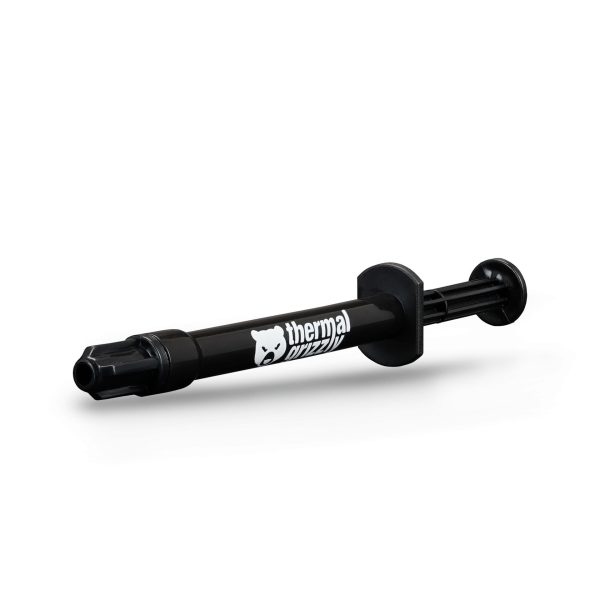
Kryonaut (12.5 W/mK claimed) is the famous premium paste. Non-conductive, great peak performance, but the 80-degree pump out limit is the single most important caveat. Practical reapplication interval is about 12 months on laptops and hot GPUs, and 2-3 years on cooler desktops. Independent benchmarks from Tom’s Hardware, tinytechtweaks, and Tech4Gamers in 2024 and 2025 place it within 0-0.5 degrees of MX-6 and NT-H2. Competitive on raw performance but loses on longevity. Available up to 37 grams.
- SKU: ZUWA-145
- MPN: TG-K-001-RS
- EAN: 0753677507234
- Available for Collection
- SKU: ZUWA-128
- MPN: TG-H-030-R
- EAN: 0753677507562
- Available for Collection
- SKU: ZUWA-324
- MPN: TG-D-002-R
- EAN: 4260711991134
- Available for Collection
- SKU: ZUWA-150
- MPN: TG-H-001-RS
- EAN: 0753677507586
- Available for Collection
Kryonaut Extreme (14.2 W/mK claimed) offers a marginal 0.25-0.5 degree real world gain over standard Kryonaut on conventional cooling. It is meaningful only under cryogenic or LN2 conditions. Pump-out is actually worse than standard Kryonaut on hot loads.
Duronaut (12.5 W/mK claimed, launched 2025) is Thermal Grizzly’s response to Kryonaut pump out criticism. Igor’s Lab tested the prototype under the codename “Paste X” and found it beats Kryonaut and Kryonaut Extreme on thermal resistance while being engineered for long term stability. Composition is silicone oil with aluminium microparticles and multi shape zinc oxide nanoparticles. It is stiff when cold so warm it before application. Available in 2 gram and 6 gram sizes.
Arctic
Arctic GmbH, based in Germany with operations in Hong Kong. I should be clear here: Arctic is a completely separate company from Arctic Silver Inc. based in Visalia, California. Despite the similar names they have no corporate relationship. The section below on Arctic Silver covers that brand separately.
Arctic deliberately does not publish W/mK figures anymore. Their stated position via Igor’s Lab is that real paste conductivities are 1-4 W/mK and competitor claims above that are marketing fiction. Historic numbers still appear on some retailer listings but should be treated cautiously.
MX-4 is the de facto safe default since approximately 2011. Carbon micro particles in a silicone polymer matrix. Non-conductive, non capacitive. Historic claim of 8.5 W/mK. Viscosity around 87 Pa.s makes it soft and beginner friendly. Eight-year longevity claimed. Available from 2 grams to 45 grams. Igor’s Lab calls it a paste where ageing stability is more important than the theoretically highest thermal conductivity.
MX-6 (launched April 2022, now at Rev. 4 in 2025) is a reformulated carbon particle paste. Arctic publishes no W/mK figure. Igor’s Lab independently measured Rev. 4 at 4.748 W/mK bulk using a TIMA5 lab grade instrument. Viscosity is approximately 450 Pa.s, so thick it cannot be spread with a spatula, deliberately engineered for pump out resistance. Reception is genuinely mixed: lab measurements show MX-6 measurably better than MX-4, but real CPU testing often shows less than 1 degree difference. Arctic’s own data claims approximately 3 percent lower temperatures. The honest framing is that in the lab it is better, but on a user’s CPU often not visibly so. Available in 2, 4, and 8 gram sizes, with a 4 gram plus MX Cleaner bundle.
MX-7 (late 2024/2025) is the newest flagship. Composition analysis by EnosTech reveals 88.4 percent aluminium, 11.5 percent PDMS, and 0.1 percent melanins. Despite Arctic claiming it is 22 percent less viscous than MX-6, reviewers describe it as putty like and harder to spread. Non-conductive, non capacitive. Arctic claims up to about 3 percent cooler than MX-6 and about 6 percent cooler than MX-4 on a Core Ultra 9 285K at 284 watts. Igor’s Lab ranked it second overall in their thermal paste database at an average CPU temperature of 64.86 degrees Celsius. Available in 2, 4, and 8 gram sizes.
MX-5 is discontinued. It was launched in March 2021 and recalled in January 2022 for consistency anomalies including oil separation and premature hardening. It was superseded by MX-6. Do not buy it.
Arctic Silver
Arctic Silver Inc., based in Visalia, California, founded in 1999 by Nevin House. Still active in 2025 with the most recent Safety Data Sheet reviewed June 2024. The current lineup is narrow: only Arctic Silver 5 and Ceramique 2 are listed as current products. Matrix, Alumina, and the original Ceramique are explicitly listed as discontinued on their website.
Arctic Silver 5 contains 99.9 percent pure micronised silver in three particle shapes and sizes for percolation, plus sub micron zinc oxide, aluminium oxide, and boron nitride. Over 88 percent by weight is conductive filler in a polysynthetic oil suspension with no silicone. The famous triple phase viscosity and approximately 200-hour break in period means the paste spreads easily on application, thins to fill micro valleys during initial use, then thickens slightly over 50-200 hours and multiple thermal cycles to its long term stable consistency. The measured temperature drop is typically 2-5 degrees. The computer must be allowed to cool to room temperature between cycles for the break in to develop properly.
Current independent testing by Tom’s Hardware and tinytechtweaks in 2024 and 2025 places Arctic Silver 5 mid pack, typically 2-5 degrees warmer than modern leaders like MX-6, KryoSheet, NT-H2, and Kryonaut. Still reputable and outstanding value per gram at roughly 8-10 US dollars for 3.5 grams.
Ceramique 2 is a tri linear ceramic compound of aluminium oxide, zinc oxide, and boron nitride in third generation polysynthetic oil with no metal content. It is a pure electrical insulator, neither conductive nor capacitive, making it the safest Arctic Silver choice for tight, exposed boards. Cure time is approximately 25 hours minimum, much shorter than Arctic Silver 5.
ArctiClean is their two stage cleaning kit: Step 1 emulsifies old thermal paste and Step 2 purifies the surface. It is widely recommended particularly for Arctic Silver 5 work because surface cleanliness is critical for the 200-hour cure to develop properly.
Polartherm
Polartherm is a sister brand of Thermal Grizzly, owned and launched by Roman “der8auer” Hartung. This was confirmed via polartherm.com legal disclosures listing Thermal Grizzly and Roman Hartung, TweakTown’s Computex 2024 coverage describing it as positioned to compete against Arctic, and Amazon listings stating “Polartherm X-10 by Thermal Grizzly.” It is not a UK house brand. It launched around Computex 2024 as Thermal Grizzly’s mainstream segment brand targeting the MX-4 and MX-6 price segment rather than the Kryonaut and Duronaut tier.
- SKU: ZUWA-318
- MPN: PT-X10-010
- EAN: 4260711990939
- SKU: ZUWA-317
- MPN: PT-X10-005
- EAN: 4260711990922
- SKU: ZUWA-315
- MPN: PT-X8-040
- EAN: 4260711990984
- SKU: ZUWA-313
- MPN: PT-X8-005
- EAN: 4260711990960
- Available for Collection
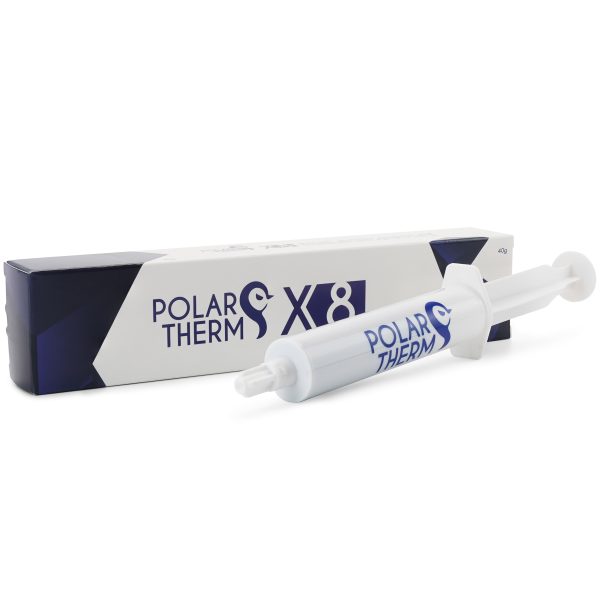
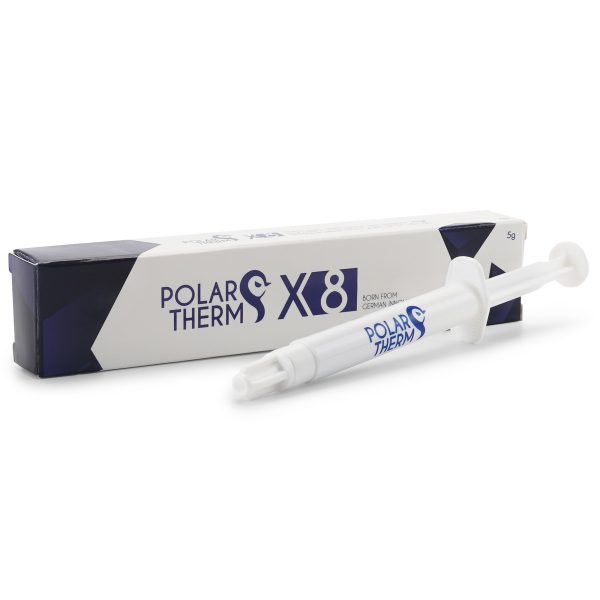
Polartherm X-8 contains silicone oil with aluminium oxide and zinc oxide. Particles up to 12 micrometres. Low-to medium viscosity and easy to apply. Igor’s Lab measured it at 3.1 W/mK using a TIMA5 instrument. Non-conductive. Guidance from Polartherm and LDLC suggests it is best for CPUs up to 70 watts TDP. Pump-out resistance is moderate and Igor classifies it as rather unsuitable for graphics cards. Available in 2, 5, 10, and 40 gram sizes with spatula and applicator included.
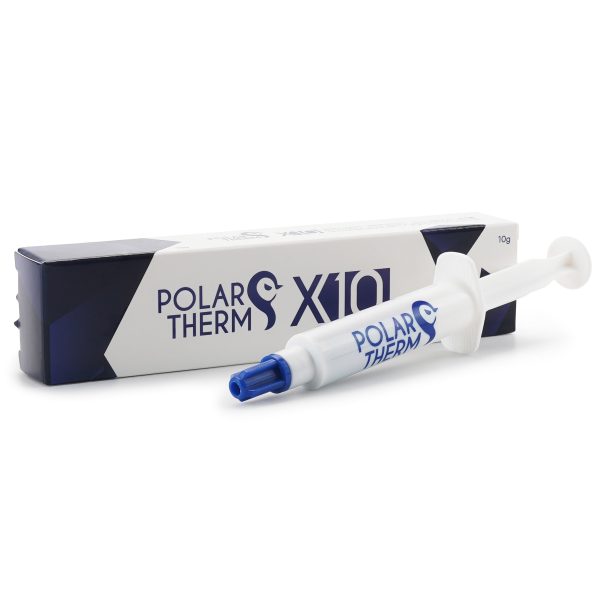
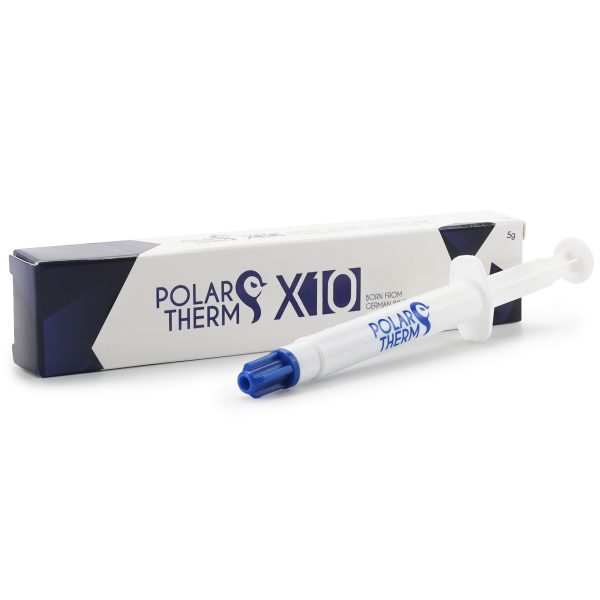
Polartherm X-10 uses the same chemistry but with higher filler concentration and smaller particles up to 5 micrometres. Visibly thicker. Igor’s Lab measured it at 3.2 W/mK, only 2.9 percent above the X-8. Non-conductive. Guidance suggests it is suitable for CPUs above 65 watts and GPUs, with better pump out resistance than the X-8. Reviews from EnosTech say X-10 performance is comparable to Kryonaut, MX-6, and ID-Cooling Frost XT-45. Pokde.Net found it about 1 degree ahead of Cooler Master MasterGel Maker on average. Tech4Gamers found it outperformed Duronaut in short term testing, though Duronaut is expected to win over the long term. No dedicated reviews exist from Gamers Nexus, Hardware Unboxed, or Tom’s Hardware. Available in 2, 5, 10, and 40 gram sizes.
Liquid Metal: What It Is and Why You Need to Be Careful
Liquid metal thermal compounds are eutectic gallium indium tin alloys with thermal conductivity of 73 W/mK or higher, roughly 10 times better than the best traditional paste. Thermal Grizzly Conductonaut is the most widely known product at 73 W/mK. Conductonaut Extreme removes tin from the alloy and is estimated at approximately 86 W/mK, though Thermal Grizzly does not publish a discrete figure. Coollaboratory Liquid Pro and Liquid Ultra are older products at 32.6 and 38.4 W/mK respectively (CEO-confirmed figures, not the incorrect 80 W/mK circulating in some retailer marketing).
Electrical Short Circuit Risk
Liquid gallium has bulk resistivity of about 29 micro ohm centimetres, roughly 3 times the conductivity of copper and enormously conductive compared to any paste. A bead falling onto a VRM, capacitor, or trace will short power rails. Even with power supply over current protection, liquid metal etches and migrates, leaving permanent damage. The highest risk targets are LPC bus pins, exposed BGA balls under the package substrate, and topside surface mount capacitors.
Liquid metal also exhibits capillary creep: over months of thermal cycling, micro amounts wick along the IHS perimeter. This is documented as a laptop failure mode where pump out dries the silicone dam. Gallium also alloys with tin silver copper BGA balls if it reaches them, slowly embrittling solder joints.
Gallium and Aluminium: A Catastrophic Reaction
Never apply liquid metal to any aluminium surface. This includes budget AIO cold plates (some Cooler Master Hyper AIOs, some Asetek-derived units), aluminium heatsinks, exposed aluminium heat pipes, and die cast aluminium vapour chambers.
Aluminium is normally protected by a 5 nanometre aluminium oxide passivation layer. Gallium has high solubility in aluminium and penetrates the oxide through any micro defect, then diffuses into the aluminium grain boundaries forming a quasi liquid intergranular layer that lowers grain boundary cohesion energy. This is intergranular embrittlement, not electrochemical corrosion. No electrolyte is needed, just atomic diffusion. The bulk aluminium loses ductility catastrophically.
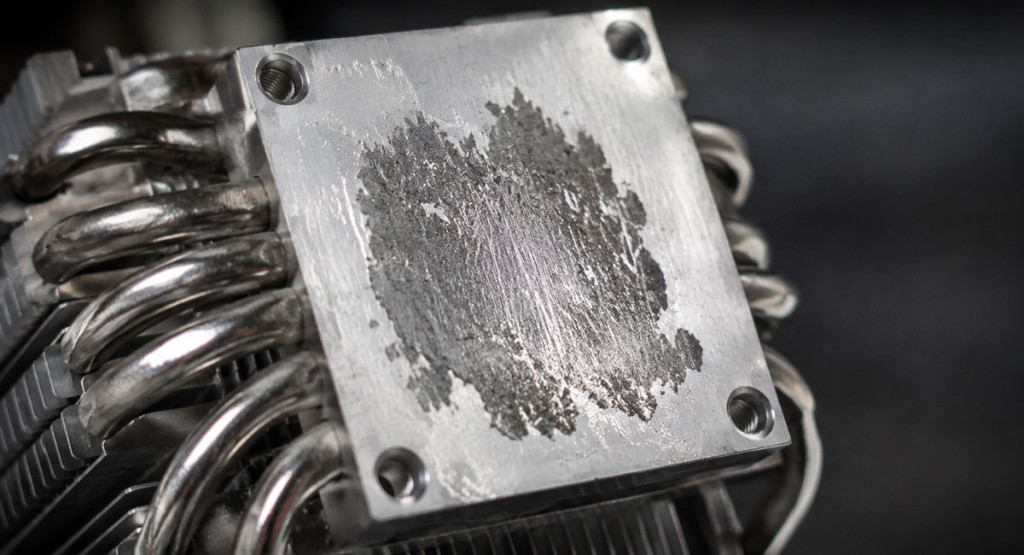
One referenced study showed fracture elongation of pure cast aluminium dropped 60 percent after 40 minutes of gallium exposure at 80 degrees Celsius. Visually you get a chalky, blackened surface that crumbles and is thermally useless. Damage is irreversible. GamersNexus demonstrated complete failure of an aluminium cold plate in an overnight test. Anodisation does not reliably stop gallium given enough time.
Safe and Unsafe Materials
Nickel-plated copper is the preferred surface. Cosmetic staining only with no measurable thermal degradation. All modern desktop IHSes qualify. Bare copper is acceptable but shows surface alloying, staining, and pitting over time, slower and less destructive than aluminium. Nickel coatings are a safe barrier but inspect for pinholes or thin spots in cheap blocks. Bare silicon die is safe for direct die applications as gallium does not attack silicon. Aluminium of any alloy, anodised or not, must never be used. Solder and tin should be avoided as gallium embrittles tin based solder over the long term.
How to Apply Liquid Metal
The process itself is fairly straightforward, but masking is critical. Cover the socket area, package edge, and adjacent surface mount capacitors aggressively with Kapton or electrical tape. Liquid electrical tape or Thermal Grizzly’s TG-Shield conformal coating is even safer.
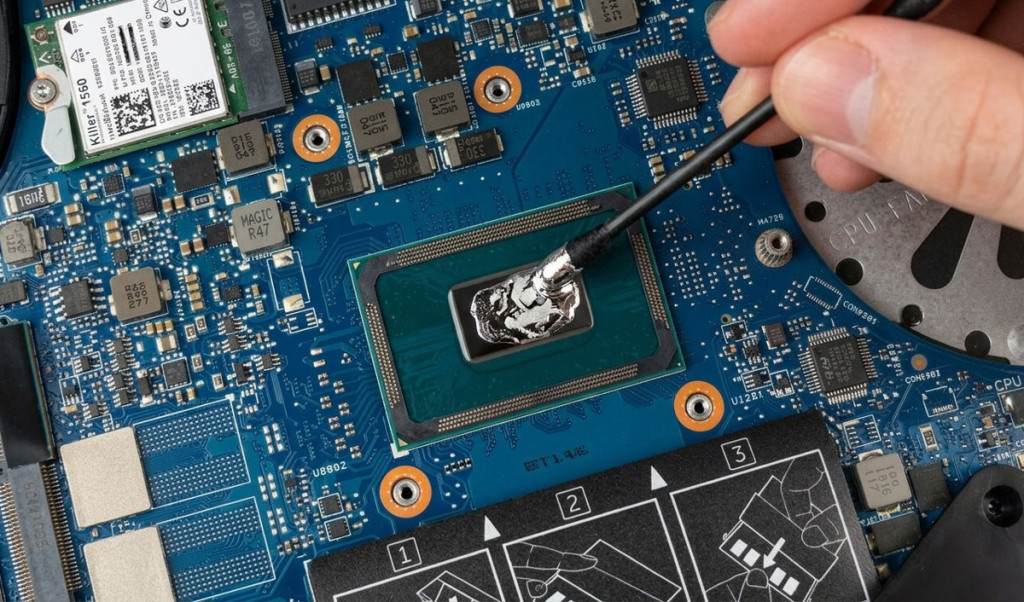
Clean both surfaces with 90 percent or higher isopropyl alcohol. Apply a rice grain sized droplet, then use a tightly packed cotton swab to tin the metal surface into a thin, uniform mirror finish, which breaks gallium’s surface tension. Tin both mating surfaces. Mount firmly and immediately. Wipe any perimeter ooze with a dry swab. For laptops or direct die applications, add a silicone dam or Thermal Grizzly GPU Guard to physically contain pump out.
Who Should and Should Not Use Liquid Metal
On a subjective note, I think it is fair to say liquid metal is not for everyone. It is appropriate for experienced delidders applying between die and IHS, direct die watercooling builds, GPU repaste experts on high end cards, and extreme overclockers chasing the last 5-10 degrees.
It is not appropriate for anyone with aluminium cooling, first time builders, anyone unwilling to mask carefully, mobile or LAN systems without a silicone dam, or anyone whose warranty matters.
The Kryonaut and Conductonaut Naming Confusion
This is the single most important safety point in this entire guide, and I do feel I really should not have to point it out. But I will, because the consequences of a mix up are severe.
Thermal Grizzly has a large product lineup and two of their product names sound similar but are fundamentally different products with very different safety profiles.
Kryonaut is a non conductive nano ceramic paste at 12.5 W/mK. Safe everywhere. Kryonaut Extreme is the same family with finer nano aluminium oxide particles at 14.2 W/mK. Also non conductive and safe everywhere. Conductonaut is liquid metal made from gallium indium tin at 73 W/mK. Electrically conductive. Destroys aluminium. Conductonaut Extreme is gallium indium only at approximately 86 W/mK. Same hazards as standard Conductonaut.
A user told to buy Kryonaut who accidentally buys Conductonaut, especially in an aluminium cooler setup, will destroy their cooler within hours. Always double check you have the correct product before opening the syringe.
The rest of Thermal Grizzly’s lineup for reference: Duronaut is a new non conductive durability focused paste. Hydronaut is a mid tier non conductive silicone free paste. Aeronaut is entry level non conductive silicone based. Carbonaut is a graphite pad that is electrically conductive. KryoSheet is a graphene pad that is electrically conductive and single use. PhaseSheet PTM is a phase change pad that is non conductive.
Surface Preparation and Cleaning
Use 99 percent isopropyl alcohol for cleaning. It has minimal water content, evaporates fastest, and leaves no residue. 91-95 percent is acceptable with slightly longer drying time. 70 percent works but contains significant water and needs full drying of 10-15 minutes or hair dryer assistance. Avoid rubbing alcohol that contains lanolin (always read the label). Alternatives include ArctiClean from Arctic Silver, pure acetone (but it corrodes nickel plating and some plastics), and Arctic MX Cleaner which is 100 percent limonene included with some MX-6 bundles. Never use tap water, fragranced wet wipes, or household glass cleaner.
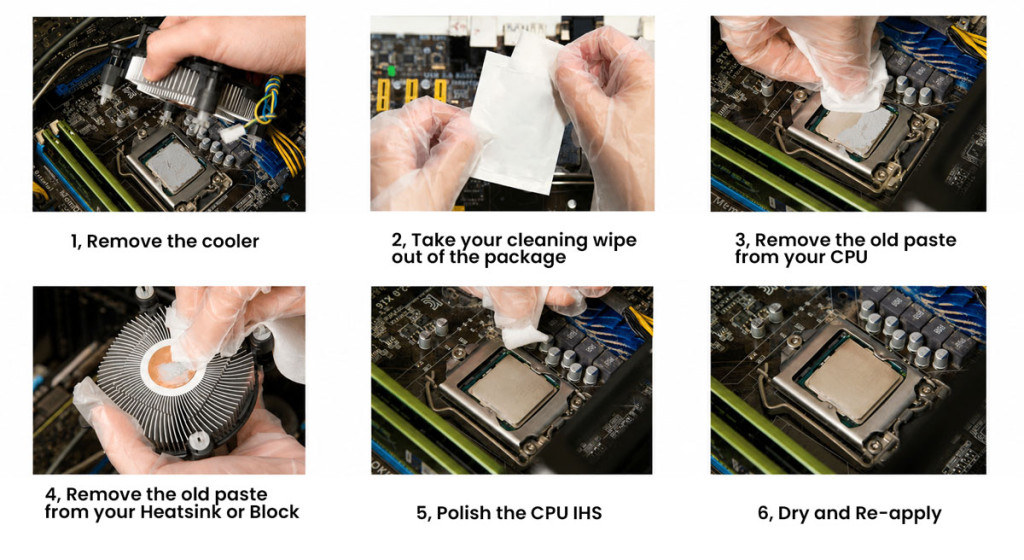
For wiping material, coffee filters are the universal recommendation from iFixit, GamersNexus, Tom’s Hardware, Noctua, and Arctic. Use bleached white only, not coarse organic. Microfibre cloth that is clean and unused is also acceptable. Avoid paper towels, tissue paper, cotton swabs around socket pins, shop rags, and perfumed wet wipes.
To clean old paste: cool the surface to room temperature, lift the bulk with a plastic spudger or credit card edge (never metal), dry wipe with a coffee filter, apply 99 percent IPA to a fresh filter without dripping onto the board and wipe in one direction, repeat until no residue transfers. For baked on Arctic Silver 5 or factory pre applied paste, multiple passes are needed. Allow 5-10 minutes drying with lower concentration IPA, 1-2 minutes with 99 percent. Do not touch the IHS or cold plate with bare fingers afterwards.
Storage and Shelf Life
Manufacturer longevity claims: Arctic MX-4 and MX-6 are rated for 8 years unopened, Thermal Grizzly Kryonaut has a 5-year storage warranty, and Noctua NT-H1 and NT-H2 are rated for 2 years once opened and approximately 5 years applied. Liquid metal is rated for 1-2 years due to oxidation sensitivity. A practical real world rule of thumb is 3-5 years unopened and 1-2 years once opened.
Igor’s Lab tested a 20-year old opened Arctic syringe and found it still usable but slightly less fluid. Separately, a 19-year old paste ran 2-5 degrees warmer than new paste but still worked.
For best storage: cap tightly, put in a zip lock bag, store in a cool, dry, dark location at 15-25 degrees Celsius, avoid temperature swings, and store cap up to prevent nozzle clogging and oil separation. Signs of expired paste include oil bleed on the first squeeze, extremely stiff, dry, or grainy texture, cracking or powdering on application, and unusual smell.
When to Reapply Thermal Paste
For PC desktops with standard pastes like MX-4, MX-6, MX-7, and NT-H1 or NT-H2: every 2-5 years. For desktops with high performance or overclocked setups using Kryonaut: every 1-2 years. der8auer publicly recommends annual Kryonaut reapplication due to pump out.
For GPUs: every 2-3 years with standard pastes, every 1 year with Kryonaut or NT-H2, and every 4-6 years with PTM7950 phase change pads.
Trigger-based signals that it is time to reapply include a sustained 5-10 degree rise versus baseline at the same workload, throttling at lower clocks than historical, and visible pump out or a dry zone over the die when you disassemble.
Manufacturer W/mK Claims: Take Them With a Pinch of Salt
One final point that applies to every paste in this guide. Manufacturer thermal conductivity claims are routinely inflated for non metal pastes. Igor’s Lab TIMA5 measurements are the most credible independent data available: MX-6 Rev. 4 at 4.748 W/mK, Polartherm X-8 at 3.1 W/mK, Polartherm X-10 at 3.2 W/mK. These numbers are physically realistic for paste composites and expose the gap between marketing figures and measured reality.
Arctic and Noctua have themselves stopped publishing W/mK figures because the metric is widely abused and does not correlate linearly with real world cooling, which depends on thermal resistance at a given bond line thickness, contact resistance, and viscosity. Treat claimed figures like Kryonaut’s 12.5 W/mK and Kryonaut Extreme’s 14.2 W/mK as comparative reference points, not absolute material constants. For those looking to get the most out of their cooling setup, the paste you choose matters less than how you apply it and how often you replace it. I did encounter quite a lot of inflated marketing claims while researching this guide, though, so any improvements in transparency from manufacturers would be most welcome.