




Reservoirs and Distribution Plates Explained
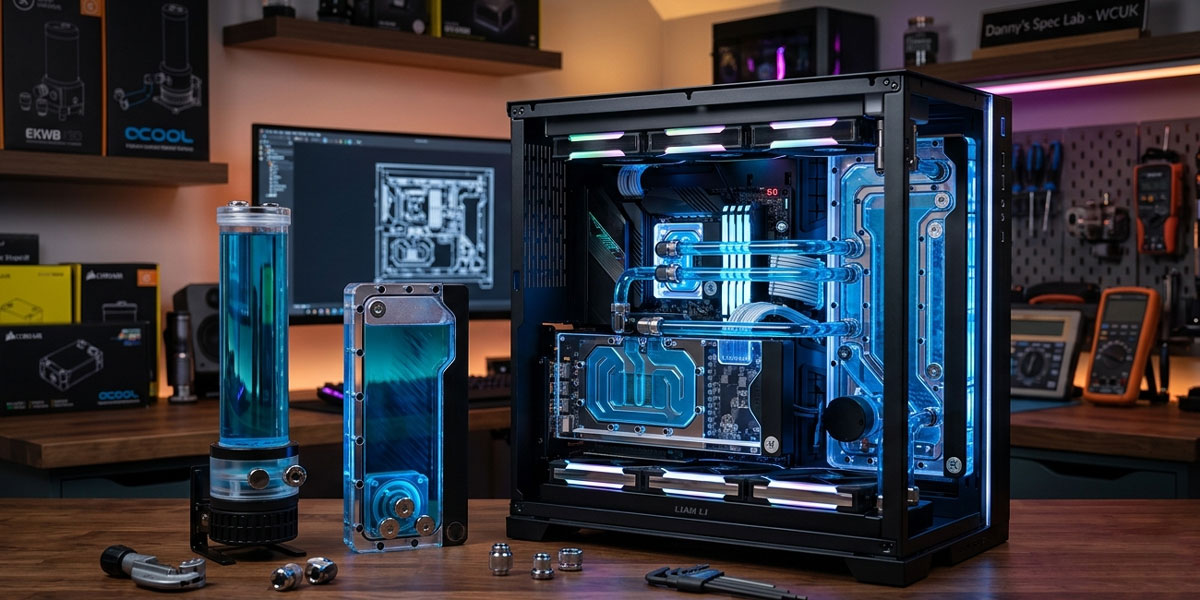
If you have been planning a custom watercooling loop, you will have come across reservoirs fairly early on. They are one of the more straightforward components in a loop, but they serve several important purposes that are easy to underestimate. In recent years, distribution plates have also emerged as a popular alternative, combining multiple functions into a single piece while adding a serious visual element to your build. So, what do both of these components actually do, how do they differ, and which one makes the most sense for your particular setup? Let’s find out.
What Does a Reservoir Do?
A reservoir holds extra coolant in your loop, and it serves four key purposes:
- Air separation. Air bubbles rise to the surface inside the reservoir rather than circulating through your blocks and radiators. This is important for keeping the loop running quietly and efficiently.
- Easy filling. It gives you somewhere to pour coolant into the loop and top up as air bleeds out over the first few days.
- Coolant visibility. It lets you see the coolant level, colour, and clarity at a glance, which is quite handy for spotting any issues early.
- Feeds the pump. It ensures the pump always has liquid at its inlet, preventing it from running dry. This is a fairly critical function, as a dry pump is not a happy pump.
Types of Reservoir
Tube / Cylinder Reservoirs
- SKU: WAAU-202
- MPN: 34060
- EAN: 4260073417013
- SKU: 1019162
- MPN: 15379
- EAN: 4250197153799
- Available for Collection
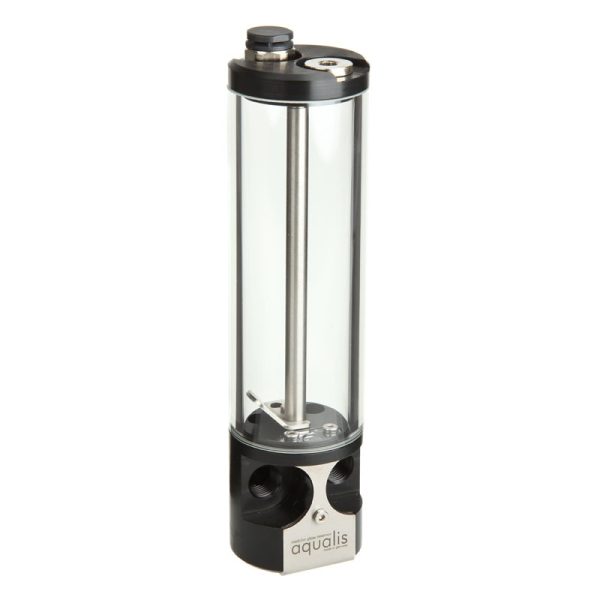
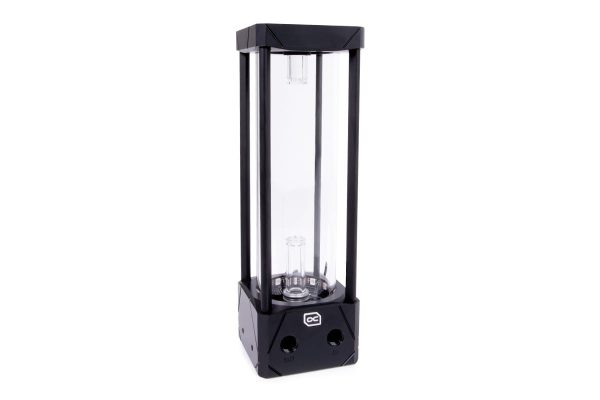
This is the classic design. A vertical tube (usually acrylic or glass) with end caps and G1/4 ports. These are available in sizes from 100mm to 300mm+ in length. You can mount them to your case with brackets, or combine them with a pump as a combo unit, which is the most popular option these days.
Pump-Reservoir Combos
- SKU: WAPU-233
- MPN: CX-9040015-WW
- EAN: 0840440484592
- SKU: 1023976
- MPN: 13742
- EAN: 4250197137423
- SKU: XS-PMP-020
- MPN: 5060596651906
- EAN: 5060596651906
- SKU: XS-PMP-010
- MPN: 5060596651661
- EAN: 5060596651661
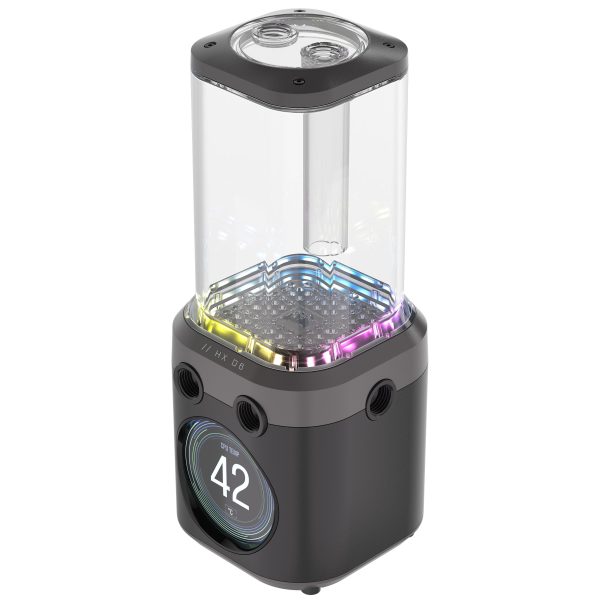
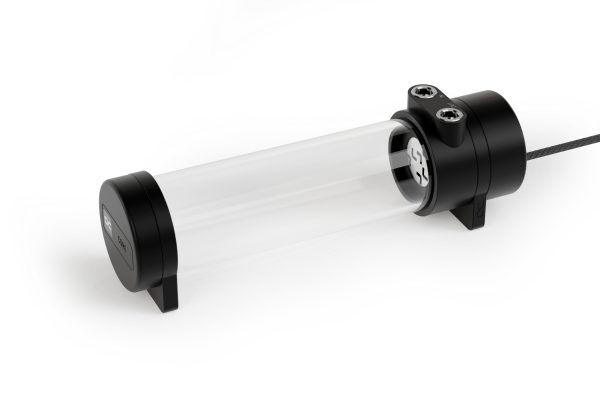
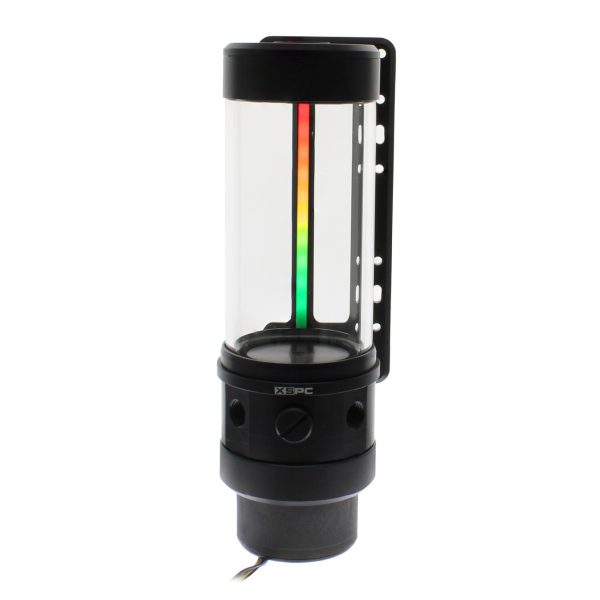
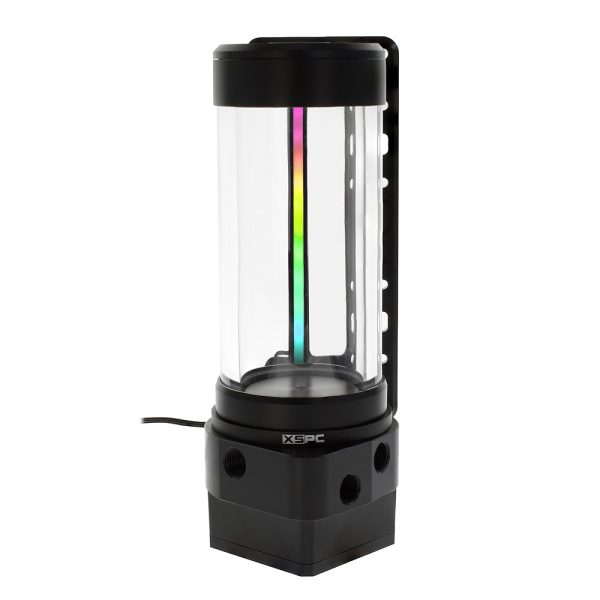
These integrate the reservoir and pump into a single unit, saving space and simplifying the loop. A pump-reservoir combo is, in fact, the most popular choice for modern builds. They are available for both D5 and DDC pumps from brands like EK, Watercool (Heatkiller), Singularity Computers, XSPC, and Alphacool. If you are putting together your first loop, this is quite likely the route you will want to take.
Flat Reservoirs (FLT)
- SKU: WAAU-726
- MPN: BPM-WTCR801
- EAN: 4712914791535
- SKU: WAAU-728
- MPN: BPM-WTCR803
- EAN: 4712914791559
- SKU: 1024004
- MPN: 15488
- EAN: 4250197154888
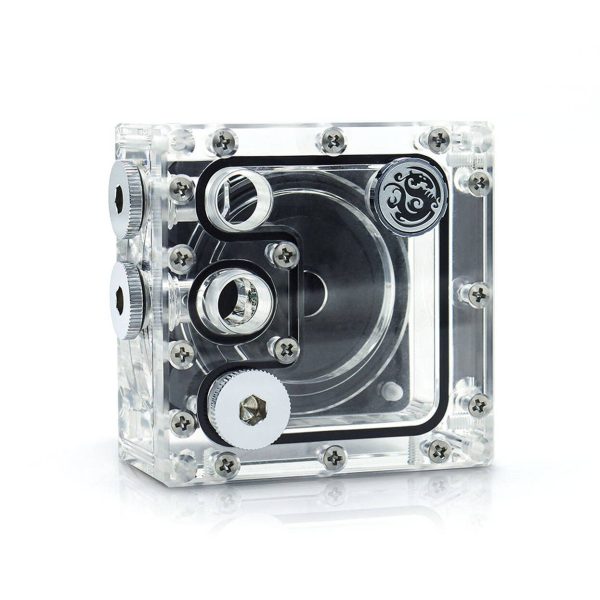
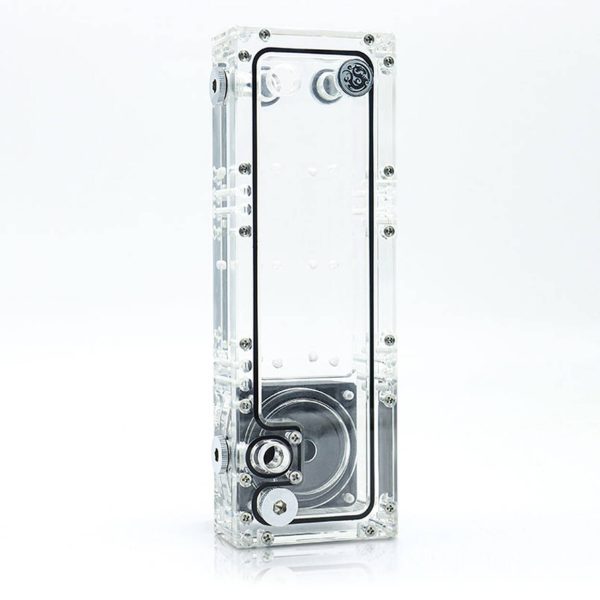
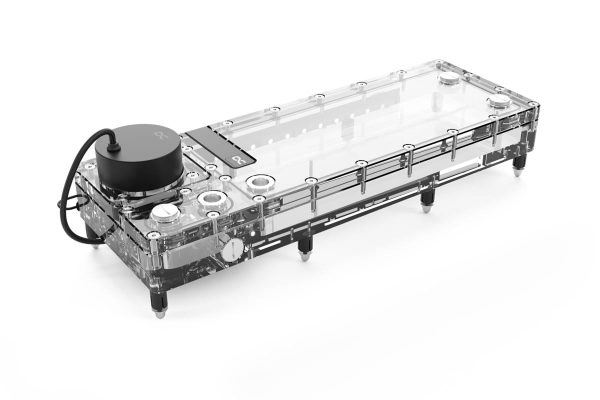
This is a newer design that mounts to 120mm fan positions, much like a radiator would. EK’s FLT series is the most well-known example. These are slim, mount flush against the case, and can include a DDC pump seat. They are great for builds where a traditional tube reservoir does not fit, or where you simply want a cleaner layout.
Distribution Plates
- SKU: WASK-074
- MPN: 19001
- EAN: 4260754981178
- SKU: 1025035
- MPN: 13874
- EAN: 4250197138741
- SKU: BKK-B009
- MPN: RGV-DDC-X-TK240
- EAN: 6932167227881
- Available for Collection
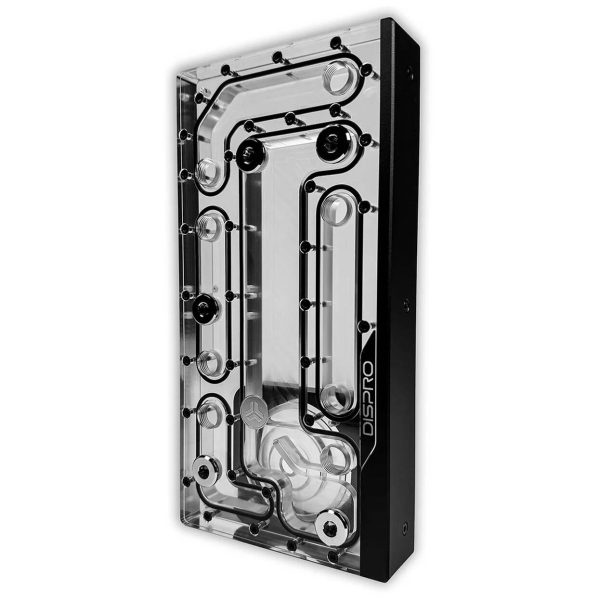
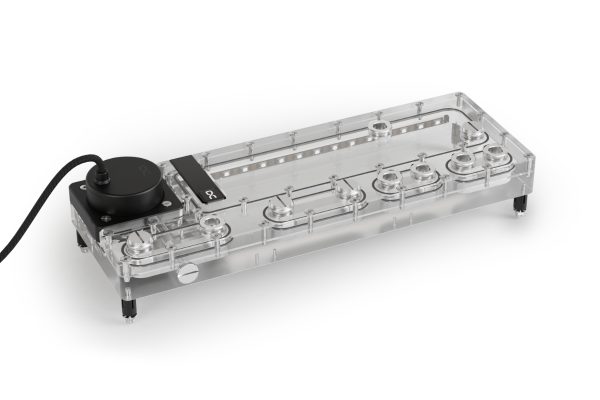
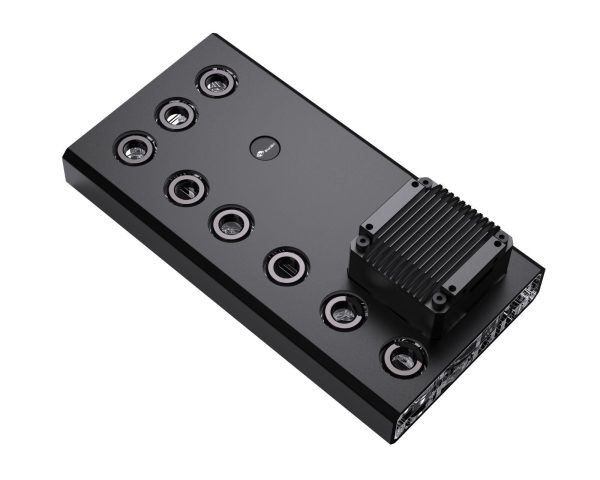
Distribution plates are flat acrylic or metal panels with internal channels machined into them. Instead of running tubing between every component, you run short tubes from each component to the distro plate, and the internal channels handle the routing. It is a fairly elegant solution, if I am being honest.
The key benefit here is simplification. Instead of planning complex tube runs between your CPU water block, GPU block, and radiators, each component just needs a short, straight run to the nearest distro port. The plate handles the rest internally.
Most distro plates include a DDC pump seat (the DDC’s compact 62x62mm footprint fits neatly within the plate’s thickness) and act as a reservoir too. Some are designed for specific cases, with the Lian Li O11 Dynamic being the most popular, while others are universal.
Distro Plate Advantages
- Fewer and simpler tube runs, which makes the building process a relative doddle compared to complex routed loops.
- Built-in pump and reservoir in one piece, which saves both space and headaches.
- Dramatic visual impact with coloured coolant and lighting. On a subjective note, I do think these can look quite swish in the right build.
- Easier to drain and fill, as the ports tend to be more accessible.
Distro Plate Considerations
I should point out that distro plates are not without their drawbacks:
- Case-specific models limit your case choice. If you go with a universal plate, you gain flexibility but may sacrifice that perfectly tailored look.
- They are more expensive than a standard reservoir. That is worth bearing in mind if you are on a tighter budget.
- Port positions are fixed, so your component layout needs to work with the plate design. This is not something you want to discover after the fact.
- Adding or removing components from the loop means all port positions need to line up. Any changes to your hardware can require a fairly significant rethink.
How Much Capacity Do You Need?
This is a question that comes up quite often, and the answer is relatively straightforward. Reservoir capacity does not significantly affect cooling performance. A bigger reservoir holds more coolant, which provides slightly more thermal mass (meaning the loop takes longer to heat up), but the temperature difference is negligible in practice. A 100ml reservoir cools just as effectively as a 300ml one once the loop reaches equilibrium.
As such, I would recommend choosing your reservoir size based on what fits your PC case and what looks right to you. Larger reservoirs are easier to fill and show off coolant colour better. Smaller ones fit in tight builds. It really is that simple.
Which one should you choose?
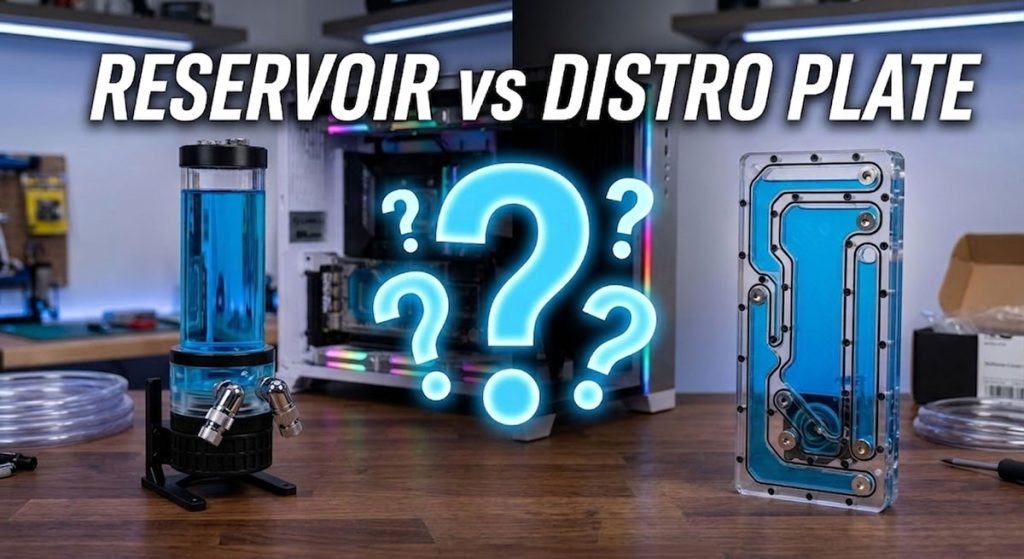
For those looking for maximum ease of building and a clean aesthetic, a distribution plate is a strong contender. It combines pump, reservoir, and internal routing into a single component, and the visual impact can be quite impressive. I would say the simplified tube runs alone make it worth considering if your case and budget allow for it.
That said, a traditional pump-reservoir combo is not to be overlooked. It is more flexible in terms of case compatibility, generally costs less, and still does the job admirably. If you are putting together a first loop or working within a tighter budget, a pump-res combo is arguably the more sensible choice.
In short, neither option is objectively ‘better’. It comes down to your case, your layout, and how much you are willing to shell out. Both will keep your loop fed and bled properly. The distro plate just happens to look rather nice while doing it.