




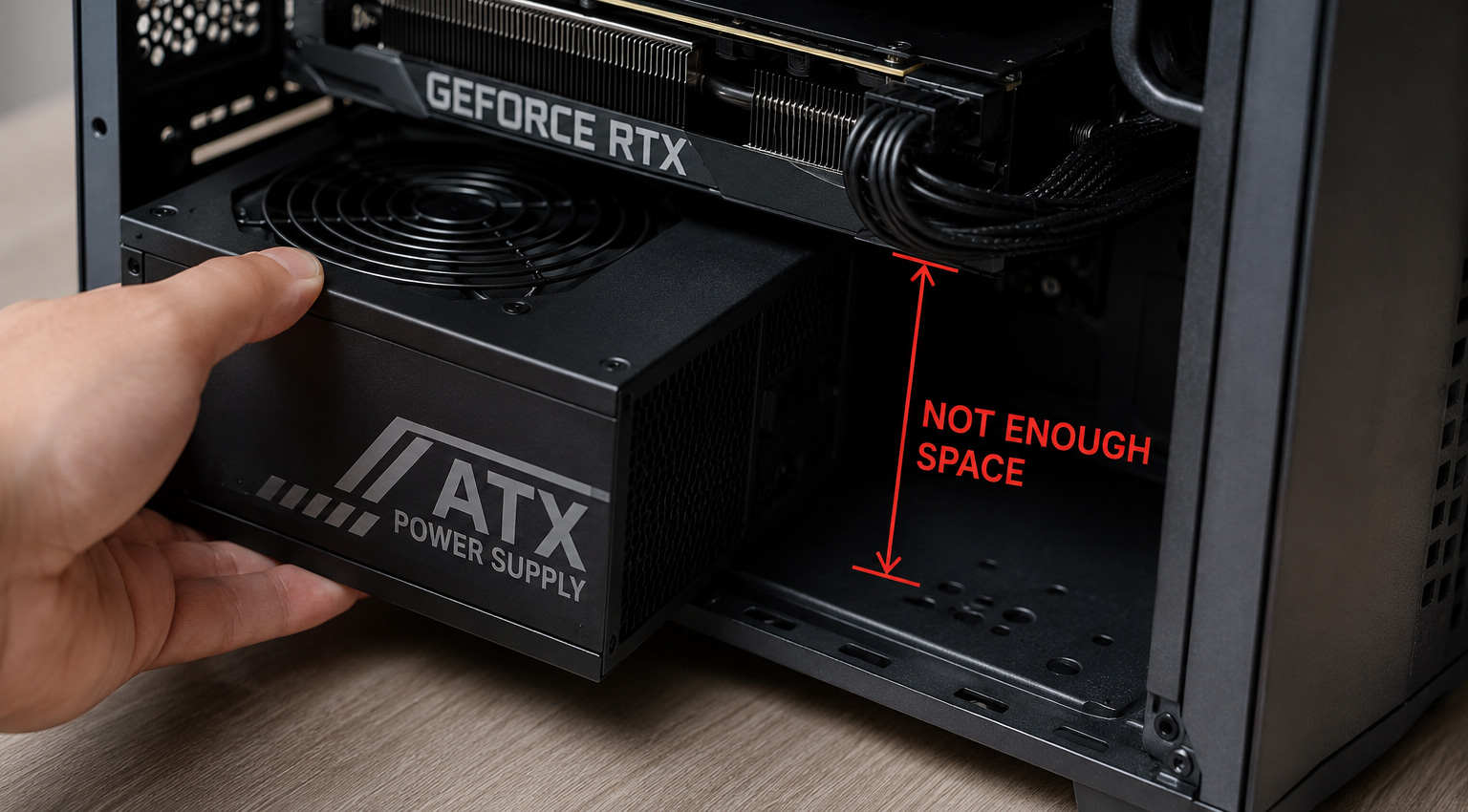
Which PSU Will Fit My PC Case?
You might assume that choosing a power supply is a straightforward wattage calculation, however the physical shape of the unit matters at least as much as the number on the label. The PSU is the only major PC component governed by multiple competing Intel specifications, all developed at different points between 1995 and 2024. Buy the wrong form factor and it either refuses to bolt into the chassis or, worse, bolts in perfectly but fouls your bottom radiator mount, blocks GPU clearance, or prevents the side panel from closing. For watercooling builders who plan their loop around every available millimetre, this is not a trivial concern.
This guide covers the form factors that actually matter for the enthusiast market, which case types use which standard, and where PSU dimensions specifically affect custom loop planning.
ATX: The Standard You Probably Already Know
ATX is the desktop default and has been since Intel formalised the specification in 1995. The mounting face is fixed at 150 x 86 mm; what varies is the depth, which ranges from 140 mm on a compact 650 W unit to 230 mm on something like a Seasonic PRIME TX-1600 or SilverStone HELA 2050R. That depth dimension is the number that catches people out.
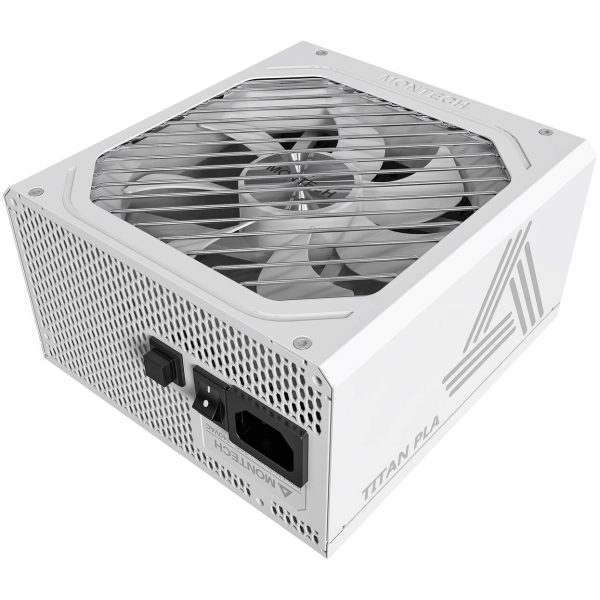
- SKU: NEMT-006
- MPN: TITAN PLA 750W
- EAN: 4710562741612
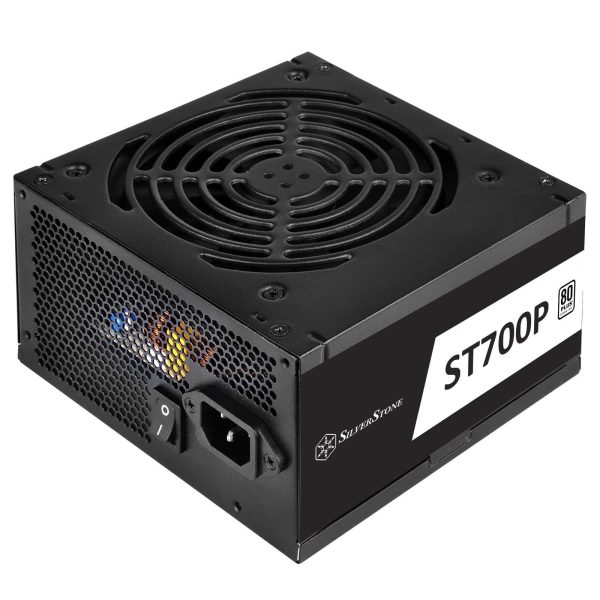
- SKU: PSU-FIX-007
- MPN: SST-ST700P
- EAN: n/a
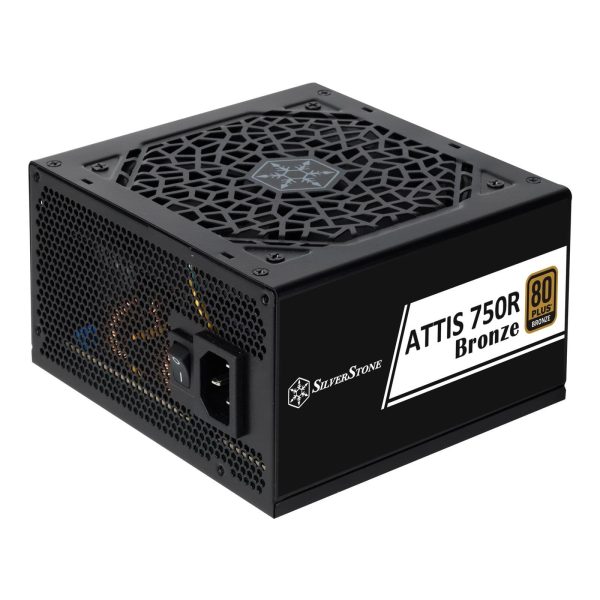
- SKU: PSU-FIX-011
- MPN: SST-AT750R-BF
- EAN: 4710679817484
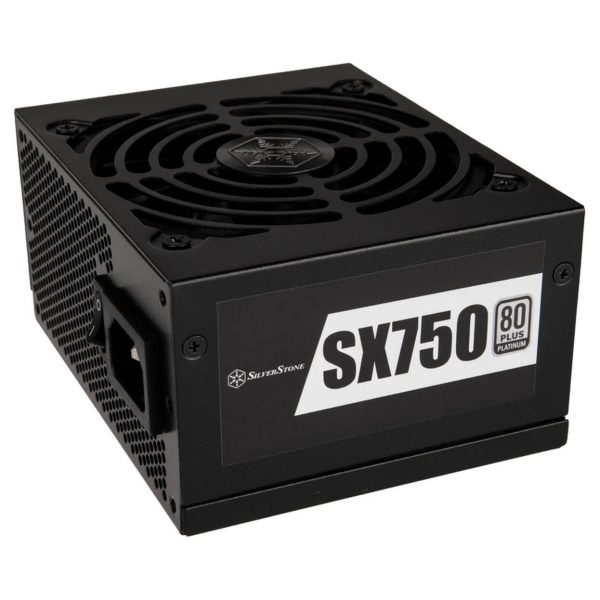
- SKU: NEST-188
- MPN: SST-DA1650-G UK
- EAN: 4710007229897
A standard ATX PSU at 140 mm deep fits virtually any mid tower or full tower case without drama. Push past 160 mm and you start eating into the space behind the motherboard tray where cables, drive cages, and in many builds a reservoir or pump need to live. At 200 mm and above, you need to check your case specification sheet explicitly, because not every mid tower can accommodate an oversized ATX unit even though the mounting holes line up.
Fan size on ATX ranges from 120 mm to 140 mm, which means quiet operation even under heavy load. Wattage runs from 300 W budget units to 2050 W flagships in retail, and Seasonic has announced a 3200 W model. For the vast majority of builds, the practical range is 750-1200 W.
SFX: Small Form Factor, Serious Power
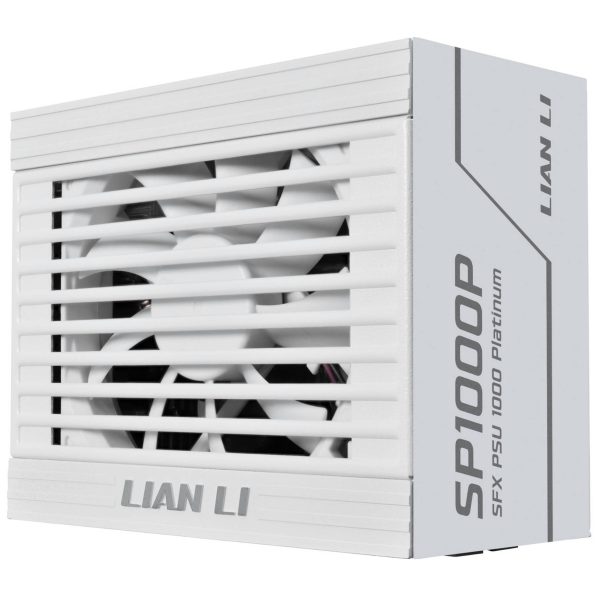
SFX measures 100 x 125 x 63.5 mm in the consumer “Top Fan Mount” profile that pretty much every modern SFX unit uses. It is physically smaller than ATX in every dimension, uses an 80 mm or 92 mm fan, and was designed for Mini-ITX cases where volume is measured in litres rather than vague marketing descriptions.
What has changed dramatically in the last few years is the wattage ceiling. SFX now reaches 1000 W from multiple manufacturers, with the Corsair SF1000L and Lian Li SP1000P both delivering flagship power in a package the size of a thick paperback. Five years ago, the idea of running an RTX 5080 from an SFX PSU would have been optimistic. Today it is the standard recommendation for any ITX build.
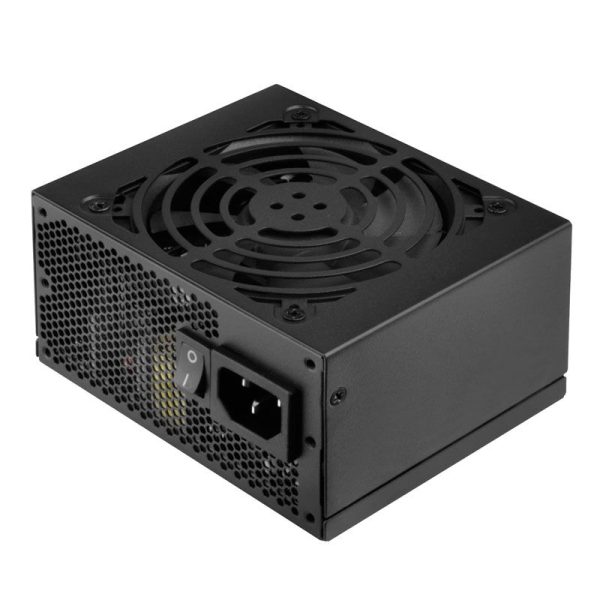
- SKU: NEST-128
- MPN: SST-ST45SF v 3.0
- EAN: 4710007224298
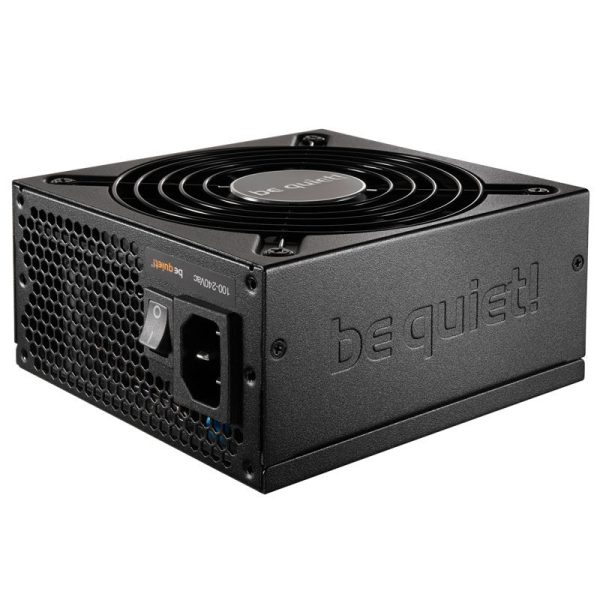
- SKU: NEBE-173
- MPN: BN215
- EAN: 4260052185629
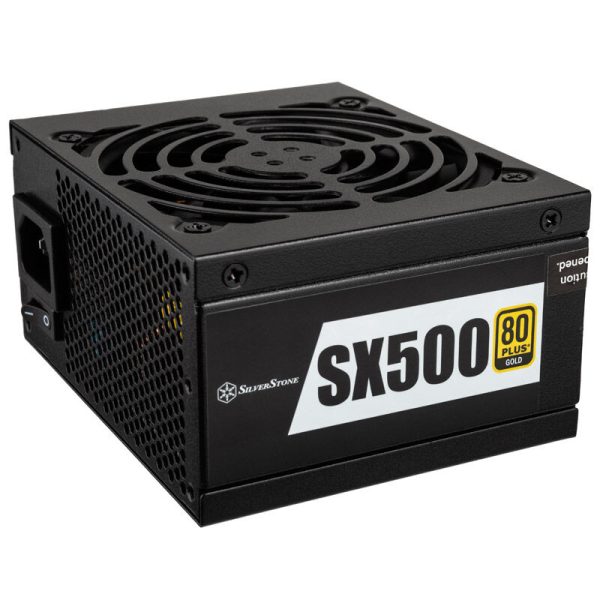
- SKU: NEST-145
- MPN: SST-SX500-G v1.1
- EAN: 4710679810898
- SKU: NELI-042
- MPN: G9P.SP1000P.W000.EU
- EAN: 4718466020192
The downside is noise. Smaller fans spin faster to move the same volume of air, and an SFX unit at full load will be noticeably louder than an equivalent ATX. If you are spending money on custom watercooling specifically to eliminate fan noise (and many of our customers are), this is worth considering. The other downside is cable length: SFX units typically ship with 300-400 mm cables, which may not reach the top of a mid tower motherboard without extensions.
SFX-L: The Quieter Middle Ground
SFX-L is a variant pioneered by SilverStone measuring 130 x 125 x 63.5 mm. The extra 30 mm of depth accommodates a proper 120 mm fan, which drops noise levels significantly and lifts the wattage ceiling to around 1300 W. The SilverStone Extreme 1200R Platinum and ASUS ROG Loki SFX-L 1200 W Titanium sit at the top of this range, and either would comfortably power an RTX 5090 build in SFF form.
Here is the important detail: SFX-L bolts into any SFX bracket because the mounting face is identical. However, the case must have 30 mm of additional depth behind the PSU bay to accommodate the longer body. Most modern SFX cases explicitly support SFX-L. Older or ultra compact cases such as the original DAN A4-SFX v1/v2 and the Velka 5 do not. This is not a maybe, it is a hard physical constraint. Always check the case specification for explicit SFX-L support before buying.
TFX, Flex ATX, and the Niche Standards
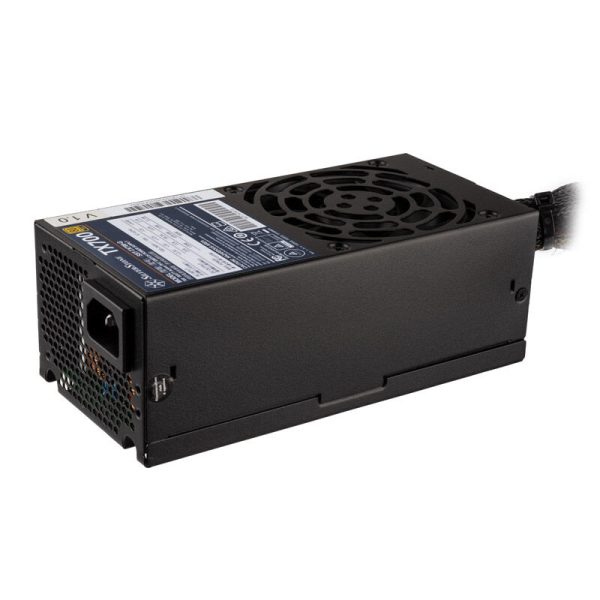
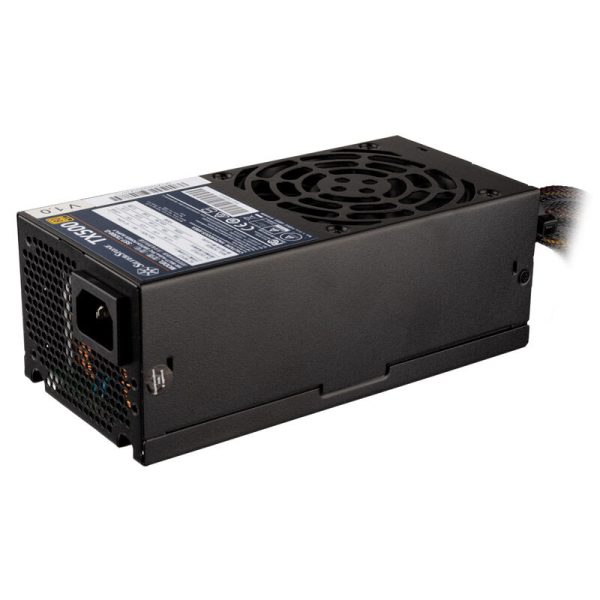
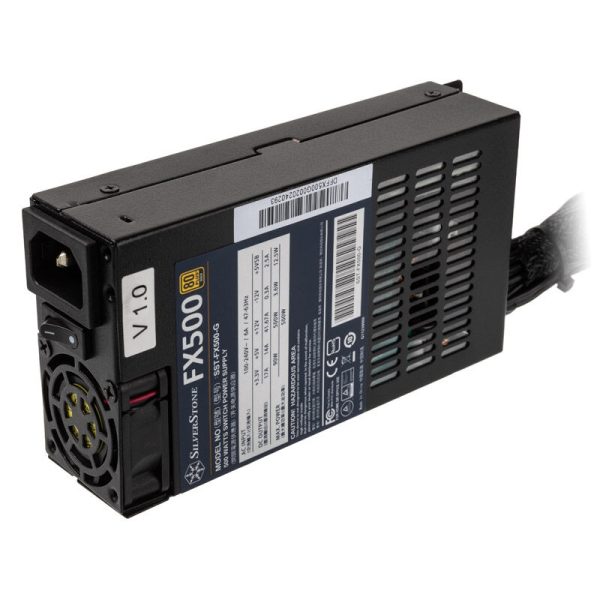
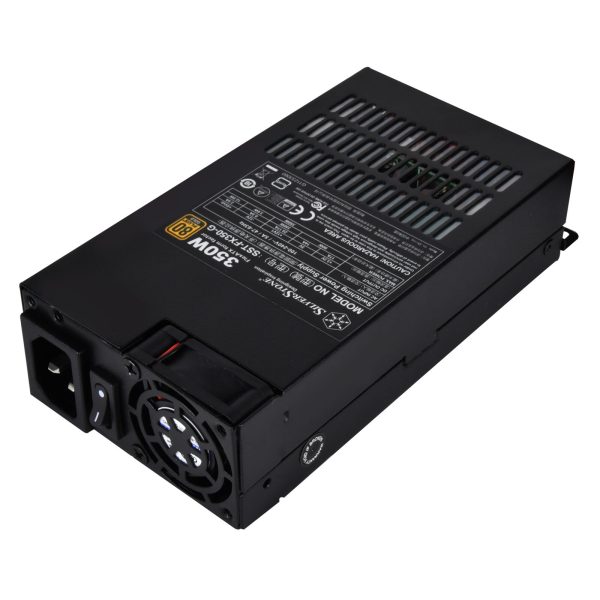
These two form factors exist for specific use cases and are worth mentioning primarily so you do not confuse them with each other. Despite both being described as “slim,” they are mechanically incompatible. TFX measures 175 x 85 x 65 mm and fits slim OEM desktops and a small number of HTPC cases such as the SilverStone Milo ML11. Flex ATX measures 150 x 81.5 x 40.5 mm and fits 1U/2U server chassis and ultra thin NAS cases like the Jonsbo N10.
- SKU: NEST-166
- MPN: SST-TX700-G
- EAN: 4710679810461
- SKU: NEST-165
- MPN: SST-TX500-G
- EAN: 4710679810454
- SKU: NEST-144
- MPN: SST-FX500-G
- EAN: 4710679810379
- SKU: NEST-196
- MPN: SST-FX350-G
- EAN: 4710007225912
Flex ATX in particular has an acoustic problem that buyers need to understand before committing. The single 40 mm fan is its defining limitation: even Gold rated Flex ATX units idle at 22-30 dBA and approach 50+ dBA at full load (ouch). If you are building an ultra compact NAS in a Jonsbo N10 or NV10 and expecting quiet operation, Flex ATX will disappoint you. The wattage ceiling sits around 850 W, with most units in the 250-500 W range.
For completeness, picoPSU modules exist for truly fanless builds: a tiny PCB plugging into the motherboard’s 24-pin socket, fed by an external 12 V brick. Wattage caps at 250-400 W, limiting you to low TDP CPUs. Nifty for a silent Plex server, but the enthusiast applications are narrow.
Case Type Compatibility at a Glance
Rather than listing every case on the market, here is the general principle by case category. If your case is not listed, the manufacturer specification sheet will state maximum PSU length and supported form factors.
Full towers take ATX as standard, typically supporting depths up to 200-250 mm. Most will swallow an oversized 1500 W unit without complaint. The Lian Li O11 Dynamic XL supports up to three ATX PSUs for builds running multiple systems. The Fractal Define 7 XL accommodates 250 mm with drive cages installed and 353 mm with one cage moved forward. Honestly, PSU fitment is rarely a concern in a full tower.
Mid towers also take ATX as standard, however the maximum depth varies more than you might expect. The Lian Li O11 Dynamic EVO and Corsair 4000D Airflow both support 220 mm. The original O11 Dynamic drops to 170 mm with the cable management bar installed. The Fractal Define 7 offers 180-200 mm depending on configuration. This is where checking the actual specification matters, because a 200 mm Corsair HX1500i fits some mid towers and not others.
- SKU: GEJB-188
- MPN: X400 WHITE
- EAN: 6970620555621
- SKU: GEJB-189
- MPN: D401 BLACK
- EAN: 6970620555591
- SKU: GEJB-184
- MPN: X400 PRO
- EAN: 6970620555546
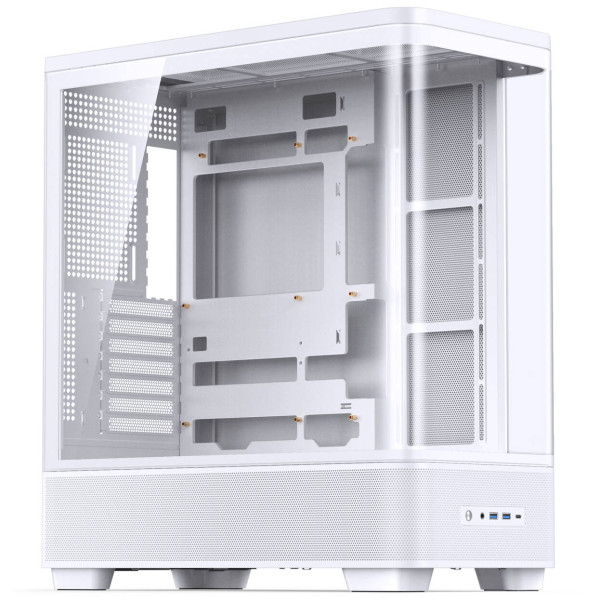
- SKU: GEJB-174
- MPN: TK-5 WHITE
- EAN: 6970620555027
Mini-ITX and SFF cases take SFX as the default, with SFX-L supported on most modern designs above 10 litres. The Cooler Master NR200P deserves special mention for being among the first true ITX cases with official ATX support up to 160 mm via the MCA-NR200C-KPSU00 bracket, however this compromises maximum GPU length to 240 mm. The Lian Li Q58 includes a switchable bracket for SFX, SFX-L, or ATX up to 160 mm, though ATX mode reduces AIO support to 120 mm. The Lian Li A3-mATX ships with a adjustable bracket supporting ATX up to 220 mm.
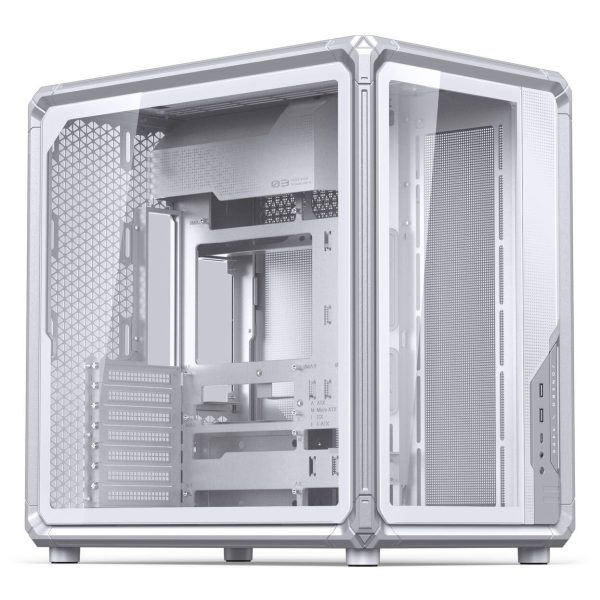
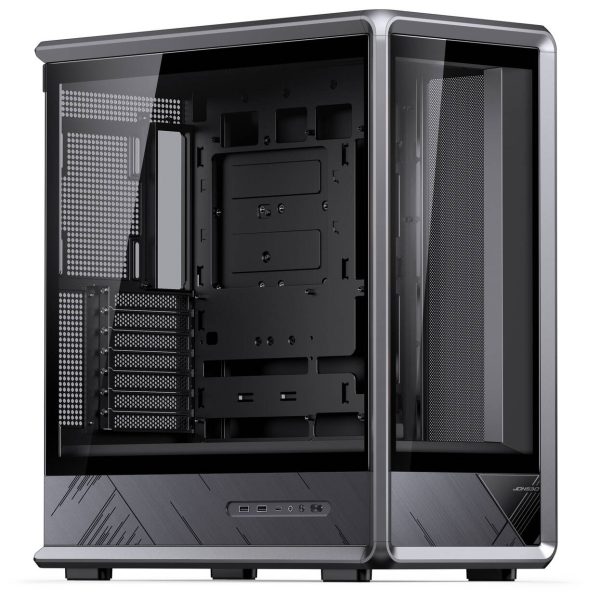
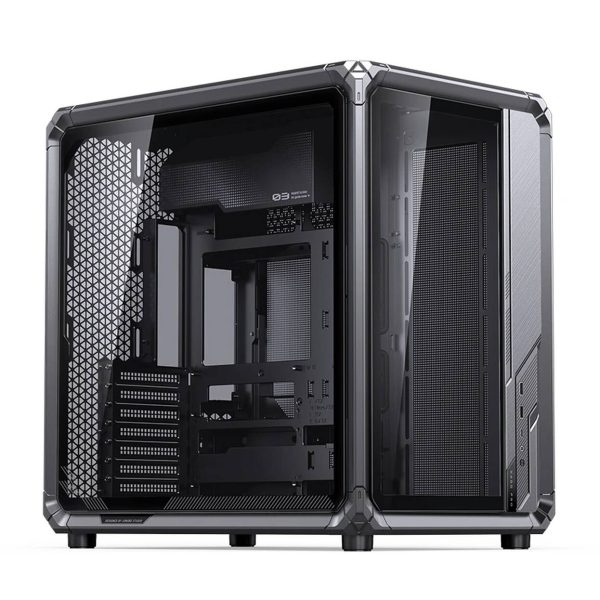
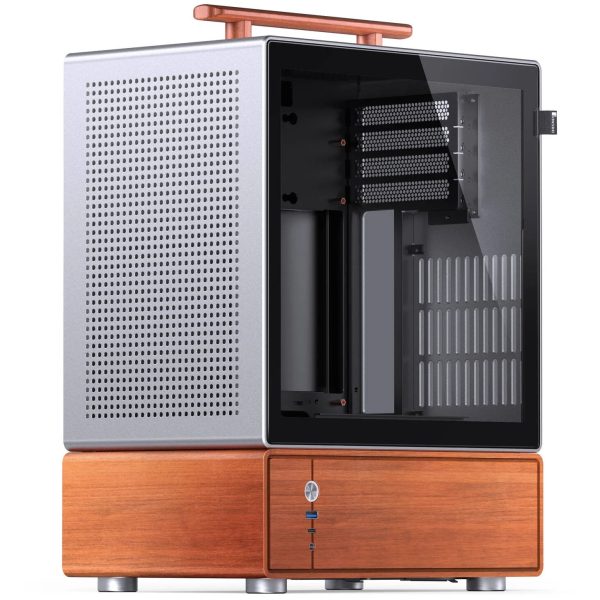
Cube cases vary wildly. The Jonsbo D31 and D41 have a nifty four position adjustable front mounted PSU bracket supporting both ATX and SFX at depths from 100 to 220 mm, which makes them particularly popular with compact watercooling builds where the exact PSU height can be tuned around a radiator and fan stack. The Fractal Node 804 takes full ATX in its dedicated PSU chamber. The Thermaltake Core V21 takes ATX.
Server rack cases depend on U height. 1U means Flex ATX only (40.5 mm height constraint). 2U can take Flex ATX or SFX depending on model. 3U accepts SFX or ATX. 4U takes full ATX and is the easier choice for homelab builds.
HTPC cases split between TFX for the slimmest designs, SFX for most mid size units, and picoPSU for the fanless enthusiasts running Streacom or HDPLEX chassis.
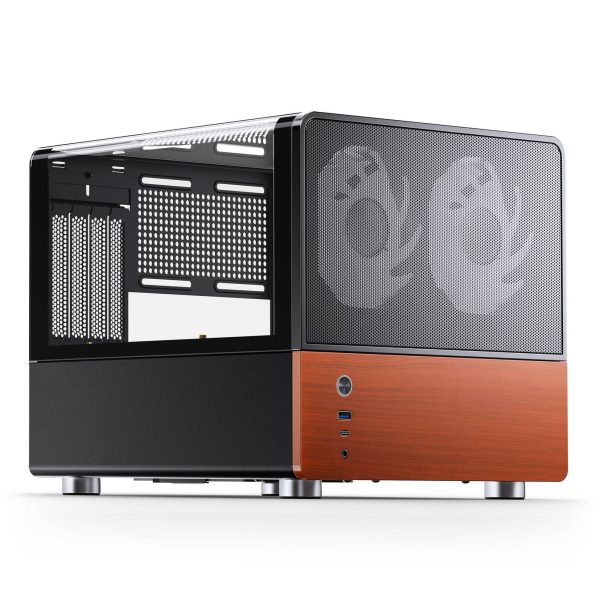
- SKU: GEJB-164
- MPN: V12 BLACK
- EAN: 6970620554822
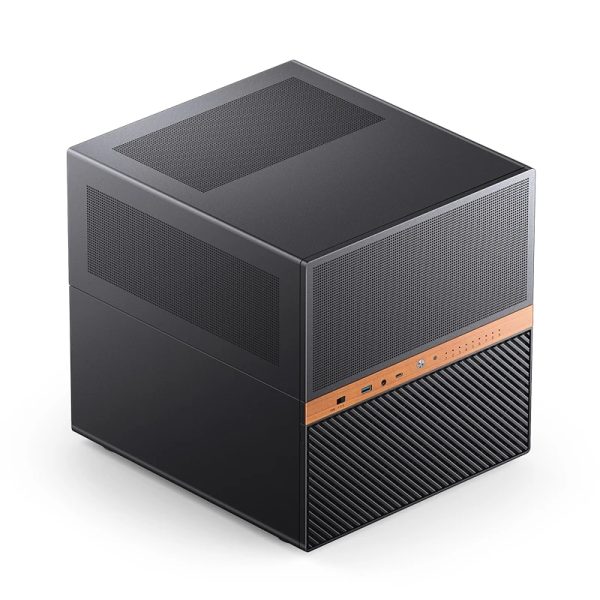
- SKU: GEJB-185
- MPN: N6 Black
- EAN: 6970620555522
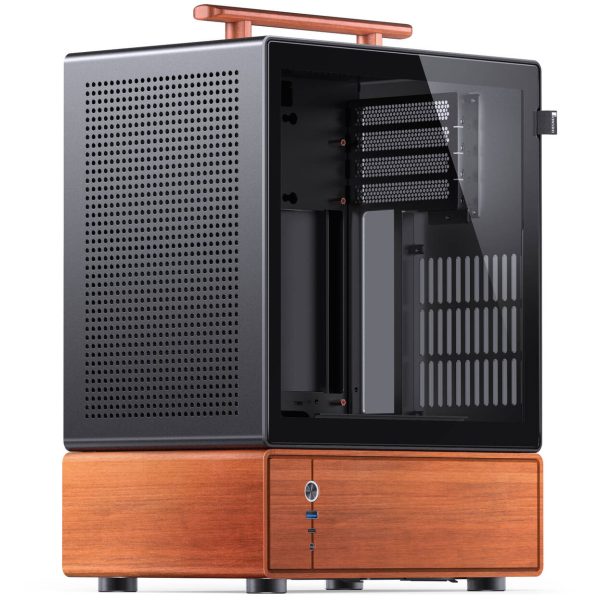
- SKU: GEJB-175
- MPN: T7 BLACK
- EAN: 6970620554907
- Available for Collection
- SKU: GEJB-176
- MPN: T7 SILVER
- EAN: 6970620554914
Why Watercoolers Should Think About PSU Dimensions
For a standard air cooled build, PSU dimensions are pretty much a checkbox exercise: check the case spec, confirm the unit fits, move on. For custom loop builders, however, the PSU’s physical footprint directly affects how much space remains for the components that actually matter to you.
In a mid tower, the PSU typically sits in a shroud at the bottom of the case. A 200 mm ATX unit in that position may block or severely limit clearance for a bottom mounted radiator with thick fans, a D5 pump top reservoir, or a full length distribution plate. Replace that with an SFX unit on a SilverStone PP08 bracket and you reclaim approximately 21 mm of internal space compared to a native ATX installation. That is enough for a 60 mm radiator with 30 mm fans underneath, which would otherwise not fit.
The PP08 bracket costs around fifteen pounds and accepts both SFX and SFX-L units. It has become standard equipment for watercooling builds in dual chamber cases like the Lian Li O11 Dynamic series, where every millimetre of the main chamber is allocated to tubing runs, fittings, and radiator stacks. If you are planning a loop in a mid tower and have not considered an SFX PSU with a bracket adapter, it is worth running the numbers on clearance before committing to ATX.
The cost is the downside. SFX units carry a 30-60% premium per watt over equivalent ATX models. An 850 W SFX Platinum costs roughly what a 1200 W ATX Platinum does. Whether that premium is justified depends on your case, your loop layout, and how much you value the extra clearance. For many custom loop builders, it is money well spent.
ATX 3.1 and the 12V-2×6 Connector
Any build running a modern high end Nvidia GPU needs to pay attention to this. The RTX 4090, 5080, and 5090 all use the 12V-2×6 connector (a 16-pin socket delivering up to 600 W through one cable). ATX 3.1 is the PSU specification that supports it properly, with the revised connector design featuring longer power pins and shorter sense pins for safer insertion and removal.
- SKU: FSD8-076
- MPN: TG-WV-P2-H19R
- EAN: 4260711992483
- Available for Collection
- SKU: FSD8-075
- MPN: TG-WV-P2-H19N
- EAN: 4260711992490
- Available for Collection
- SKU: FSD8-080
- MPN: TG-WV-P2-H19R-W
- EAN: 4260711992957
- SKU: FSD8-079
- MPN: TG-WV-P2-H19N-W
- EAN: 4260711992964
Best practice is straightforward: use a native 12V-2×6 cable from an ATX 3.1 PSU. Do not daisy chain adapters. Ensure the connector clicks fully into the GPU socket with no visible gap. Avoid bending the cable within 35 mm of the plug. The widely reported “melting connector” issue has not disappeared with the RTX 5090, and independent analysis attributes it to the GPU side pin layout rather than the cable itself. Mitigations now appearing include yellow tip cables from MSI and ASRock that make incomplete seating visible, per pin current monitoring on some ASUS ROG cards, and 90 degree angled native cables from Cooler Master.
This applies equally to ATX and SFX PSUs. Most premium SFX units from Lian Li, SilverStone, Corsair, and Phanteks now ship with native 12V-2×6 cables as standard. If yours does not, it is either an older model or a budget unit, and you should consider upgrading rather than relying on an adapter.
Modular, Semi Modular, and Why It Matters for SFF
In a mid tower with generous cable routing space, a semi modular PSU is a perfectly sensible choice. The 24-pin and EPS 8-pin are permanently attached (you need them regardless), while PCIe, SATA, and Molex detach. Good value, minimal fuss.
In an SFF build, fully modular is the only viable option. Inside an 8-13 litre case, every millimetre matters. Excess hardwired cables physically prevent the chassis from closing. Custom short cable kits from Corsair, CableMod, or Pslate Customs are SFF essentials, and they require a fully modular PSU to work. Almost every modern SFX and SFX-L unit is fully modular for exactly this reason. If you find an SFX PSU that is not fully modular, that is a strong signal it is either very old or very cheap, and probably both.
The Gotchas Worth Knowing
A few compatibility traps come up regularly enough to flag explicitly.
SFX-L does not fit every SFX case. The mounting face is identical, but the case needs 30 mm of extra depth. The original DAN A4-SFX, Velka 5, and some Phanteks Evolv Shift configurations do not have it. Check the case specification for explicit SFX-L support, do not assume.
Some “ATX compatible” cases reject oversize ATX units. The Jonsbo C6-ITX has a 150 x 86 mm aperture that matches the ATX standard precisely, but some PSU manufacturers build slightly oversize. The MSI MAG A650BN at 151.6 x 88.3 mm will not physically fit. The Jonsbo D32 PRO explicitly excludes C19 16 A plug ATX units. If you are building in a compact case with ATX support, measure the aperture and compare it against the PSU’s published dimensions.
TFX and Flex ATX are not interchangeable. They are both slim, they are both niche, and they use completely different mounting patterns. TFX is taller and narrower (175 x 85 x 65 mm) versus Flex ATX (150 x 81.5 x 40.5 mm). Buying the wrong one means a returns process.
The Lancool 207 PSU clearance is tighter than expected. Despite ATX support, the front mounted rotated PSU bay can block the 24-pin connector area on some deeper PSUs. Keep to 160 mm or under and verify clearance before finalising your build.
NR200P ATX bracket limits GPU length. The Cooler Master ATX bracket enables full ATX up to 160 mm, which is nifty, however it restricts the GPU to 240 mm in the low bracket position. For a watercooled GPU build, that may rule out your block and terminal combination.
Realistically, most of these issues are avoidable by spending five minutes with the case specification sheet before ordering. The question is whether you actually do that, or whether you assume it will fit and discover otherwise when the box arrives. We have handled enough support queries on this topic to know which approach is more common.
- SKU: GEJB-188
- MPN: X400 WHITE
- EAN: 6970620555621
- SKU: GEJB-189
- MPN: D401 BLACK
- EAN: 6970620555591
- SKU: GEJB-184
- MPN: X400 PRO
- EAN: 6970620555546
- SKU: GEJB-174
- MPN: TK-5 WHITE
- EAN: 6970620555027