




Understanding and Preventing Corrosion in Your Watercooling Loop
You might assume the biggest risk to a custom watercooling loop is a dramatic leak that drenches your graphics card in coolant. In practice the real threat is far less cinematic. Corrosion works quietly, chewing through metal surfaces over weeks and months without giving you any obvious warning. The good news is that it is almost entirely preventable, however you do need to understand the underlying chemistry and follow a few straightforward rules. Think of this as the guide you wish you had read before building your first loop.
What is Galvanic Corrosion?
When two dissimilar metals sit in the same liquid, they effectively form a tiny battery. One metal surrenders electrons and slowly dissolves (the anode), while the other sits there happily protected (the cathode). Your coolant acts as the electrolyte that makes this electrochemical reaction possible.
The speed at which this happens depends on how far apart the two metals are on the galvanic series, which is essentially a ranking of metals by their electrochemical potential. Metals that sit close together on the series can coexist without drama. Metals far apart will cause problems, and there is pretty much nothing you can do to stop it once the reaction gets going.
The Metals in Your Loop
A typical custom watercooling loop contains the following metals:
- Copper. Used for water block cold plates and premium radiators.
- Nickel. Applied as plating on water blocks and some fittings, primarily for aesthetics and basic oxidation resistance.
- Brass. Found in most fittings (brass is a copper-zinc alloy) and some radiator end tanks.
- Aluminium. Used in budget radiators, most AIO cooler radiators and some budget fittings.
Copper, nickel and brass are all within about 0.10V of each other on the galvanic series. They are close enough to live together without any issues, and this combination has been the standard for PC watercooling for over two decades.
Aluminium is the problem. It sits roughly 0.40-0.55V away from copper on the galvanic series, which is well above the safe threshold. When aluminium meets copper in the same loop, the aluminium becomes the sacrificial metal and corrodes. There is no getting around this.
Never Mix Aluminium and Copper
This is the single most important rule in watercooling, and it is worth stating plainly. If your loop has copper water blocks and brass fittings (which pretty much all custom loops do), then every radiator and every other component in that loop must also be copper or brass. Introducing an aluminium radiator will cause galvanic corrosion that no coolant additive can fully prevent.
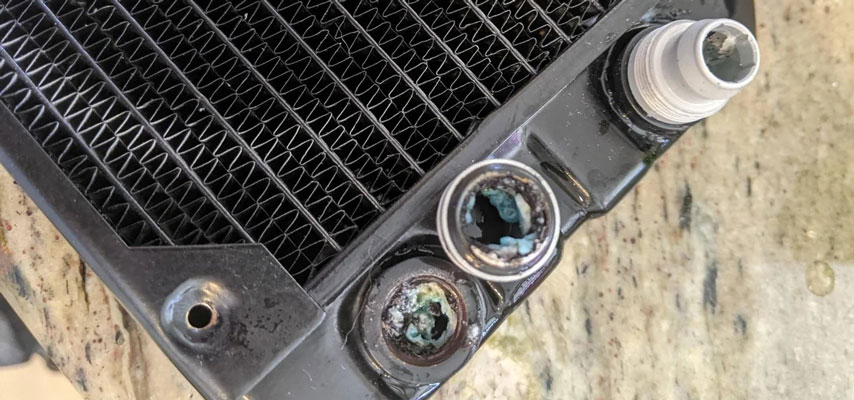
Here is what happens in practice:
- Within weeks. Coolant may start to discolour or go cloudy.
- Within months. White aluminium oxide deposits appear throughout the loop and aluminium surfaces show pitting.
- Within 6-12 months. Particles circulate through the loop, clogging water block micro-channels and damaging pump impellers. Pinhole leaks can develop in the aluminium radiator. (Ouch.)
Even the best corrosion inhibitors can only slow this process, not stop it. The electrochemical driving force is simply too strong.
One point that catches people out: most AIO (all-in-one) coolers use aluminium radiators to keep costs down. You cannot cannibalise an AIO radiator and add it to a custom loop with copper blocks. The materials are incompatible, however tempting it might be to repurpose hardware you already own.
Signs of Corrosion
If you spot any of the following, investigate immediately rather than hoping for the best:
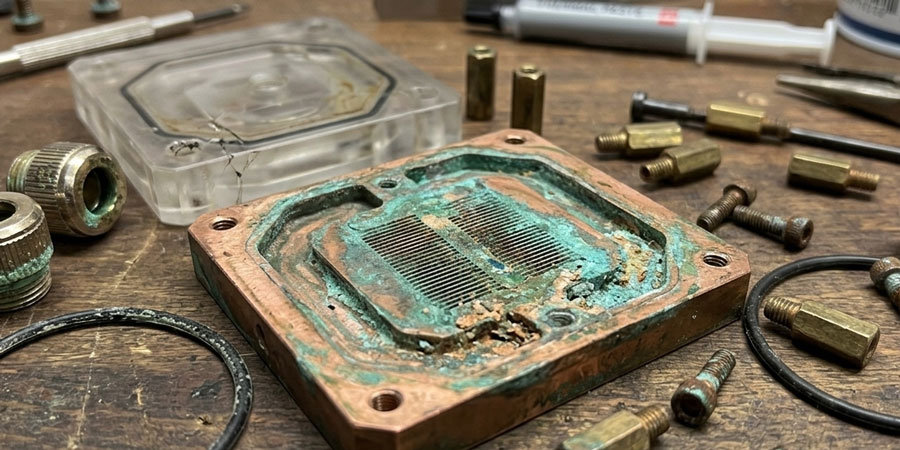
- Green or blue-green deposits. This is copper corrosion (verdigris), which indicates your coolant is not protecting copper surfaces properly.
- White powdery deposits. Aluminium corrosion. Almost certainly means aluminium is present in a mixed-metal loop.
- Nickel plating flaking. Corrosion underneath the plating is lifting it off, and the flakes will circulate through the loop.
- Metallic particles in coolant. Visible in the reservoir, these indicate active corrosion is under way.
- Coolant discolouration. Clear coolant turning greenish (dissolved copper) or cloudy (aluminium corrosion products).
- Rising temperatures. Corroded micro-channels in water blocks restrict flow and insulate the cold plate from the liquid. If your temps are creeping upward for no obvious reason, corrosion is one possible culprit.
How to Prevent Corrosion
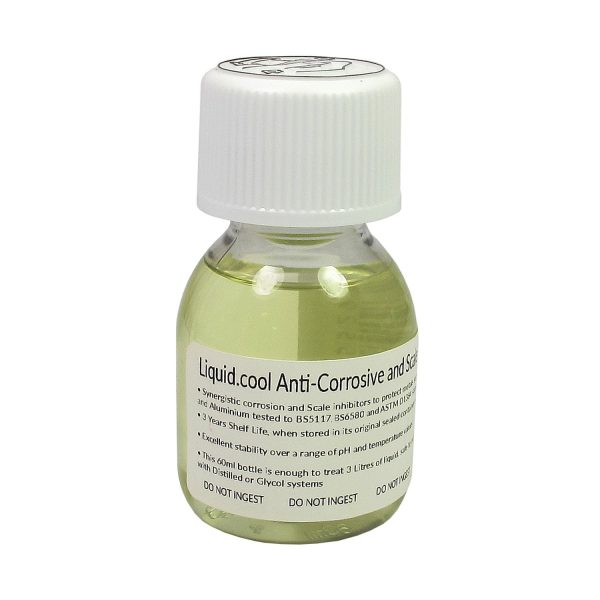
- SKU: LC-ANTCO-60ML
- MPN: 700461855293
- EAN: 0700461855293
- Available for Collection
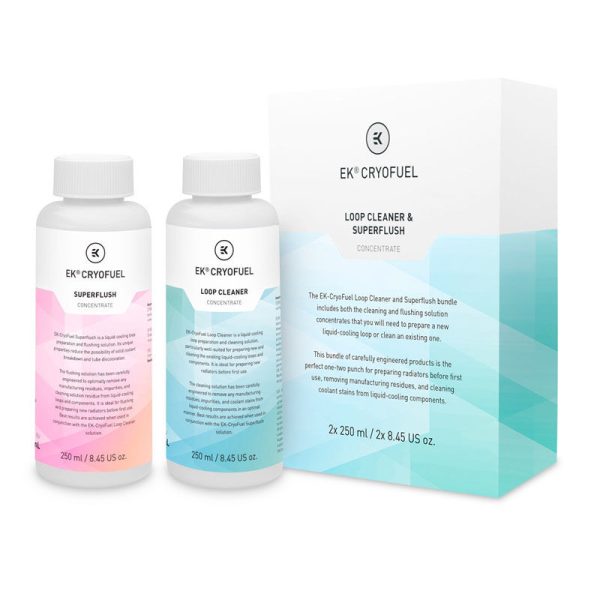
- SKU: WAEK-2491
- MPN: 3831109897720
- EAN: 3831109897720
- Available for Collection
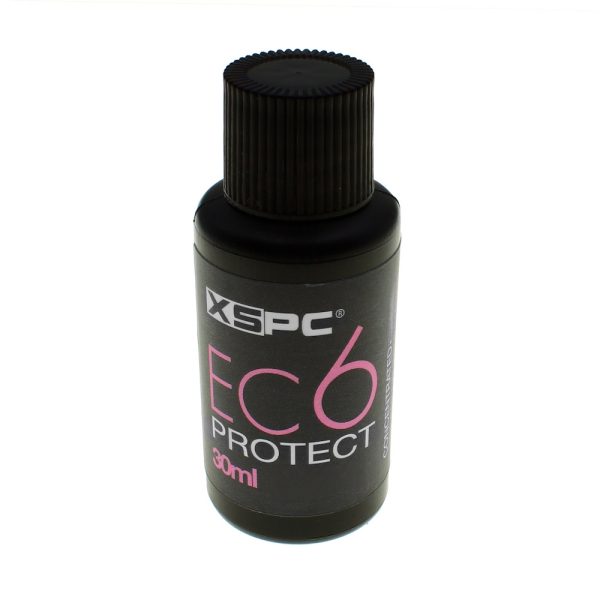
- SKU: XS-ECP-01
- MPN: 5060175589613
- EAN: 5060175589613
- Available for Collection
- SKU: XS-CNPURE-CL
- MPN: 5060596651746
- EAN: 5060596651746
- Available for Collection
1. Stick to One Metal Family
Build your entire loop from copper, brass and nickel-plated components. Check the specifications of every component before you buy. If a product does not clearly state its material, ask the manufacturer. This applies to radiators, blocks, fittings and any metal accessories in the loop. In the great scheme of things a certain amount of due diligence at the purchasing stage saves you from an expensive teardown later.
2. Use Proper Coolant
Never run distilled water on its own for extended periods. While distilled water is the correct base for coolant, its very purity makes it aggressively seek ions from your metal surfaces. Without corrosion inhibitors, copper will dissolve into the coolant and contaminate everything downstream.
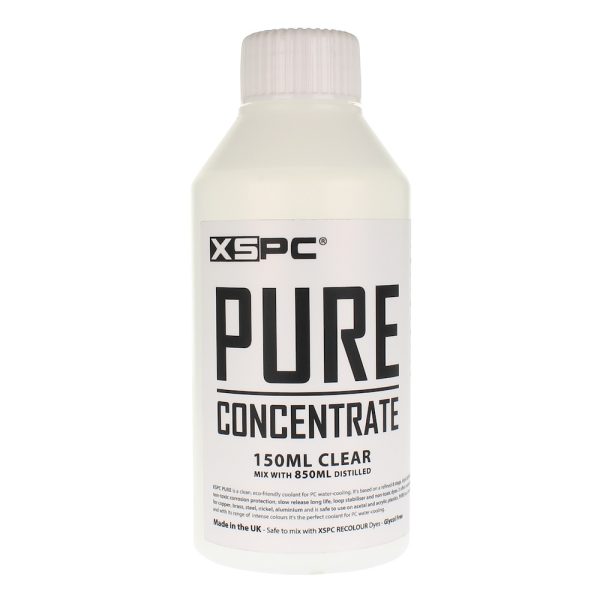
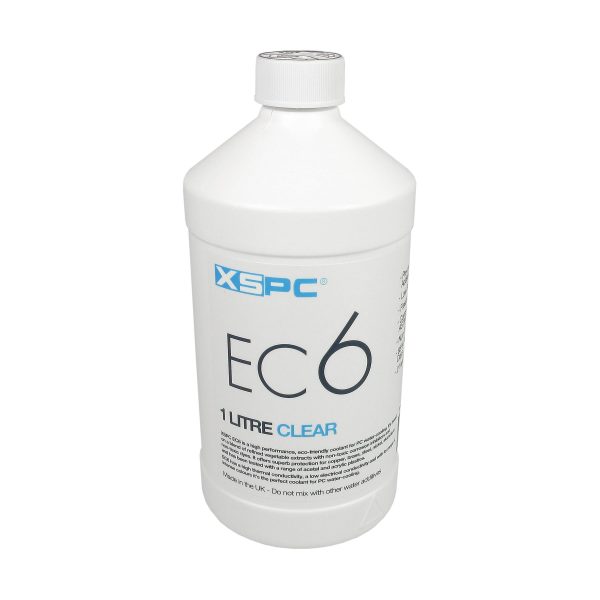
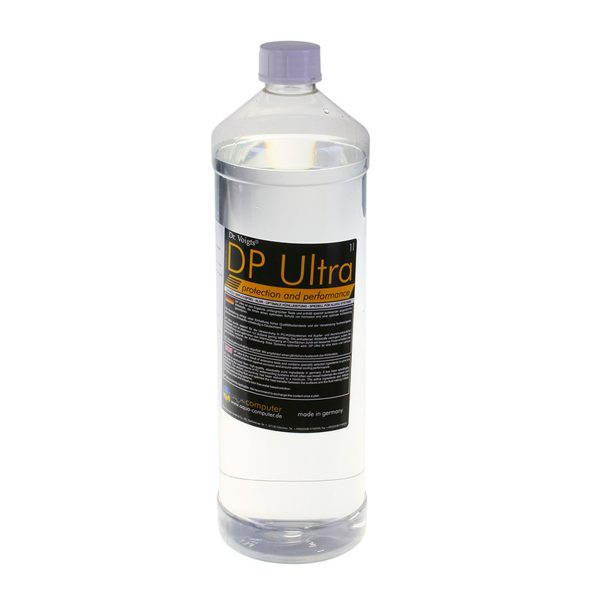
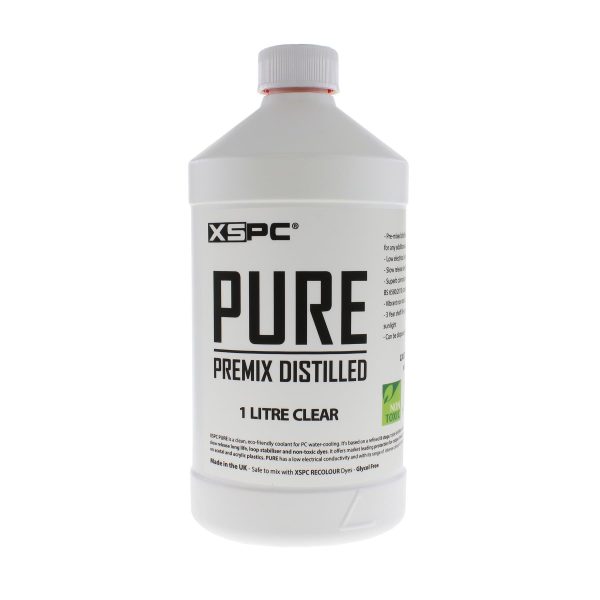
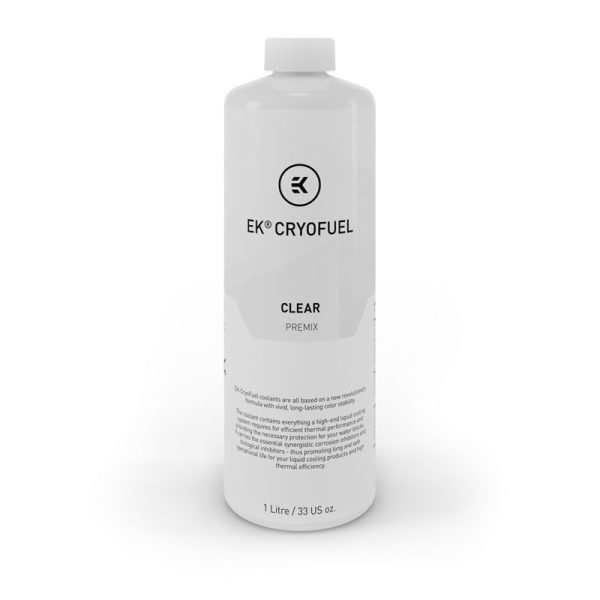
Use a purpose-made premixed coolant (such as EK CryoFuel, XSPC Pure, Aqua Computer DP Ultra or Alphacool Eiswasser), or distilled water with proper concentrate and additives. This is standard practice with custom loop hardware and is just one of those things you have to accept as part of the running cost.
- SKU: XS_EC6_CL
- MPN: 5060175582744
- EAN: 5060175582744
- SKU: WAZU-191
- MPN: 53113
- EAN: 4260073412360
- SKU: XS-PURE-CL
- MPN: 5060596651395
- EAN: 5060596651395
- Available for Collection
- SKU: WAEK-1649
- MPN: 3831109813256
- EAN: 3831109813256
- Available for Collection
3. Never Use Tap Water
Tap water contains chlorides, calcium, magnesium and other minerals that dramatically accelerate corrosion. Chloride ions are particularly damaging as they break down the protective films on metal surfaces. Always use distilled or deionised water as your base. The question left hanging in the air is whether saving a couple of pounds on distilled water is worth risking your entire loop, and the answer is obviously no.
4. Do Not Mix Coolant Brands
Different manufacturers use different inhibitor chemistries. Mixing them can cause chemical reactions that produce sludge, neutralise the inhibitors, or both. When switching brands, flush the loop thoroughly with distilled water before adding the new coolant. A certain amount of patience during this process pays dividends.
5. Change Your Coolant Regularly
Corrosion inhibitors deplete over time as they protect your metals. Most manufacturers recommend changing coolant every 12 months. If you are the sort of person who builds a loop and then forgets about it for two years, you are effectively gambling that the chemistry will hold up long past its intended lifespan. Set a reminder and stick to it.
What About Nickel Plating?
Nickel plating on water blocks is typically only about 4 microns thick. That is extremely thin. It is there primarily for aesthetics (that nifty silvery finish) and basic oxidation resistance, however it is not industrial-grade corrosion protection by any stretch.
Nickel plating can fail if:
- The coolant is acidic or has depleted inhibitors.
- Silver kill coils are used (some manufacturers specifically void warranties if silver coils are found in the loop).
- The original plating quality was poor, with micro-pinholes that let coolant reach the copper underneath.
Once plating starts to lift, the process accelerates. The flakes circulate through the loop and can clog micro-channels. The copper underneath works perfectly well for cooling, so flaking nickel is mostly a cosmetic issue, however the particles it sheds are a real problem for the rest of the system.
To protect nickel plating: use proper coolant with inhibitors, avoid silver kill coils and never clean nickel-plated surfaces with vinegar or acid. Warm soapy water only. Pretty much any abrasive will do more harm than good.
What to Do If You Find Corrosion
If you discover corrosion in your loop, here is the process:
- Drain the loop immediately. Do not keep circulating corrosion products through your blocks and pump.
- Disassemble and inspect every component individually.
- Clean affected parts. Bare copper: dilute white vinegar (5:1 water to vinegar), a soft toothbrush, then rinse with distilled water. Nickel-plated: warm soapy water only, no acid, no abrasives. Radiators: flush with distilled water repeatedly until the output runs clear.
- Identify the cause. Mixed metals? Old coolant? No inhibitors? Tap water?
- Replace damaged components. Deep pitting or significant material loss means the part needs replacing. There is no rescuing metal that has been eaten away.
- Flush everything with distilled water at least three times before refilling.
- Refill with fresh coolant containing proper inhibitors and set a reminder for your next maintenance window.
Common Myths
“Distilled water is the safest option.” Not on its own, no. It is the correct base, however without inhibitors and biocide it is actually corrosive. Its purity is precisely what makes it aggressive toward metal surfaces.
“Silver kill coils prevent all problems.” Silver is antimicrobial only. It does nothing for corrosion protection and can actually cause issues with nickel plating. These two jobs (killing biological growth and preventing corrosion) require different chemistry entirely.
“Good coolant means I can mix aluminium and copper.” No. Inhibitors slow the corrosion but cannot prevent it. The voltage difference is too great. Never mix these metals, regardless of what coolant you are using.
“My loop has been running for years with no issues.” Corrosion can be happening internally without visible signs until significant damage is done. Regular maintenance and coolant changes are your early warning system. The fact that you cannot see a problem does not mean one is not developing, and by the time you notice particles in your reservoir you may already be looking at component replacements. In the great scheme of things, a 12-month coolant swap is a pretty small price to pay for peace of mind.