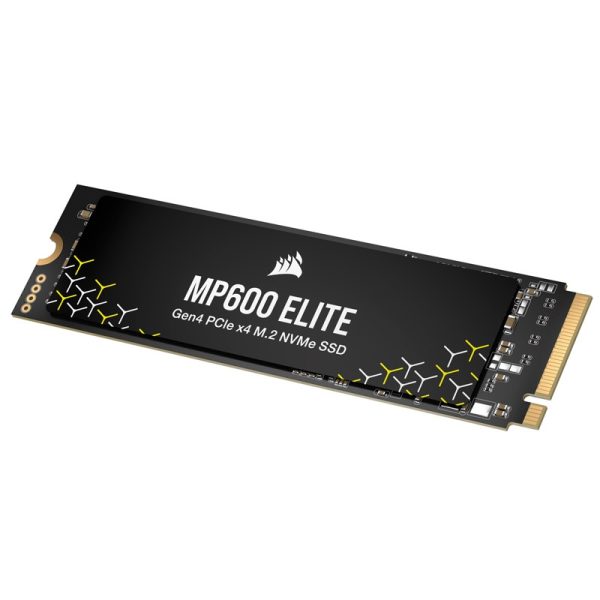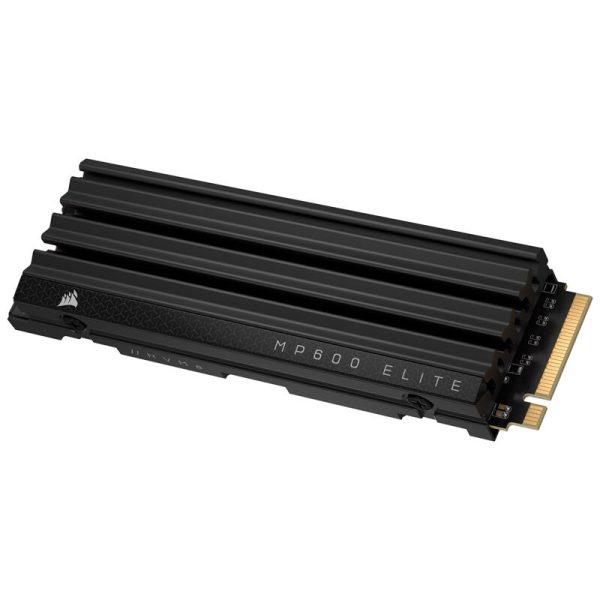





PCIe 4.0 NVMe M.2 SSD with 2TB capacity)
- SKU: sscs-111
- MPN: CSSD-F2000GBMP600ENH
- EAN: 0840006677659


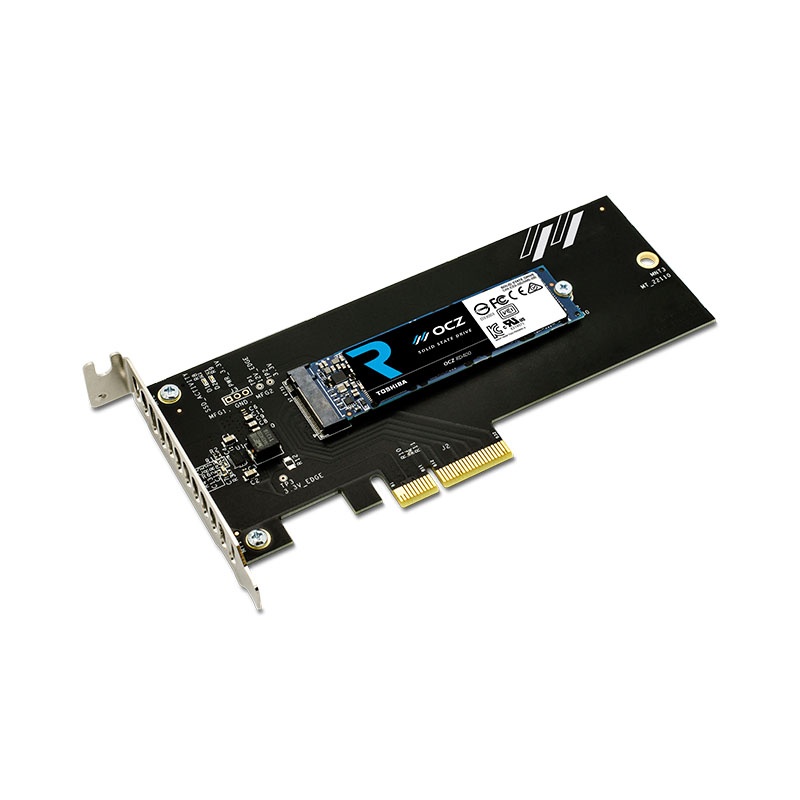
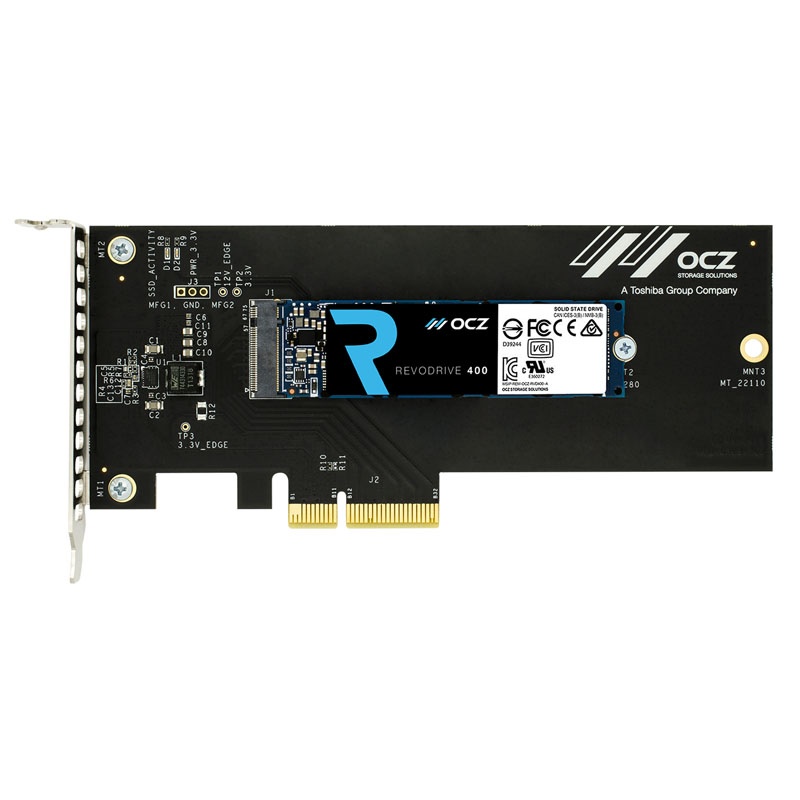
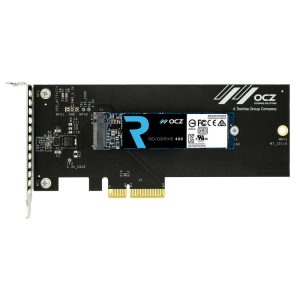
The Toshiba OCZ RD400A Series M.2-SDD is an extremely fast data carrier for enthusiasts and hardcore gamers. Designed for unbelievable fast data transfers, the OCZ RD400A achieves up to 4.5 times higher reading speed and up to 3 times higher write speed than normal SATA SSDs via the M.2 interface. Already the jump from normal HDDs to SSDs was a significantly noticeable and accelerated systems enormous.
The Toshiba OCZ RD400A Series M.2-SDD is an extremely fast data carrier for enthusiasts and hardcore gamers. Designed for unbelievable fast data transfers, the OCZ RD400A achieves up to 4.5 times higher reading speed and up to 3 times higher write speed than normal SATA SSDs via the M.2 interface. Already the jump from normal HDDs to SSDs was a significantly noticeable and accelerated systems enor...

The Toshiba OCZ RD400A Series M.2-SDD is an extremely fast data carrier for enthusiasts and hardcore gamers. Designed for unbelievable fast data transfers, the OCZ RD400A achieves up to 4.5 times higher reading speed and up to 3 times higher write speed than normal SATA SSDs via the M.2 interface. Already the jump from normal HDDs to SSDs was a significantly noticeable and accelerated systems enor...
No products found
With the M.2 volumes of Toshiba is now repeating itself the history. Users can make a huge performance boost with their data carriers. This version of the M.2 SSD is delivered with a practical expansion card for the PCIe slot on the mainboard, in case the main board does not have the appropriate interface or is already used.
The Toshiba OCZ RD400A Series SSD at a glance:
Modern M.2 NVMe PCIe SSD on expansion card with 1 TB capacity
Very fast 2.600 / 1.550 MB / s when reading / writing
A total of 210,000 / 130,000 IOPS 4KB Random Read / Write
Toshiba Fujisan Controller & MLC V-NAND
M.2 NVMe PCIe SSD with very good read and write speed
With the introduction of the M.2 slot, to connect SSDs in module construction directly on the mainboard, the already very fast Solid State Drives performed a further performance jump, since this modern slot in most cases no longer have the comparatively slow SATA -6G interface with a maximum net data rate of approximately 550 MB / s, but is connected over several lines of the PCI Express bus of the mainboard.
Toshiba is now mixing up this king class of the much faster SSDs in the M.2 format and presents with the OCZ RD400A Series an extrented fast M.2 PCIe SSD with MLC V-NAND and in-house Toshiba Fujisan (TC58NCP070GSB) controller. This is not inserted in the usual M.2 slot of the mainboard, but on a PCIe expansion card in the corresponding PCIe slot. This is especially useful if the mainboard does not have an M.2 slot or is already occupied.
Since the first final specification of the AHCI protocol for data transmissions using a SATA interface was developed in 2004 with mechanical hard disks (HDDs) in mind, it is hardly surprising that this from a technical point of view is now an archaic standard for modern flash-based Solid State Drives (SSDs) – especially if they are not connected via SATA, but via significantly faster PCI Express lanes to mainboard and CPU.
For this reason, the current NVM Express protocol (usually abbreviated as NVMe) was created, which was designed entirely for PCI Express-connected SSDs and their hitherto not fully exploited hardware potential, and therefore more parallelized data access operations (IOPS) Transfer rates, lower latencies, and much deeper command queues. The lower access levels also result in overall increased energy efficiency in conjunction with PCI-Express optimized power saving modes.
The Fujisan controller of this latest generation 2280-format hypershape drive (22 mm width, 80 mm length) supports four PCI Express lanes of standard 3.0 (up to about 3.900 MB / s possible!). In combination with the built-in MLC-V-NAND, the Toshiba OCZ RD400A offers a solid performance potential with the 1 TB variant offered here: the M works with up to 2,600 MB / s (read) and 1,550 MB / s (write) .2 drive under PCIe 3.0 and reaches IOPS values of 210,000 in the 4KB random read or 130,000 in the 4KB random write.
Technical details:
Dimensions: 157.64 x 105.51 x 17.2 mm (L x W x H)
Format: M.2 2280 on PCIe expansion card
Weight: approx. 63 g
Capacity: 1,024 GB
Controller: Toshiba Fujisan (TC58NCP070GSB)
NAND: MLC
Interface: PCIe expansion card (PCIe 3.0 x4)
Performance (PCIe 3.0):
Read: max. 2,600 MB / s
Write: max. 1,550 MB / s
IOPS (4KB random read): 210,000
IOPS (4KB Random Write): 130,000
Power consumption (operation): max. 6.4 W
Average life expectancy: 1.5 million hours
TBW (Total Bytes Written): 592 TB
Application temperature: 0 to 70 degrees C