







After Intels Broadwell CPUs have slow in coming because of delays in 14-nm process long time now, so that only a short time the next generation comes later: Skylake. This has a newly developed micro-architecture with a constant (proven) manufacturing process and does so in accordance with its own tick-tock model is a tock. Accordingly big are the changes compared to its predecessor, and some of them pose a real revolution. The most important change is undoubtedly the support of modern DDR4 memory, the significantly higher clock rates and low power consumption features compared with DDR3 - even against DDR3L. Nevertheless Skylake is basically still compatible with DDR3L, but mainly plays a role in notebooks and mini-PCs. The change to a new storage technology also requires a change of the base, so the CPU now the LGA used 1151st
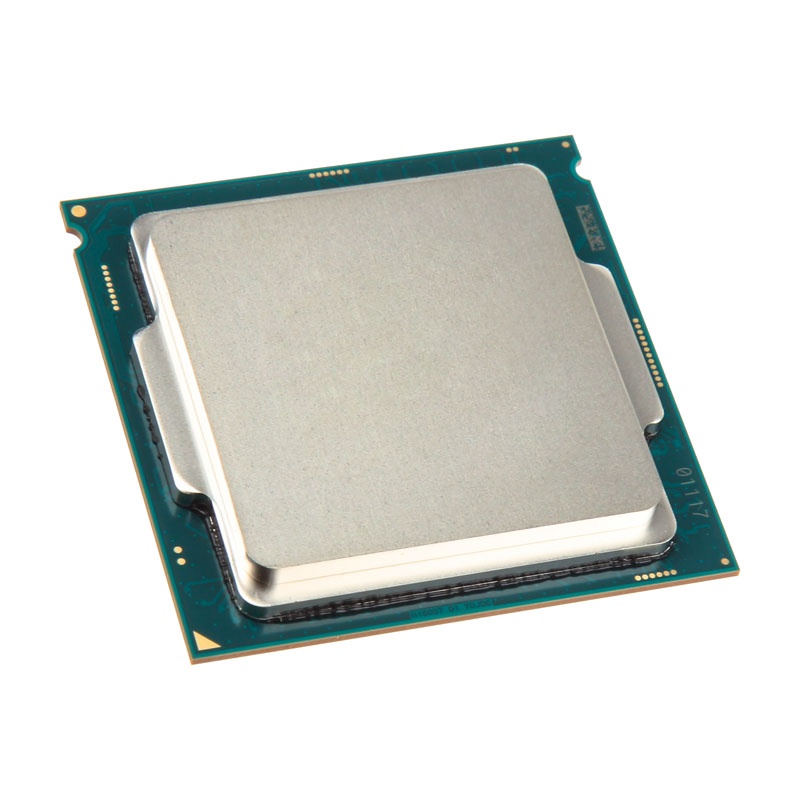
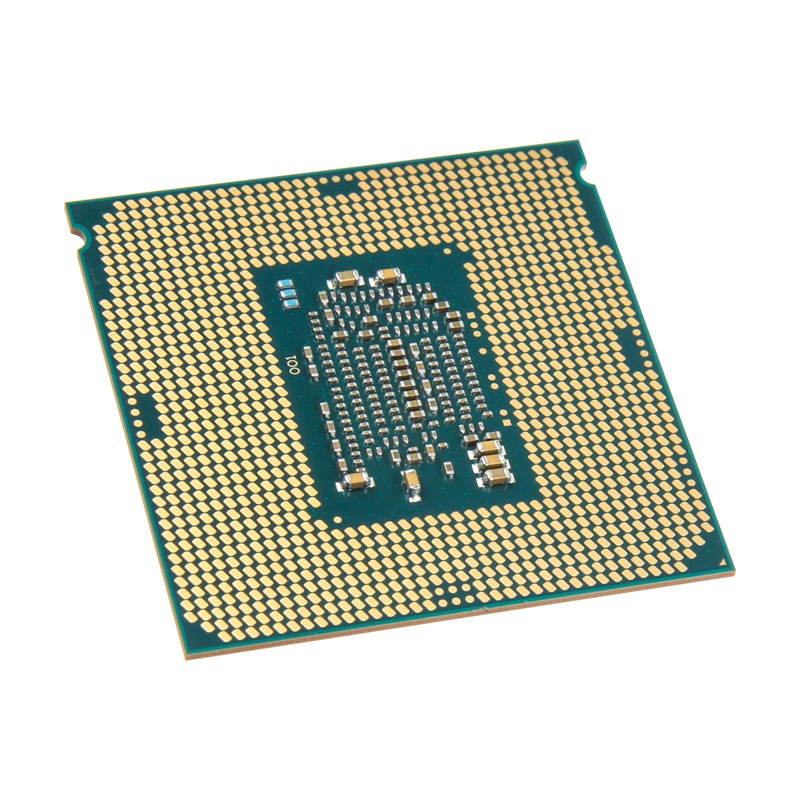
Intel Core i3-6320 3.9 GHz (Skylake) Socket 1151 - tray
After Intels Broadwell CPUs have slow in coming because of delays in 14-nm process long time now, so that only a short time the next generation comes later: Skylake. This has a newly developed micro-architecture with a constant (proven) manufacturing process and does so in accordance with its own tick-tock model is a tock. Accordingly big are the changes compared to its predecessor, and som...

- SKU: HPIT-241
- MPN: CM8066201926904
- EAN: 0000000000000
- Warranty: 12 Months
After Intels Broadwell CPUs have slow in coming because of delays in 14-nm process long time now, so that only a short time the next generation comes later: Skylake. This has a newly developed micro-architecture with a constant (proven) manufacturing process and does so in accordance with its own tick-tock model is a tock. Accordingly big are the changes compared to its predecessor, and som...
Featured products
No products found
The performance per clock (IPC) was again lifted slightly as with every generation in recent years, and the clock itself has risen again in many models – this CPU with two cores clocked at very fast computation 3.9 GHz. The thermal design power (TDP) is only 47 Watt – at the Haswell-generation dual-core CPUs were still default at 54 watts. As these Core i3 dual-core processor features Intel Hyper-Threading Technology and can thus carry not only two, but four threads simultaneously. The integrated graphics called Intel HD Graphics 530 (stage GT2) provides with its 24 execution units 20 percent more execution units than the HD used in desktop CPUs Haswell generation 4600 – and thus more than enough graphics power for Intel Quick Sync, GPU Computing and of course the one or other game in between. Furthermore, supports DirectX 12 graphics unit with the feature level 12_0, OpenGL 4.4 and OpenCL 2.0, as well as playback of 4K / UHD resolutions at 60 Hz via DisplayPort – provided an appropriate motherboard.
In addition to the increased CPU power, the clearly bored graphics unit and the DDR4 support also offer the new series chipsets 100 (Sunrise Point) that accompany the new processors, some marked improvements. Instead of the previous eight PCI Express 2.0 lanes, for example, provides the Z170 chipset as top model now whopping 20 lanes, which also are equipped with PCIe 3.0 still about twice as fast. It is important that, inter alia, for equipping with M.2 slots that now – depending on the motherboard – can contain up to three slots, each with four PCIe 3.0-lines, where it previously was only one slot, which in most cases was connected only with two data lines. This allows having a bandwidth of approximately 4 GB / s per slot, the use of several extremely fast M.2 SSDs and enables bypassing the slower SATA 6Gb standards, the there are still up to six times. Even with USB 3.0 lot has changed, from a maximum of 14 USB ports now support a maximum of 10 quick 3.0 standard and not a maximum. 6
This is the tray version of the processor. A CPU cooler therefore not included.
Technical details:
Type: Intel Core i3-6320 (Skylake)
Manufacturing: 14 nm
Cores: 2/4 (physical / virtual)
Clock: 3.9 GHz
Level 3 cache: 4 MB
Storage Controller: internal
Memory channels: 2
Memory Standard: DDR4 / DDR3L (motherboard dependent)
Integrated graphics: Intel HD Graphics 530 (24 EUs, max 1.150 MHz.)
TDP: 47 Watt
Socket Compatibility: LGA 1151
Particularities:
2 cores + SMT (Hyper-Threading: virtual core doubling)
4 megabytes of L3 cache
Dual-Channel Interface
Support for DDR4-2.133
Integrated graphics Intel HD Graphics 530 (with DX12 support)
AVX2 instruction set (Advanced Vector Extensions)
AES encryption (Advanced Encryption Standards)
